Women’s History Month

Jascin N. Leonardo Finger • March 11, 2013

March is women’s history month (though all months should be women’s history month.) At the end of March, I will be hosting a Nantucket women’s history walk so please check our calendar if you are interested in registering.


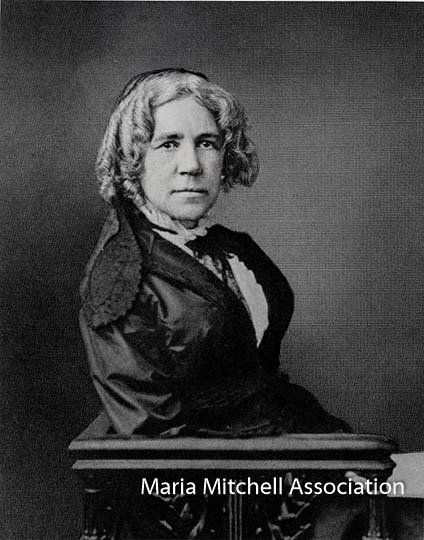
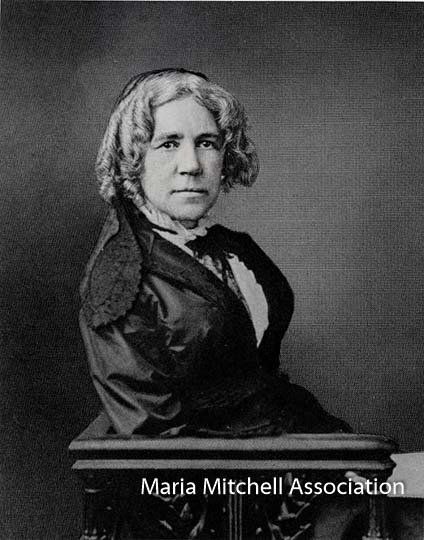
Maria Mitchell was one of the founders of the Association for the Advancement of Women (AAW), was its president (1875), and founded its Science Committee which she chaired for the remainder of her life.


When the fourth Congress of the AAW met in Philadelphia in October 1876, Julia Ward Howe (also a friend of Maria’s) was serving with Maria on the executive committee. Maria presented a paper, “The Need for Women in Science.” In it she stated,


Does anyone suppose that any woman in all the ages has had a fair chance to show what she could do in science? . . . The laws of nature are not discovered by accidents; theories do not come by chance, even to the greatest minds; they are not born of the hurry and worry of daily toil; they are diligently sought, they are patiently waited for, they are received with cautious reserve, they are accepted with reverence and awe. And until able women have given their lives to investigation, it is idle to discuss the question of their capacity for original work.


She is not saying that women cannot be scientists – she is saying they need to be given the opportunities.

Maria was incredibly busy with the AAW – it took up a great deal of her time – and at the next meeting in November of that year some aspects of the meeting were wonderful according to her account –“excellent” papers, “newspapers treated us very well. The institutions opened their doors to us, the Centennial gave us a reception. But – we didn’t have a good time!” It appears there was discord among the women. A few opposed the subject of “Woman Suffrage,” but Lucy Stone was able to present her paper on the subject despite this. And, some women felt that the West was not well represented and was overshadowed by New England thus women representing the western states protested the nomination and election of Julia Ward Howe as president of the AAW. But she won. Whew! It was not always easy and controversies constantly abounded with many schisms over time within the women’s rights movement.


I often wonder what Maria might think of the place of women today – how far things have come from her time or would she be surprised that there still can be inequality?


In honor of Women’s History Month, please visit the National Women’s History Project website ( http://www.nwhp.org ), where you can find a list of this year’s women honorees and nominees for “Women Inspiring Innovation through Imagination” – which includes Maria and three other women associated with the MMA’s astronomy program – Annie Jump Canon, Margaret Harwood, and Dorrit Hoffleit – Harwood and Hoffleit being MMA astronomers and directors of the observatory. You will also find a list of March birthdays and March highlights in U.S. women’s history.


JNLF

Recent Posts
By Jascin N. Leonardo Finger August 10, 2026
This is a blog of the past. I often think of this “story” when it’s hot and humid out. So here it is again. The past few weeks have been very un-Nantucket as far as the heat and the extreme humidity. When I was a child and even a teenager, I remember that we always wore long pants and even sweaters in the summer evenings on island. This does not seem to be the norm any longer unfortunately. The heat also leads me to think about staying cool and what generations before us did to preserve food. Long before modern refrigeration, ice was used for preserving foods. Although the use of ice brought an end to salting and drying fish for local markets, with railroad development and western expansion in the 1850s, salt fish was still being shipped to inland domestic markets as well as abroad. As the fishing industry grew on Nantucket and elsewhere, however, so did the need for ice to keep the catch fresh for market. On Nantucket, when a hard freeze produced ice of the necessary thickness, blocks were cut from Maxcey’s and Washing Ponds and the North Head of Hummock Pond and stored in nearby icehouses. This was a fairly long and tricky process that took skill to make sure the ice was the right thickness and that one did not fall through the ice. Mainland icehouses typically used sawdust for insulation, but Nantucket ice was insulated with beach grass, seaweed, and eelgrass—sawdust not being readily available here. The iceman would drive his cart around the streets with usually a gaggle of children trailing behind – or hitching a secretive ride on the back of the cart – hoping for a piece of ice to suck on and cool off with – back when something that simple was a pure delicacy. When electricity was introduced on Nantucket in 1889, cutting pond ice was no longer necessary. Captain John “Jack” Killen built the first ice-making plant, on Straight Wharf, opening it on May 5, 1902. Several other plants, including that of the Island Service Company, followed—all operating until the Great Depression. Nantucket’s early ice-making plants were established primarily for packing fish and shellfish, which were shipped in barrels or fish boxes layered with ice. Fishermen both on and off-island would stock up on ice before going out on long trips, and it is said that island ice was of a much higher quality than that from plants off-island—perhaps because of the purity of Nantucket’s water. Some people still cut ice. My parents had an elderly friend, now gone, and his family owned – and I assume still owns – a camp of cottages from the 19 th century up in New Hampshire. In the winter, the entire family shows up to harvest ice and store it in the icehouse. The ice is then used in each of the cottages during the summer since they have no electricity or plumbing. It is an art that is almost gone but happily there are still a few who have passed down the knowledge and skill for harvesting ice. I recently took a look at his obituary and was blown away – I remember him for ice harvesting – but wow what a life! One of service and seeking justice. JNLF
August 3, 2026
“If you don’t look, you don’t see. You have to go and look.” -Edith Andrews
July 28, 2026
NANTUCKET, MA— Join the Nantucket Maria Mitchell Association (MMA), Nantucket Land and Water Council (NLC), and Sustainable Nantucket (SN) for the Seventh Annual Nantucket Green Crab Week! The MMA, NLC, and SN will be offering fun daily events from Monday, August 3 to Saturday, August 8 to learn about, and take action against, invasive European green crabs on Nantucket. European green crabs were first introduced to North America in the 1800s, likely traveling in the ballast water of merchant ships from Europe. This invasive species is now abundant on Nantucket, threatening crucial aquatic resources, including eelgrass beds, shellfish populations, and native crab communities. Together, as a community, it is possible to help prevent green crabs from destroying the natural resources that make Nantucket’s waters so special! Please come join us during Nantucket Green Crab Week to learn more. MMA Green Crab Identification Workshop and Derby Information Session Registration Link: Maria Mitchell Association Monday, August 3, 3:45 PM – 4:30 PM Price: FREE Location: MMA Aquarium, 32 Washington Street Join MMA Aquarium staff to learn how to identify the European green crab (Carcinus maenus), an invasive species that threatens Nantucket's native species and habitats! We will compare these species to local crab species and determine their biological sex. This is a great chance to learn about our annual Nantucket Green Crab Derby and all its events! MMA Nantucket Green Crab Survey: Seine Method Registration Link: Maria Mitchell Association Tuesday, August 4, 3:15 PM – 4:15 PM Price: FREE Location: Hither Creek Beach Access (Beach Access #52) Join MMA Aquarium staff on a survey for invasive European green crabs! This survey will be a part of the MMA Nantucket Green Crab Community Science Survey that you can do yourself at any time. In this session, we will be using a seine net. Annual Green Crab Fertilizer and Bait Pickup Registration Link: Maria Mitchell Association Thursday, August 6, 10:00 AM – 12:00 PM Price: FREE Location: Sustainable Nantucket's Community Farm, 168 Hummock Pond Rd In collaboration with the Sustainable Nantucket, please join us for this free, fun, and exciting way to help control the population of the invasive green crab, all while creating an environmentally friendly fertilizer for your garden. For folks to make their own green crab fertilizer, they should bring completely waterproof boots they're comfortable crushing dead crabs with, as well as a sealable bottle or jar to take home their fertilizer. We will provide crabs, coolers, vinegar, and take-home fertilizer instructions. Nantucket Green Crab Survey: Wading and Hand Net Registration Link: Maria Mitchell Association Friday, August 7, 5:00 PM – 6:00 PM Price: FREE Location: The Creeks/Harbor Flats, 99 Washington Street Ext Join MMA Aquarium staff on a survey for invasive European green crabs! This survey will be a part of the MMA Nantucket Green Crab Community Science Survey that you can do yourself at any time! In this session, we will be wading and using hand nets. Annual Green Crab Derby Registration Link: Maria Mitchell Association Saturday, August 8, 12:00 AM – 4:00 PM Price: $10, Groups of Up To 4 Persons Can Compete Help the Maria Mitchell Association and the Nantucket Land Council fight the green crab invasion by participating in the annual Nantucket Green Crab Derby! Participate in a team of up to 4 to help us maintain healthy marine habitats and for a chance to win prizes! Rules and prize details are detailed in the reservation process. Green crabs can be caught between 12am – 4pm and dropped off at the Maria Mitchell Association Aquarium between 12pm – 4pm! Sustainable Nantucket is a nonprofit organization dedicated to strengthening Nantucket’s local food system and building a more sustainable island community. Through education, advocacy, and community programs, the organization supports local farmers and producers, increases access to locally grown food, and connects the community with Nantucket’s agricultural resources. The Nantucket Land & Water Council is a nonprofit organization dedicated to protecting Nantucket’s land, water, and natural resources. Through conservation, research, education, and advocacy, the organization works to preserve open spaces, protect water quality, and ensure the long-term environmental health of Nantucket for future generations. The Maria Mitchell Association was founded in 1902 to preserve the legacy of Nantucket native astronomer, naturalist, librarian, and educator, Maria Mitchell. After she discovered a comet in 1847, Mitchell’s international fame led to many achievements and awards, including an appointment as the first professor of astronomy at Vassar College. Maria Mitchell believed in “learning by doing” and today that philosophy is reflected in the MMA’s mission statement, programs, research projects, and other activities. The Maria Mitchell Association operates two observatories, a natural science museum, an aquarium, a research center, and preserves the historic birthplace of Maria Mitchell. A wide variety of science and history-related programming is offered throughout the year for people of all ages. ####
Show More