

The MMA Barn Owl Program
Monitor & Protect Nantucket's Barn Owl Population.
Join or Renew Your Membership Today.
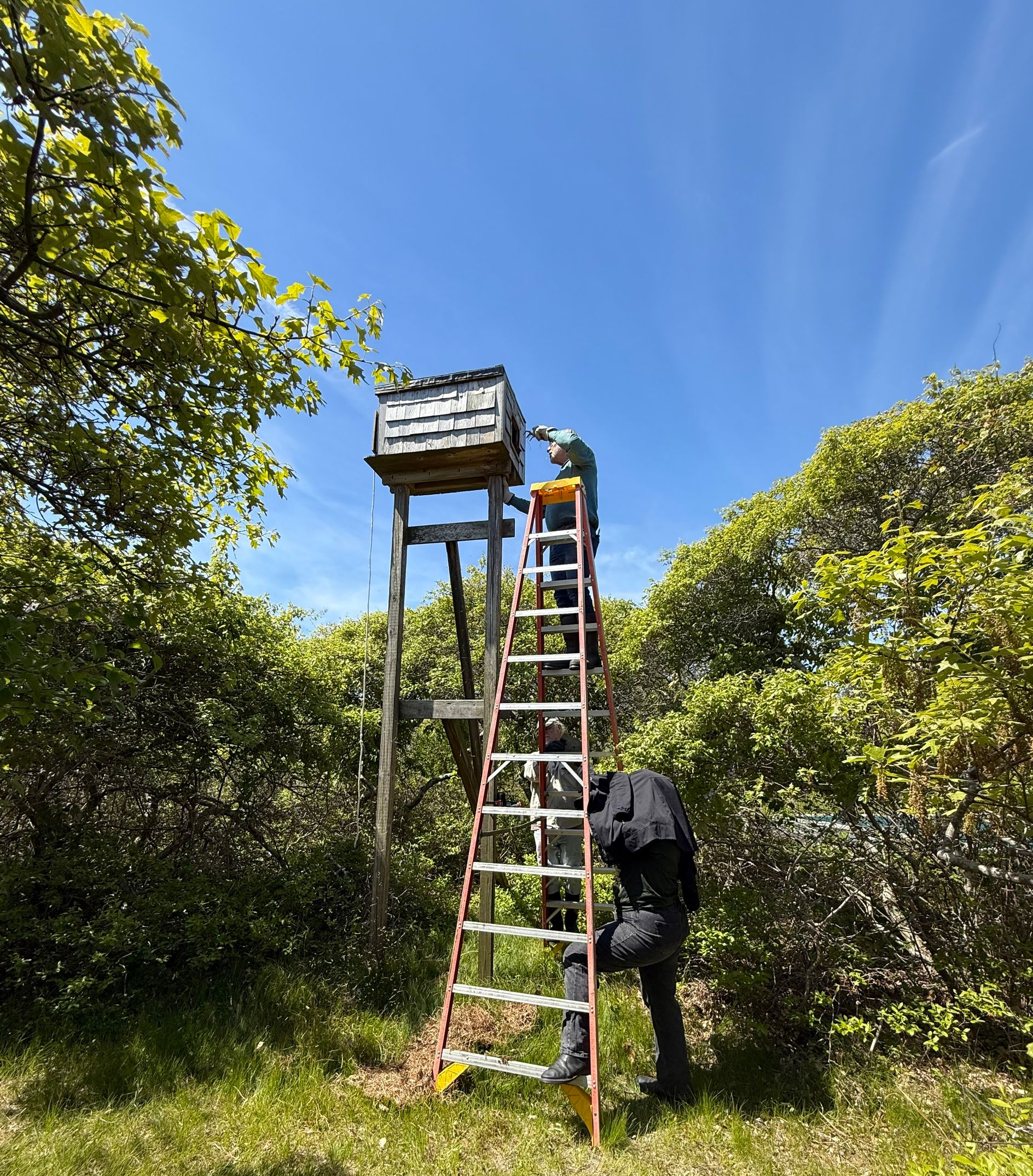
Did You Know You Can Have an Active Role in Helping the MMA Monitor and Protect the Island's Barn Owl Population?
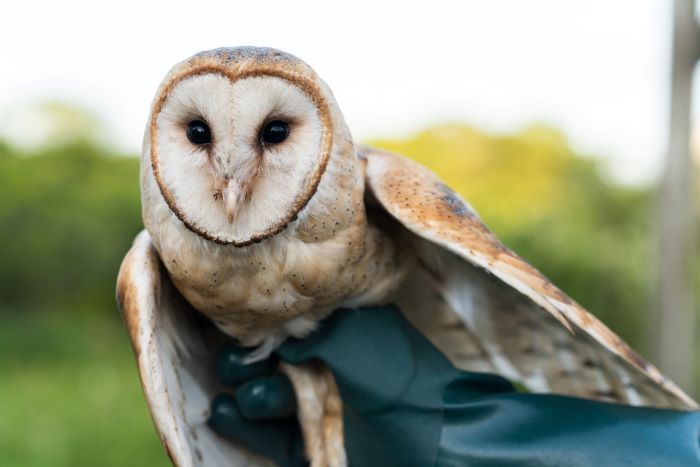
Barn owls (Tyto alba) were not historically common on Nantucket. They were first reported on the island in the early 1960s, with the first confirmed nest documented in 1968. Historically the population was small — roughly 15–20 pairs before 2002 — and the species remains at the northern edge of its range due to Nantucket’s cold winters. Severe winter weather in 2002–2005 caused a major population crash, with only one known breeding owl recorded in 2005.
Since 2006, however, the population has gradually rebounded. This recovery has been supported in part by the installation of nest boxes across the island, providing safe breeding sites within Nantucket’s open grassland habitats. In Massachusetts, barn owls are listed as a Species of Special Concern, reflecting their low numbers and vulnerability to habitat change and extreme weather.
On Nantucket, barn owls play an important ecological role by helping to control rodent populations, benefiting both local ecosystems and the community. Ongoing monitoring by the MMA tracks their distribution, breeding success, and response to environmental conditions. The MMA remains committed to studying and protecting these remarkable birds, analyzing long-term trends, and engaging the community in understanding and supporting this unique island population.
Through our Barn Owl Membership Program, you can request a nest box for your property, and our team will contact you for a site visit to determine if your location is suitable.
With your support, we can expand educational programs and hands-on experiences that inspire Nantucket residents and visitors alike to become champions for wildlife. The late Dr. Bob Kennedy played a central role in barn owl research and conservation at the MMA, and under his leadership, the number of barn owl nest boxes on the island grew to more than seventy. With your partnership, we can ensure that Dr. Kennedy’s legacy of curiosity, dedication, and passion for nature continues to inspire generations to come.
How to Get Involved | Four Tiers of Support
Purchase and install a Barn Owl nest box to become a Barn Owl Ambassador or Barn Owl Steward (following a site visit and written approval by the MMA). If you prefer not to install a nest box, you can still support the program as a Barn Owl Supporter.
If you already have a Barn Owl nest box, you can contribute annually as a Barn Owl Box Contributor to be included in barn owl surveys and reporting, and to receive tickets to our annual Barn Owl Celebration in June of each year.
The four levels of support are outlined here.
Our 2026 membership form can be downloaded and returned via mail, or you can elect to complete our online payment form here.
Forms and dues can be submitted via mail to:
The Maria Mitchell Association
Attn: Jónelle Gurley
4 Vestal Street
Nantucket, MA 02554
For questions and inquiries, please contact: programs@mariamitchell.org.
Barn Owl Program Team:
Ginger Andrews, MMA Field Ornithologist
Mitch Blake, MMA Volunteer
Kim and Tom Griswold, MMA Volunteer
Anja Hagenson, MMA Volunteer
Skyler Kardell, MMA Volunteer
Dr. Bob Kennedy †,
Senior Research Fellow
A Special Thank You to Our Barn Owl Business Partner:
Program Goals
- To monitor the population of Barn Owls on Nantucket to understand their abundance, reproduction, distribution and dispersal and how weather impacts these variables.
- To support the Maria Mitchell Association through an active research program that actually provides income to cover the project cost and to contribute to the general operating expenses of the organization.
- To provide research experiences to MMA Natural Science interns and unique experiences to other MMA interns and staff.
- To educate our sponsors and the public about Barn Owls and their benefits to controlling rodent populations, thus reducing the impact of Lyme Disease on Nantucket.
We accomplish these goals through an annual donation of $350 for each nest box a donor wants to sponsor.
Program Benefits
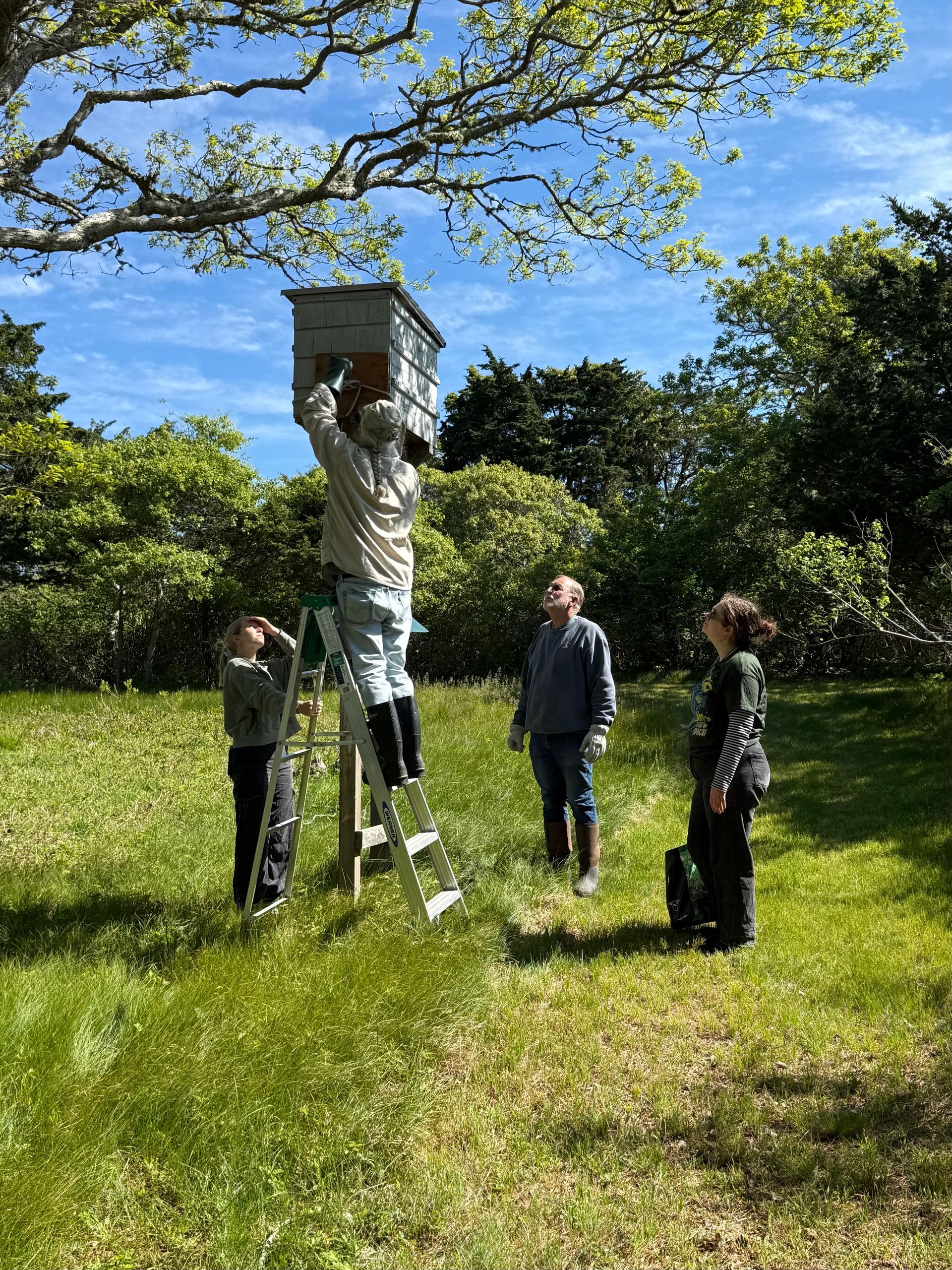
- Monitor the nest boxes once or twice in the Spring/early Summer and once in the Fall each year to record nesting success and to band the young and unbanded adults when conditions warrant safe capture.
- Clean the nest boxes, if necessary.
- Perform minor repairs to the sponsored nest boxes.
- Provide a general report of each survey and notify each sponsor of what we found in their sponsored nest boxes.
- Maintain correspondence with the sponsors if they have questions or need information about their nest boxes, Barn Owls, or birds in general.
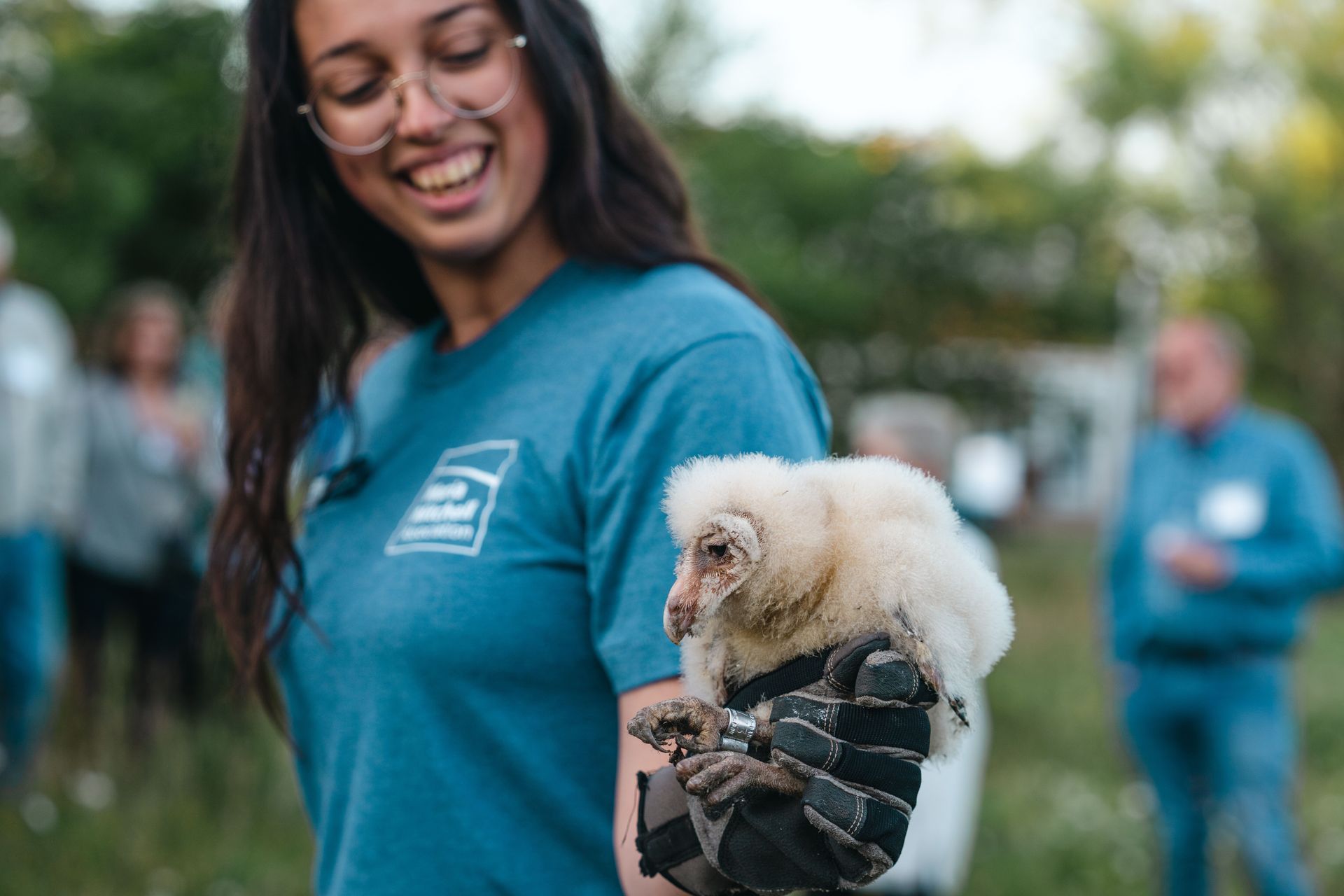
- Allow sponsors and their families and friends to be present when we check the nest boxes and handle the adults and young. This is fairly unique among research projects as most researchers do not allow the public to be present during their research activities.
Barn Owl Program - At a Glance
71
boxes monitored by MMA
11
Boxes with activity
in fall of 2025
5
Boxes with eggs in fall of 2025
26
year of mma barn owl program