February 5, 2026
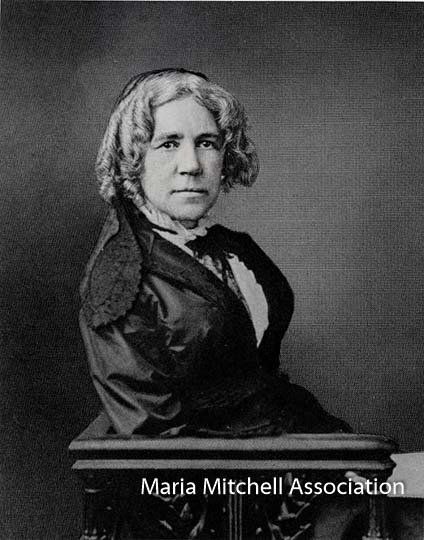
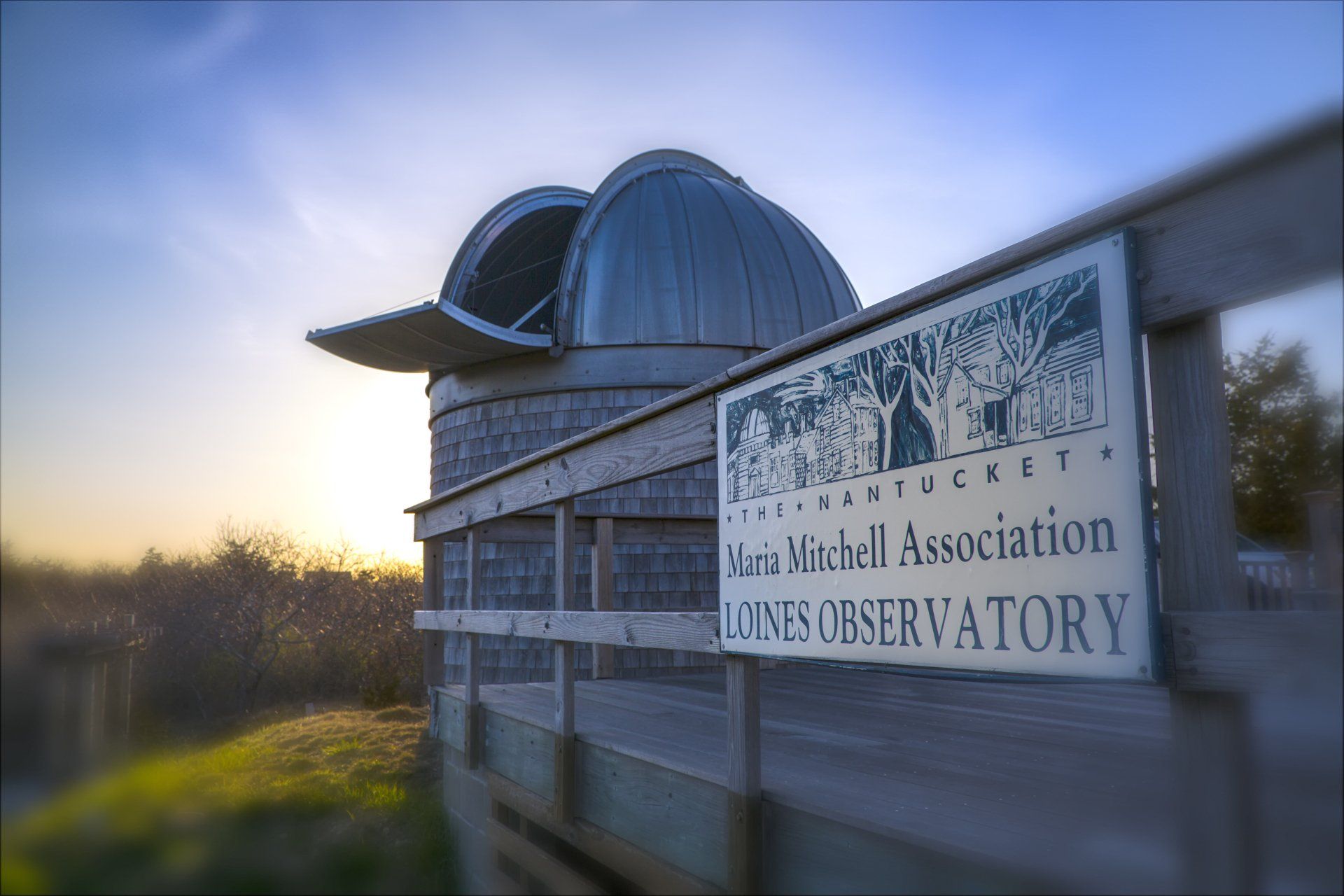
NANTUCKET, MA—On the occasion of the 247th American Astronomical Society (AAS) Meeting, and the 179th anniversary year of the discovery of Maria Mitchell’s Comet, the 2025 astronomy interns from the Nantucket Maria Mitchell Association (MMA), journeyed to Phoenix, AZ, to represent the MMA and present their research. Building on the legacy of Maria Mitchell, the first female American astronomer, the MMA offers STEM research and education opportunities to interns from across the country via their paid internship programs. The MMA’s Maria Mitchell Observatory has operated a National Science Foundation funded Research Experiences for Undergraduates (REU) program for decades. The REU is funded by a generous grant from the U.S. National Science Foundation (NSF) which allows the MMA to bring six undergraduate students to Nantucket each summer. These talented and promising students are selected out of a pool of hundreds of applicants from across the United States. From January 4 – 8, 2026, the MMA’s most recent NSF-REU students presented their work at the winter AAS meeting on subjects ranging from the characteristics of dust around and between stars, to various aspects of supernova explosions. MMA Director of Astronomy, Dr. Jackie Milingo, attended the conference and presented each student with a bound volume of their collected research papers. “The MMA’s long-standing REU program has nurtured hundreds of budding scientists over many decades. It’s always inspiring to see these students shine and make the most of this extraordinary opportunity. We’re a small program with an outsized effect on not only these students, but the future of the scientific community.” The 2025 REU students and their respective presentations are listed below. The common theme of their research was dust. This dust is made of familiar elements like carbon, oxygen, silicon and iron is similar to grains of sand or ash. Even though these dust grains are a small part of our Galaxy, they are very important because they can block the light coming from everything astronomers study. Understanding this dust helps us to understand how it is formed and how it affects the light that must travel vast distances across our Milky Way to get to our telescopes. This past summer’s NSF-REU interns and their research presentations which they presented at the AAS are: Madison Gerard (University of Texas at Austin) : SN 2024abfl: An Absolutely Flat and Low-Luminosity Interacting Type II Supernova Kaylee Perez (Texas State University) : Exploring the Link Between Dust Extinction and Attenuation with Simulated Data LaurenBarkey (CaliforniaPoly Pomona) : Peek-a-Boo: Exploring the NEOWISE Lightcurves of RCoronae Borealis Stars Aiden Agostinelli (University of Montana) and Ben Radmore (University of Michigan) : When the Dust Settles: Late-Time MIRI Imaging of SN 2011ja Image: 2025 NSF-REU Interns, Madison Gerard, Lauren Barkey, Benjamin Radmore, Aidan Agostinelli, and Kaylee Perez with MMA Director of Astronomy, Dr. Jackie Milingo. The Maria Mitchell Association was founded in 1902 to preserve the legacy of Nantucket native astronomer, naturalist, librarian, and educator, Maria Mitchell. After she discovered a comet in 1847, Mitchell’s international fame led to many achievements and awards, including an appointment as the first professor of astronomy at Vassar College. Maria Mitchell believed in “learning by doing” and today that philosophy is reflected in the MMA’s mission statement, programs, research projects, and other activities. The Maria Mitchell Association operates two observatories, a natural science museum, an aquarium, a research center, and preserves the historic birthplace of Maria Mitchell. A wide variety of science and history-related programming is offered throughout the year for people of all ages. ###