Nantucket Sorosis

Jascin N. Leonardo Finger • February 9, 2026

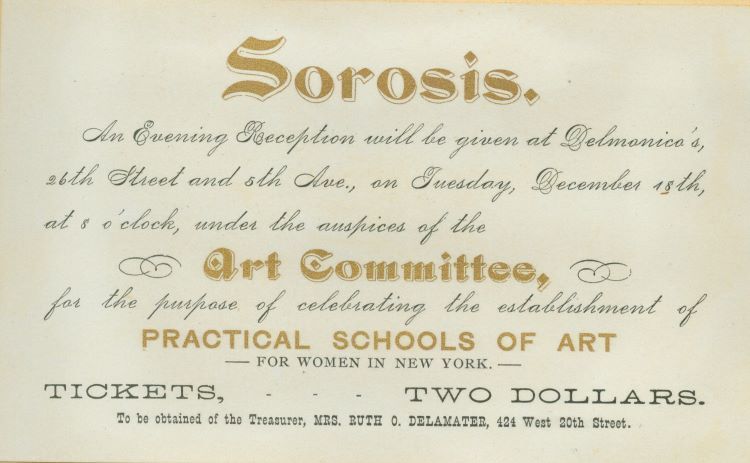
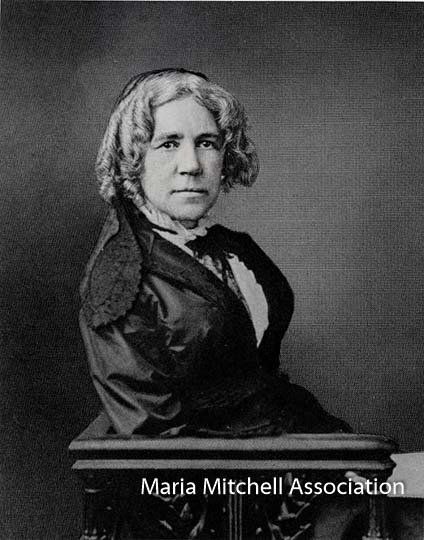
On August 6, 1872, the first meeting of the Nantucket Sorosis Club took place at the home of Sarah Cathcart on Main Street. Originally founded in New York in 1868, several of its founding members were Nantucket women such as Maria Mitchell and Reverend Phebe Coffin Hanaford, and the club appropriately found its way to Nantucket where Hanaford first publicly announced its inaugural meeting from the pulpit of the Unitarian Church. Its purpose: the “intellectual improvement of its members, by means of written essays, select readings, recitations and discussions upon the current questions of the day.” It was Hanaford and Nantucket summer resident Rebecca Morse – members of the New York Sorosis – who developed the idea of founding a Nantucket Sorosis. Like the sewing circles founded earlier in the nineteenth century, the development of a Sorosis on Nantucket may have been in part to aid women not only during a period of economic decline on the island, but to help those women who found that they were now losing their jobs as whalemen returned to the island for good and tried to “reclaim” the jobs of men. It was also a logical club to have for women on the island – given the history of their playing such an integral role in all aspects of island life. Two other island women involved with the Nantucket Sorosis Club were Eliza Starbuck Barney and the Reverend Louise S. Baker.


The main Sorosis club came about as a reaction by female journalists barred from attending and reporting on Charles Dickens’ first public lecture in the United States in New York City. They quickly came together to created forms of support for one another in their field, expanding to include women working in a variety of other fields – science among them. Thus, Maria Mitchell was one of the founding members when the first official meeting was held at Delmonico’s in NYC.


With a thirteen-article constitution, the Nantucket Sorosis had a board of directors with officers being elected annually. The club hosted lecturers and orators, discussed social and political issues – particularly those of woman suffrage – and also discussed art, literature, travel, and current events. The Nantucket Sorosis lasted approximately thirty years. Little is known about who was involved outside of key players and when exactly the group folded and why, but the last printed material that can be located dates to 1903, and by that time most of the Nantucket Sorosis members were in their seventies and eighties.


JNLF


Recent Posts
By Jascin N. Leonardo Finger May 4, 2026
May 6, 1878 Between the clouds, Miss Spalding obtained 7 photographs of Mercury on the Sun. It is comfort to me to be able to plan and do a new kind of work. The large telescope worked better than usual, Clark having just been to the Observatory. Clark, as in Alvan Clark, a man who would become the premier telescope maker in America and who built Maria Mitchell’s 5-inch Alvan Clark refractor that she purchased from him (after working with him to build it per her specifications) with money gifted to her from “The Women of America” led by Elizabeth Peabody. More than likely, it is this telescope she is referring to as she did use it in the Vassar College Observatory with her students – and it is also taking center stage in photographs, along with her (first her father’s) Dolland telescope.  Maria had decided she would photograph the Sun on every clear day, and this was one of those results. She would use these images, with her students, to study sun spots and their changes. With her students, Maria would photograph the transit of Mercury as noted above. She would also photograph the transit of Venus a few years later with her students. JNLF
By Jascin N. Leonardo Finger April 27, 2026
And with it, some of the heirloom daffodils I purchased for the Mitchell House last fall. A place was recommended to me by two longtime friends of the MMA and gardeners extraordinaire. It is called Old House Gardens. I ordered a small amount as we now have a plethora of voles on Vestal Street – I believe I complained about them here last year. They won’t eat daffodils so I got a few of “Butter and Eggs” (1777) and “Conspicuus” (1869) as either of these could have appeared in William Mitchell’s gardens. They were not listed in a letter from John Quincy Adams that I have mentioned before. But, Adams was not here visiting the Mitchell family when the daffodils would have been in bloom. The one pictured here is “Butter and Eggs” not completely unfurled. JNLF
By Jascin N. Leonardo Finger April 13, 2026
April 1878. The conference of Woman’s Congress officers met in Washington. Because we had one member in Washington we were invited to meet in that place. I went on at a great expense of time, money and strength . . . . We were in session at least nine hours. I think that more than half of that was used by Mrs. Spencer and Mrs. Sayles. The only motion which I carried through was to pay the Secretary $200 . . . In 1878, that was a long train(s) ride to Washington, DC from Poughkeepsie, NY and Vassar College. If Maria seems perturbed, I am sure she was. As president of the Association for the Advancement of Women, and thus the Congress, she had to be at the meeting. But it appears she did not get much say in the nine hour meeting. This was also a long trip to take when she had another, even longer trip coming up in July of 1878. In that month, she would travel with students and her sister, Phebe, out west to Colorado to view the eclipse and that train and wagon ride I am sure was weighing on her mind – not just the physical trip but making her way for an important eclipse viewing event. JNLF
Show More