
Nantucket Maria Mitchell Association Announces Scalloping Field Trip Program October 1 – November 19, 2025

September 12, 2025

NANTUCKET, MA— The Nantucket Maria Mitchell Association (MMA) is pleased to announce the launch of its 2025 Scalloping Field Trip Program, set to begin October 1. This hands-on, educational experience invites participants to explore the island’s coastal waters alongside MMA Aquarium Manager Christina Norman, while learning about the ecology and conservation of Nantucket’s iconic bay scallops.


Participants will head into the water to collect scallops while learning about their biology, life cycle, and the challenges bay scallops face in today’s changing environment. Hand nets and adult waders will be provided. A shellfish permit is not required to participate—unless attendees wish to take their catch home.


Scalloping Field Trips meet at one of multiple locations in Nantucket Harbor to account for changing scallop availability. Registrants will be notified of the exact location via email before the day of the program. Personal transport to and from the meeting location is required to participate.


Dates: October 1, 4, 5, 8, 10, 12, 15, 18, 19, 24, 25, 26, 29.; November 1, 2, 7, 8, 9, 12, 15, 16, 19.


Cost per Participant: $50


Pre-registration is required for this event and closes two hours before the start time of the program.


Registration Link: https://112458a.blackbaudhosting.com/112458a/Scalloping-Field-Trip-01Oct2025


For more information on obtaining an individual shellfish permit, visit the Town of Nantucket website: https://www.nantucket-ma.gov/2304/Shellfish-Permit


The Science Speaker Series is generously sponsored by the Maria Mitchell Association’s lead sponsor, Bank of America. 


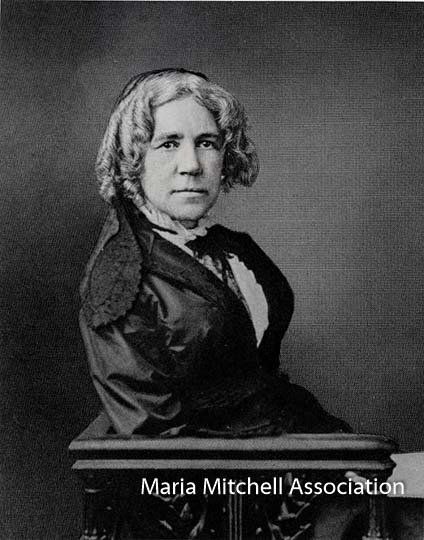
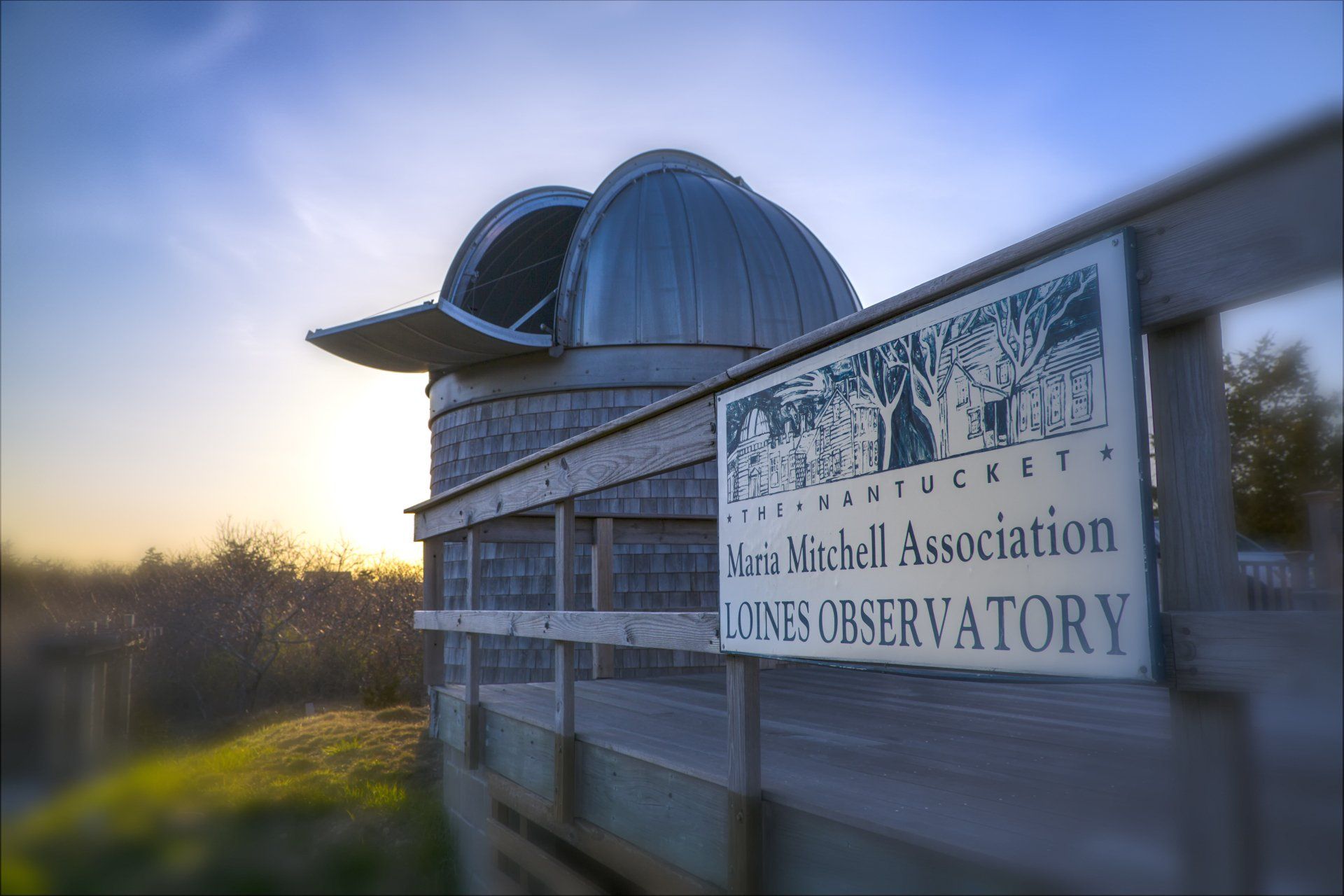
The Maria Mitchell Association was founded in 1902 to preserve the legacy of Nantucket native astronomer, naturalist, librarian, and educator, Maria Mitchell. After she discovered a comet in 1847, Mitchell’s international fame led to many achievements and awards, including an appointment as the first professor of astronomy at Vassar College. Maria Mitchell believed in “learning by doing” and today that philosophy is reflected in the MMA’s mission statement, programs, research projects, and other activities. The Maria Mitchell Association operates two observatories, a natural science museum, an aquarium, a research center, and preserves the historic birthplace of Maria Mitchell. A wide variety of science and history-related programming is offered throughout the year for people of all ages.

###

For Immediate Release

September 12, 2025

Contact: Christina Norman

cnorman@mariamitchell.org

Recent Posts

By Jascin N. Leonardo Finger • November 2, 2026
Early October is a time to make something I love – applesauce. It’s one of my favorite things. Ironically, when I was a baby, I did not like it. But because I ate very little – and my Mother was worried because I was such a skinny baby (not anymore!) – my Other Nana (great grandmother) made a lot of applesauce because my Mother said I ate it. I did not – but my Mother could not tell her Nana (grandmother) that and disappoint her. So, I think my parents ate a lot of applesauce back in the early 1970s. I sort of dread making it though – which is silly because it’s very easy and I always forget that until I am making it. You only have to core and slice the apples – you leave on the peels. That is what gives the applesauce – which uses McIntosh apples (my fave!) – its pink color. And with some lemon and then some sugar – you’ve got the best tasting applesauce. And it smells so good while it’s cooking! It is also freezable so once cool – it goes into winter hibernation to be brought out for specific sorts of meals. Putting food by – as Lydia Coleman Mitchell once did for her family of 12! I was a bit late this year, but over the weekend of October 24, apples were cooking on my stove resulting in the first applesauce accompanied meal of the fall and winter season. JNLF
By Jascin N. Leonardo Finger • October 26, 2026
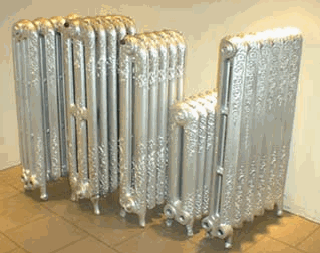
I grew up, quite literally, with hot water radiators in a Colonial Revival from the 1920s.  There was a huge boiler in the basement that chugged and blew hot belching air. It took up one whole area of the basement and I avoided it. I could hang over on the stairs and stare at its flames at the bottom. It scared me. It not only kept the basement very warm but also very dry. While the house had been built in an area that began to slope at our property, between the furnace and the clever drainage system installed by the builders of the house in the 1920s, our basement was always dry. My mother, the queen of rebates (this is the 1970s and 1980s), had her “rebate and coupon table” right in front of this furnace. I remember it always glowed – and I would not doubt that it still had some asbestos around some of its pipes. Maybe another reason I stayed away – perhaps I was warned away at an early age not just because I could burn myself! One of my fondest memories of this house was the clang and hiss of the heaters in the winter. It made me feel instantly cozy, as if I was wrapped in a nice warm quilt. If I was in bed at night and it was snowing, all the more warmth and cozy feeling. It was comforting and a sound and feel I still associate with snow and winter. The street light and the snow falling, spiraling down in that pinkish gold of the light – and the hoped for snow day to come! Forced air systems just don’t do the same thing. And, they suck all the moisture out of the house to boot! They do keep a house quite warm though – but still not the same – and I miss that humidity as do my plants. I reflect back on the hot water radiators – those old cast iron loopy radiators with the valve and perhaps a radiator box to cover them – as it if they kept me super warm. They didn’t. We kept our house at 63F – a lesson I still follow – and it was a big old Colonial-style house so it could be drafty. One reason we had a Franklin stove in our family room and quilts for nighttime television watching! So many times over the course of a winter, I think of that house where I spent about twenty years of my life, and remember the, “Bang, Clang, Hiss!” of the radiators and the coziness they projected. And while, it wasn’t always warm, it was a lot warmer that the Mitchell House would have been in February! JNLF
By Jascin N. Leonardo Finger • October 19, 2026
October 1. {1857} No place that I have yet seen in Europe has interested me like Abbotsford; no palace has held such royalty. I sat down in the chair which Sir Walter Scott had occupied, and I almost felt his presence; his power I had known nearly all my life . . . . It was rather a sad visit as all such visits must be . . . I had half a mind to sit down and cry, perhaps because the “wizard” was dead, perhaps because I was a little homesick. This date marked the anniversary of Maria Mitchell’s comet discovery on October 1, 1847. At least one of Scott’s books exists in Maria’s personal library today – and I am sure there were more – handed about among family members, as well as available at the Nantucket Atheneum. This was truly an experience and education for Maria – touring through Europe. It was also the first time she had even been away from home for any length of time. She was entering into her third month away from her family and Nantucket – it must not have been easy. Keep in mind – no easy communication – letters only, do not forget. At least a voice at the other end of a phone line can help a bit when one is homesick. (Yeah, no, I’m not a Facetime/Skype kind of girl. I do “live” in the 19 th century!) JNLF
Show More