
Nantucket Maria Mitchell Association to Open Properties June 11 for 2026 Season
NANTUCKET, MA – On Thursday, June 11, 2026, the Nantucket Maria Mitchell Association Aquarium, Hinchman House Natural Science Museum, Historic Mitchell House, Vestal Street Observatory, Loines Observatory, and the Maria Mitchell Association Research Center will open for the 2026 summer season.
The Historic Mitchell House, located at 1 Vestal Street, will be open for tours Monday–Friday, 10:00AM– 4:00PM, and Saturday 10:00AM–1:00PM. Built in 1790, this traditional Quaker house was acquired by the Mitchell family in 1818. The home became a museum in 1903 after the Maria Mitchell Association’s (MMA) founders acquired the House in 1902 to preserve the legacy of one of Nantucket’s most celebrated daughters. The House contains many stunning artifacts from the Mitchells’ daily life in the nineteenth century, including many of Maria’s personal items such as beer mugs, opera glasses, and her Dollond telescope. The House is well known for the remarkably preserved example of faux-wood grain painting in the kitchen from the 1850s.
The Vestal Street Observatory, next to the Historic Mitchell House, will be open for tours Monday – Saturday, 11:00AM–1:00PM. Built in 1908, the Observatory’s original dome now houses an 11-inch research telescope. Public accessible spaces include the Astronomical Study which displays historic astronomical collections, including Maria Mitchell’s 5-inch Alvan Clark telescope from 1858, and the Pillar Room where changing exhibits are featured. The current exhibit, “The Mitchells: A Family Constellation” showcases members of the Mitchell Family.
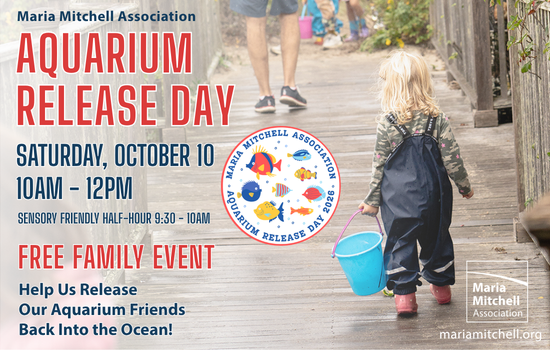
The MMA Aquarium, located at 32 Washington Street, will be open Monday–Friday, 10:00AM–4:00PM, and Saturday 10:00AM–1:00PM. Located on the waterfront of Nantucket Harbor, the MMA Aquarium displays local Nantucket species and offers an immersive place to learn about the amazing marine life of the island. Displays are consistently evolving and range from crabs and shellfish to fish and eels. All the hungry creatures at the Aquarium are fed daily during our “Feeding Frenzy” program, where attendees learn about and observe the unique feeding behaviors of our animal ambassadors. All ambassadors of the MMA Aquarium are locally collected and are re-released back into the wild at the end of the season during the annual “Release Day" event, scheduled for Saturday, October 10 this year.
The Hinchman House Natural Science Museum, located at 7 Milk Street, will be open Monday–Friday, 10:00AM–4:00PM, and Saturday 10:00AM–1:00PM. An exciting space for inquisitive minds of all ages, the Natural Science Museum is a cross between a classic natural history museum and a science center. It is a beloved place to learn about the plants, animals, and birds of Nantucket. All the hungry creatures at the Museum are fed daily during our “Ravenous Reptiles” program, where one can learn about the unique adaptations of turtles, frogs, snakes, and more. The “Keeper for a Day” program, new this year, allows children and young teen participants to prepare diets, feed members of our living collection, clean and refresh enclosures, and learn how to keep the MMA animal ambassadors healthy and thriving.
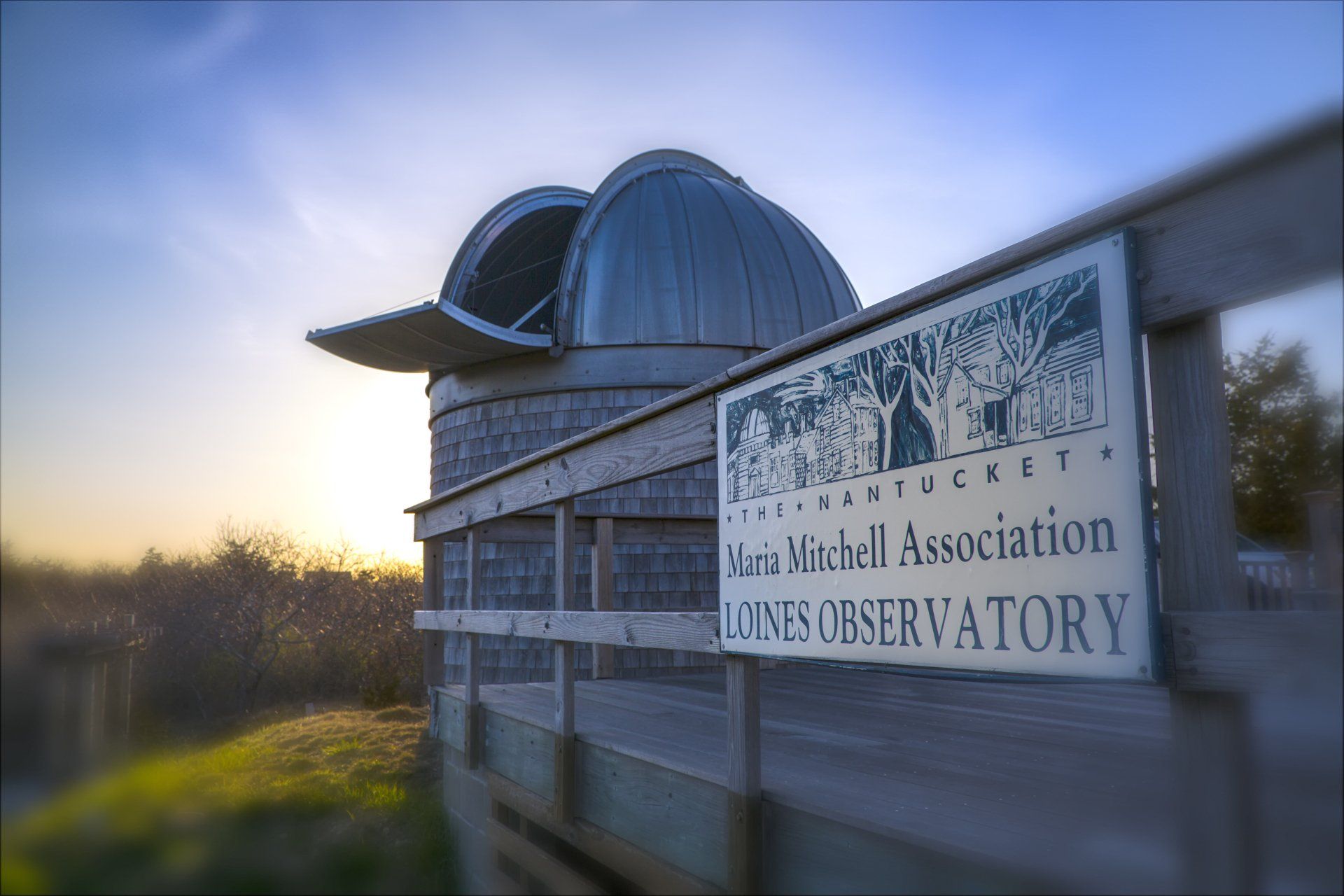
The Loines Observatory, located at 59 Milk Street Extension, will be open to the public for Stargazing Open Nights from 9:30-10:30PM Mondays, Wednesdays, and Fridays through June 27. Beginning June 29 through August, Open Nights will be offered Monday, Tuesday, Wednesday, and Friday. Please view our calendar at www.mariamitchell.org/calendar for up-to-date information as Open Night times will change throughout the summer. All Open Nights are pre-registered programs and are weather dependent. When a special natural occurrence is forecast in the night sky – such as meteor showers, a new comet, or a lunar eclipse – the Loines Observatory is the place to be. During Stargazing Open Nights, visitors can view a variety of astronomical objects in the night sky through our 8-inch Alvan Clark refractor and our modern 24-inch research telescope. MMA staff will lead constellation tours, and patrons can learn about the innovative research conducted by our astronomers and interns – a fantastic opportunity for all your astronomy-related questions to be asked and answered.
The Maria Mitchell Association Research Center, located at 2 Vestal Street, will host “Biological Collections Open Hours” by appointment only. At Open Hours, visitors can learn about the biological collections and their importance to science, in addition to examining different specimens during each session. From specimens of birds and mammals to insects and plants, you never know what will be on display! Appointments can be scheduled by emailing programs@mariamitchell.org.
MMA Property Passes can be purchased for the Aquarium, Hinchman House Natural Science Museum, the Historic Mitchell House, and the Vestal Street Observatory. A property pass includes admission to the four museum sites. The cost of a property pass is $24 for children and $42 for adults. Open Night
admission at Loines Observatory is $17 for children and $27 for adults. Admission to MMA properties is free to MMA Members and Stargazing Open Nights and all programs are discounted 20% for members of the MMA as well.
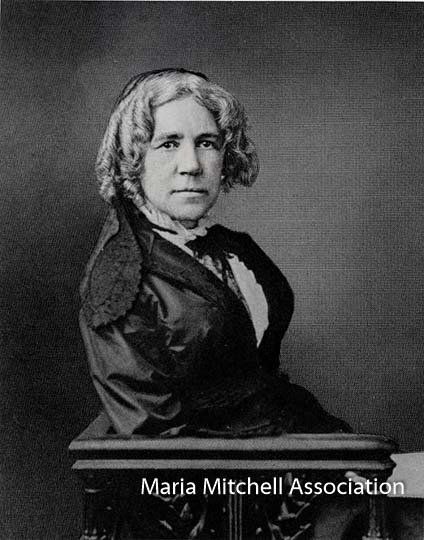
The Maria Mitchell Association was founded in 1902 to preserve the legacy of Nantucket native astronomer, naturalist, librarian, and educator, Maria Mitchell. After she discovered a comet in 1847, Mitchell’s international fame led to many achievements and awards, including an appointment as the first professor of astronomy at Vassar College. Maria Mitchell believed in “learning by doing” and today that philosophy is reflected in the MMA’s mission statement, programs, research projects, and other activities. The Maria Mitchell Association operates two observatories, a natural science museum, an aquarium, a research center, and preserves the historic birthplace of Maria Mitchell. A wide variety of science and history-related programming is offered throughout the year for people of all ages.
####
For Immediate Release
June 5, 2026
Contact: Cydney Mosscrop and Demi Grauer
marketinginterns@mariamitchell.org
Recent Posts