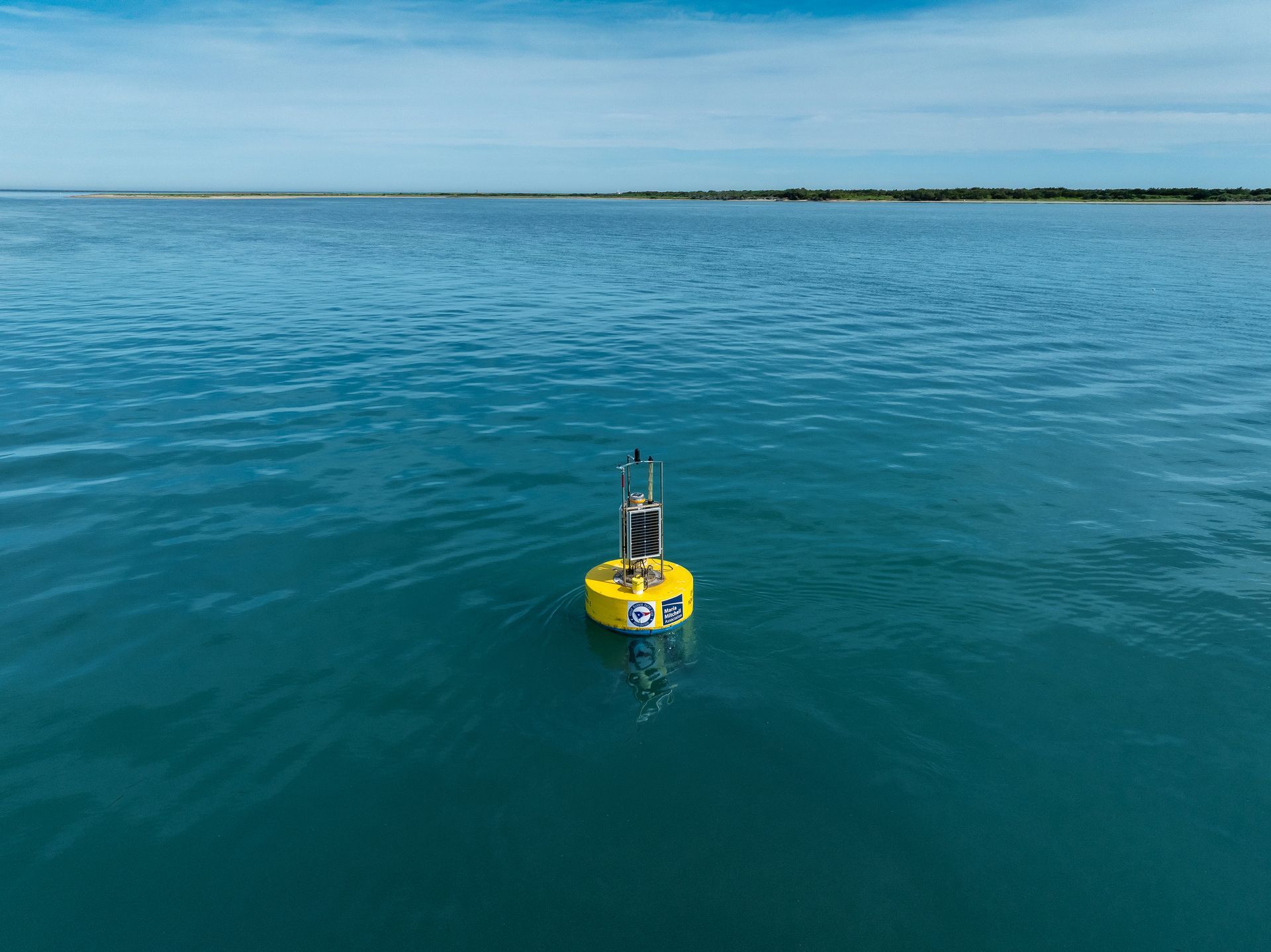


MMA's Nantucket Harbor
Buoy Monitoring Project
What is Happening Beneath the Surface of
Nantucket Harbor?
The harbor changes through the day and night, with the tides, weather, and seasons. Eelgrass, bay scallops, and other harbor life experience every change.
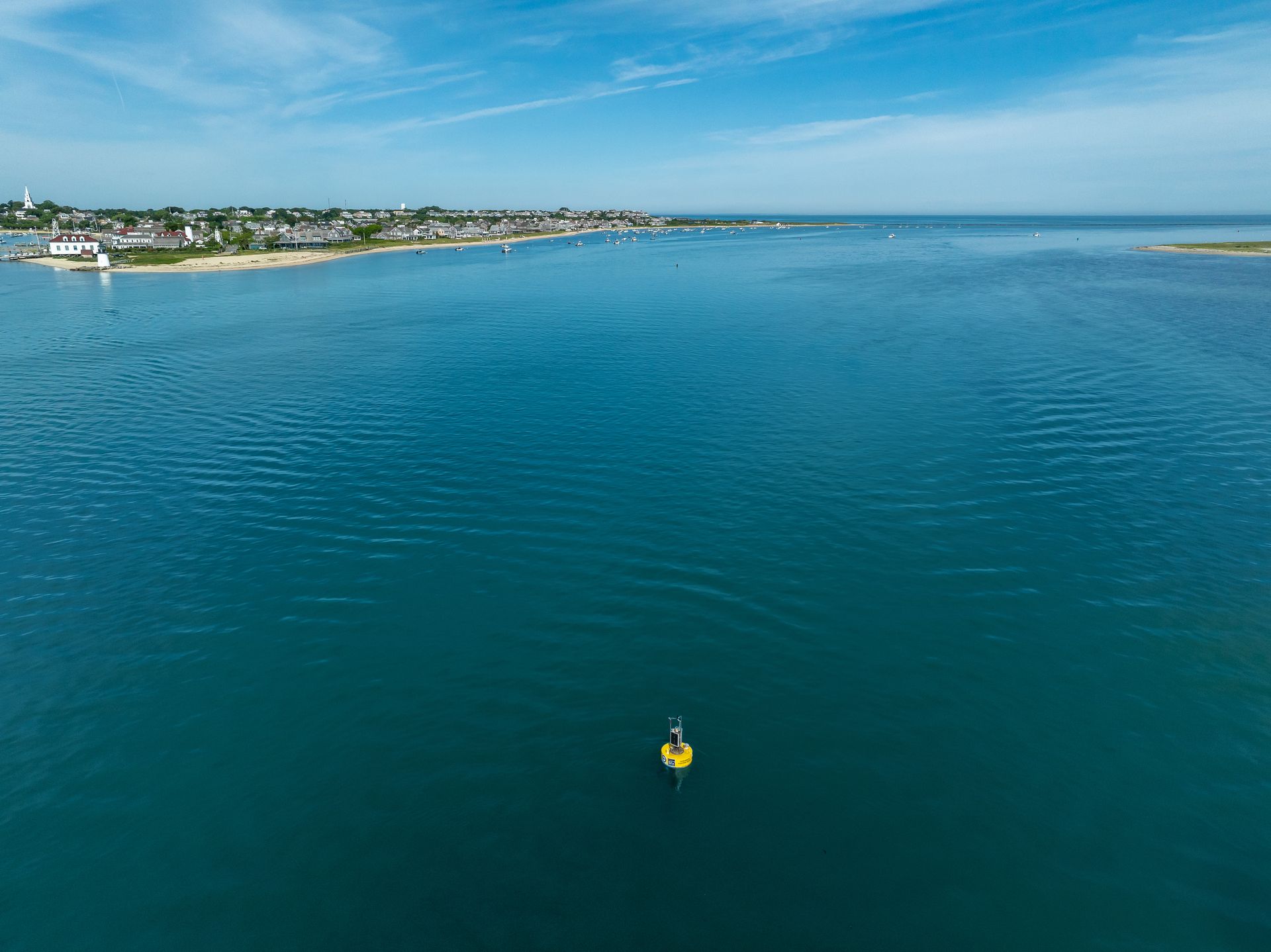
Our monitoring buoy measures temperature, dissolved oxygen, salinity, pH, and water clarity every 15 minutes. It captures overnight oxygen lows, summer heat, and sudden storm effects that occasional sampling can miss.
Click an icon below to explore the latest measurements.
Three Examples of What the Buoy Reveals
Example 1:
Why Does Oxygen Rise and Fall Each Day?
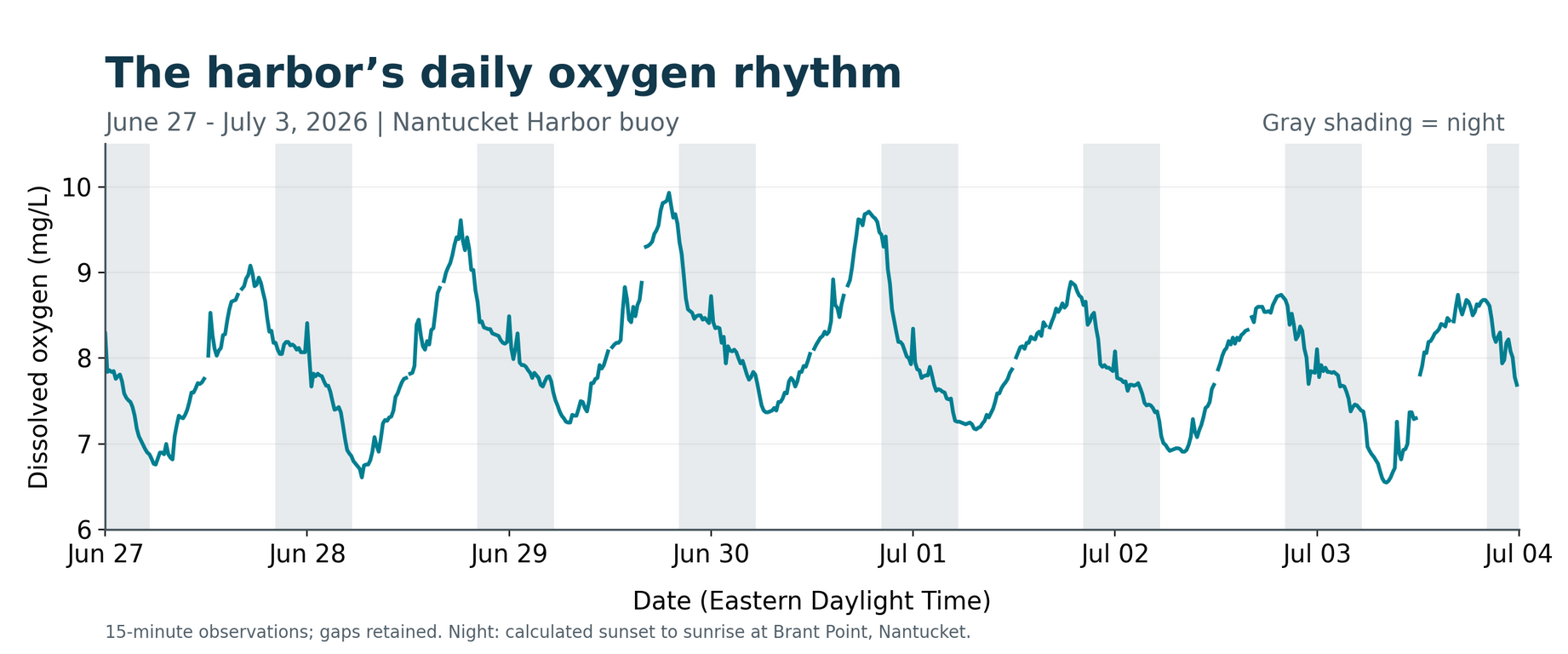
In daylight, algae and eelgrass produce oxygen through photosynthesis, while organisms continue to consume it through respiration. At night, photosynthesis stops, but respiration continues.
The graph to the right follows oxygen through a summer week, with nighttime shaded gray. Can you see oxygen generally falling overnight and rising during daylight?
Notice that the cycle repeats, but each day is a little different. Light, tides, temperature, and biological activity all help shape the oxygen measured by the buoy.
Click here to enlarge image.
Example 2:
What Happens Underwater During a Storm?
What happens to that daily rhythm when a storm arrives?
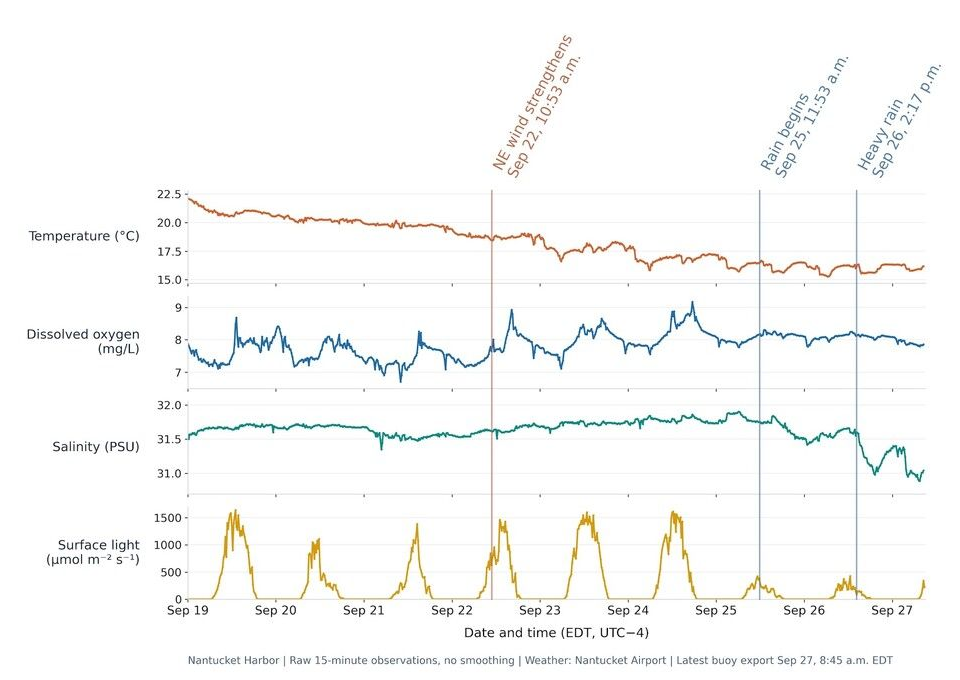
During the September 2026 nor’easter, the harbor cooled rapidly, became less salty, and its familiar daily oxygen rhythm nearly disappeared. The buoy recorded these changes as the storm unfolded.
Look for the falling temperature and salinity in the storm graph, and compare the oxygen pattern with the summer rhythm in Example 1.
What might those changes mean for life in the harbor?
Read the
Underwater Storm Story from the MMA's Senior Marine Science Advisor, Dr. Betsy Sherman in
Nantucket Current.
Click here to enlarge image.
Example 3:
When Warmth and Low Oxygen Coincide
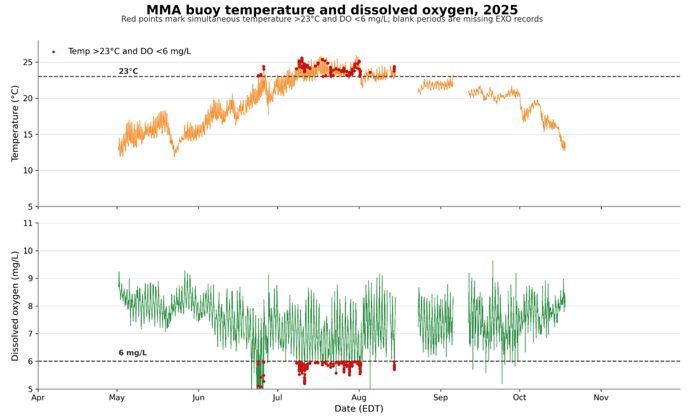
The buoy also lets us examine several conditions together. Warm water increases animals’ oxygen needs. What happens when oxygen is low at the same time?
The two panels show temperature and oxygen over the same period. Red dots mark times when water warmer than 23°C coincided with oxygen below 6 mg/L.
Notice where those dots cluster at the height of summer.
We are investigating how often these conditions overlap and how long they last, to better understand the challenges facing eelgrass, scallops, and other harbor life.
Click here to enlarge image.