
Keep Calm and Bird On: September 2025

September 1, 2025
“If you don’t look, you don’t see. You have to go and look.”
-Edith Andrews
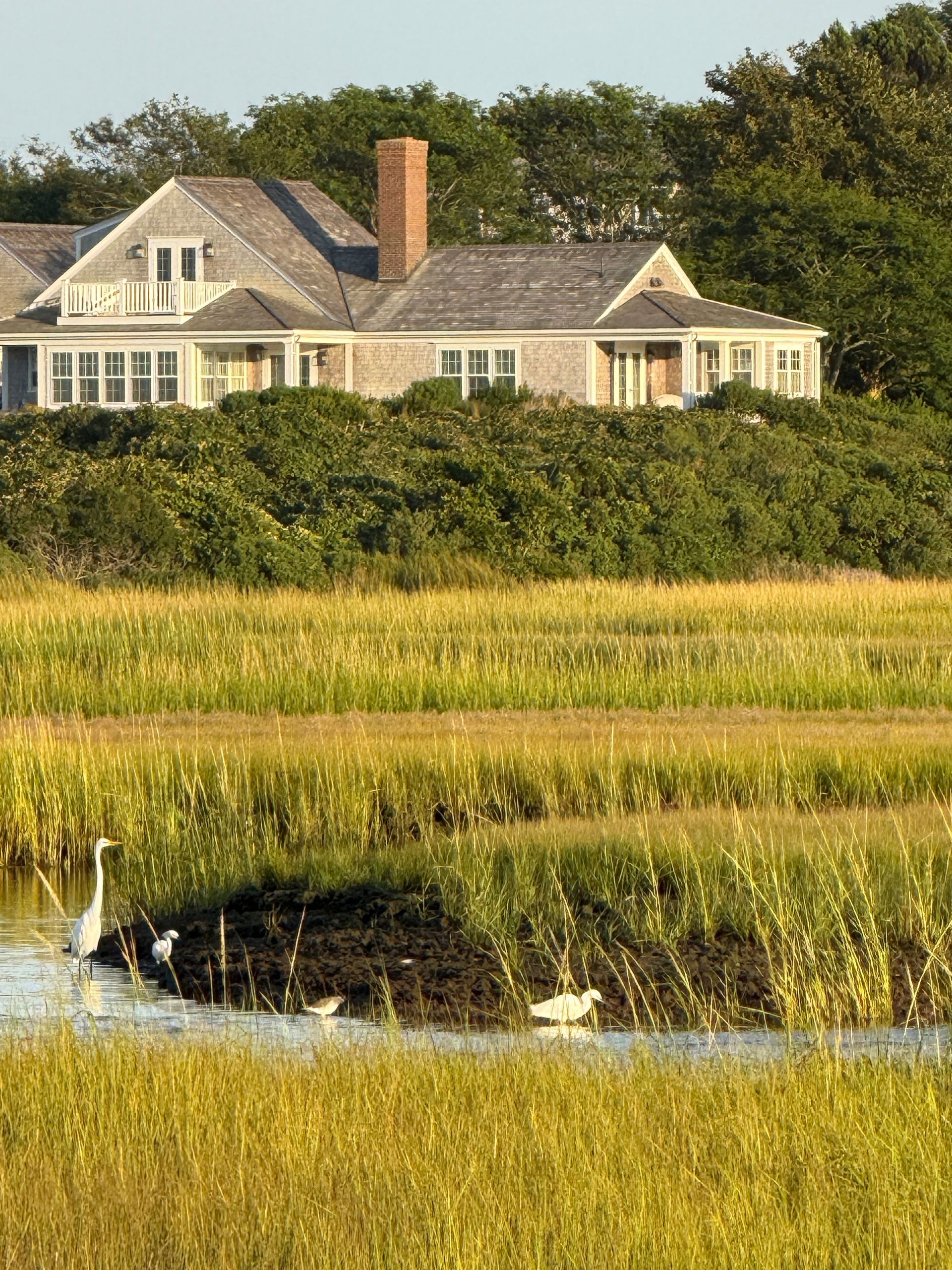
September on Nantucket is a month of arrivals and departures, as our winter visitors begin to return, while our summer residents think about departing, and some transients are just passing through.


The relentless drought has probably impacted some of our breeding landbirds. Although not all data are in and it is hard to quantify its effect, birds eat bugs. And what’s a bug to do when the leaf of which it would like a tiny bite is withered and dry? Or sprayed to remove it? We still have to hope for rain.


So, arriving early and leaving early, some of our breeders like Yellow Warblers and Common Yellowthroats have already taken off. But still, those from further north may continue to pass through. Meanwhile, shorebirds continue to find food on sandbars and mudflats, as marine organisms—nereid and polychaete worms, along with crustaceans, and the beetles and flies that gather in beach wrack, keep them going. Least Sandpipers have been plentiful; Greater and Lesser Yellowlegs, Sanderlings; there is still a lot to look at.


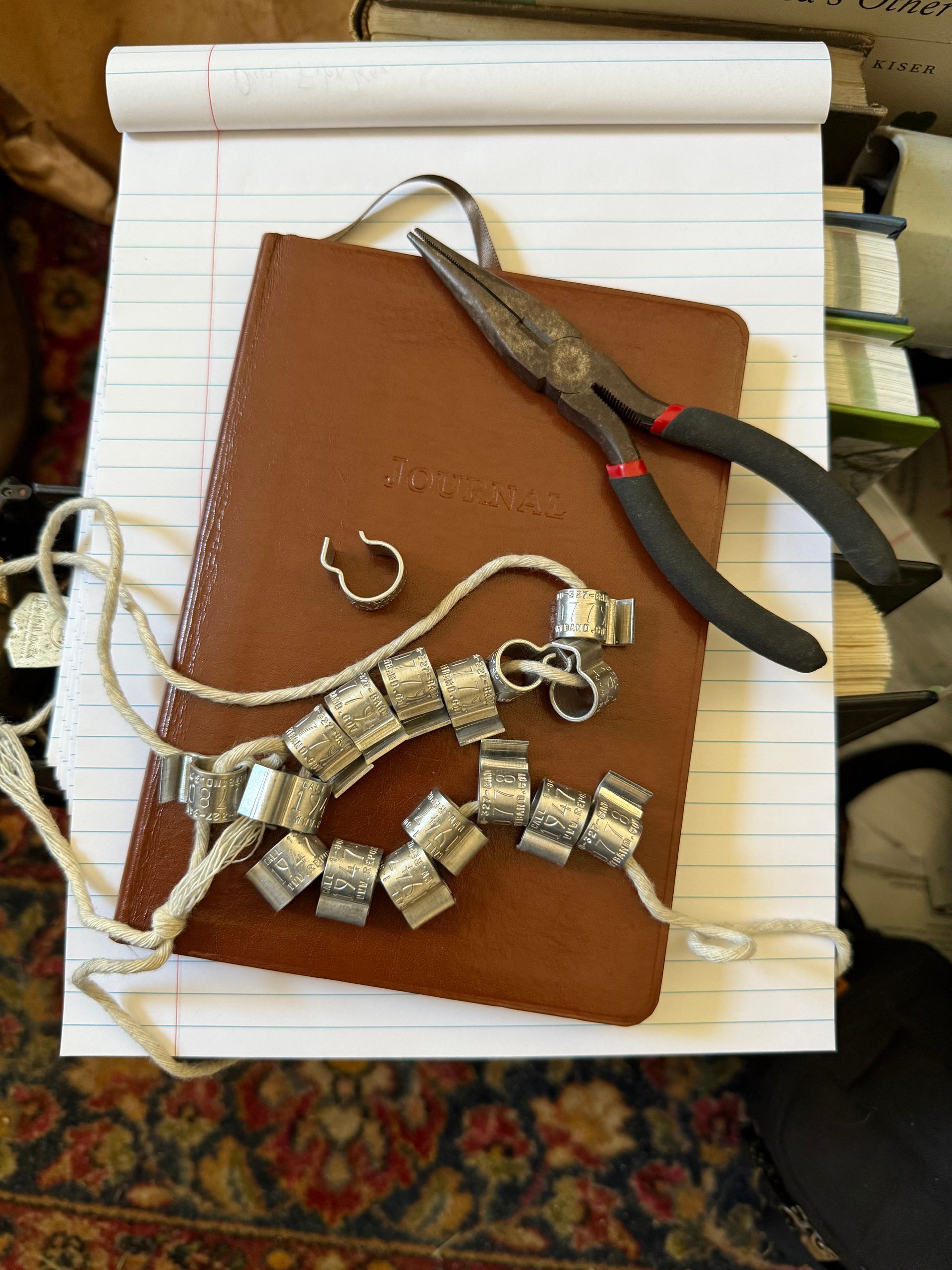
At the end of the month the MMA will do fall checks of Barn Owl boxes, and, we hope, band some young. Skyler Kardell and I are now officially permitted to attach bands under the direction of master bander, Richard R. Veit. But will there be a banding office? The Supreme Court recently okayed the firing of Federal workers; the Banding Office was among Federal departments slated to be cut or eliminated. And while there are now sexier—and vastly more expensive—ways to track migration, a cheap, simple leg band is still the only true measure of individual longevity. That is a crucial data point for wildlife managers. It would be a shame to interrupt a data stream now running for over 100 years.

Recent Posts
By Jascin N. Leonardo Finger February 2, 2026
Maria Mitchell once said, “When I see a woman sew, I think, what a capacity she has for using a micrometer!” So, maybe what I am about to write would be a bit disappointing to her. However, I believe she was likely pleased by what sewing circles on Nantucket could accomplish for her fellow Nantucketers. As, the great-granddaughter of a milliner and extremely talented seamstress (she hand-smocked about twenty dresses for me when I was an infant and did all of that with rheumatoid arthritis!) and the granddaughter of two talented women of sewing and needlework, my apologies to Maria . . . . The sewing circles that arose on Nantucket in the nineteenth century were formed in part because of the Great Fire of 1846, which, along with the demise of whaling and the lure of the Gold Rush, helped to bring about an economic depression that would last decades and cause Nantucket’s population to decrease from its height of around 10,000 in the 1830s to fewer than 2,000 people by the late nineteenth century. The sewing circles helped struggling families by providing them with clothes, food, and even paying their rent. Many of the organizations rose from within the churches of the island and all were founded, managed, and run by women. The Ladies Union Circle of the First Congregational Church, established in 1846, was followed by similar groups, such as the Unitarian Sewing Society and the Ladies Wesleyan Society of the Methodist Episcopal Church, both established in 1850. The women gathered together to create, sew, and sell their creations to raise money for those in need and for their own churches. The groups not only generated the money to help others; they also provided a social venue for those who remained on Nantucket and witnessed the quickly deteriorating social fabric of their island home. The societies served as a positive network and support group for their members. The women’s activities, accomplished many good deeds, and one group, the Unitarians, was even able to purchase a parish house for the church with funds they raised – no small task. Additionally, the sewing circles gave rise to other groups that many islanders heavily relied upon in the nineteenth century: the Relief Association, the Children’s Aid Society, and the Ladies Howard Society, which could date its beginnings to the era of the American Revolution. The Relief Association is still in existence today; assisting island families in need. The act of helping your fellow islander is something that has been a constant on Nantucket, back to when the first English came to the island to settle in 1659. Some of it is born of the isolation of the island, but it is largely that the island is akin to one big family and that is what you do, you take care of your family. JNLF
February 1, 2026
“If you don’t look, you don’t see. You have to go and look.” -Edith Andrews
By Jascin N. Leonardo Finger January 26, 2026
January 18, 1858. Before I left Marseilles I took a carriage and with Miss Shepard and the Hawthorne children visited the best parts of the city and then the seaside . . .On Sunday morning {January 17} at 8 o’clock we left Marseilles for Genoa and Leghorn, uncertain what our further destination would be. Mr. Hawthorne’s indecision is so great that the termination of our journey together is very uncertain . . . I have noted before that Maria Mitchell would travel through parts of Europe with Nathaniel Hawthorne, his wife, Sophia Peabody Hawthorne, and their children. She expressed her frustrations with Hawthorne – as you can see above – in multiple ways. Further on she notes, that if he had been, “as agreeable in conversation as he is in writing“ which gives you a deeper insight. Here was America’s first woman astronomer getting an intimate experience with the Hawthorne family. She did become quite close to Sophia and the children and I have noted before, Maria would act as their impromptu governess or teacher. Hawthorne was finally swayed in making a decision when his daughter, Una, noted that both Maria and Miss Shepard desired visiting Rome as did she. JNLF
Show More