

Keep Calm and Bird On: December 2025
“If you don’t look, you don’t see. You have to go and look.”
-Edith Andrews
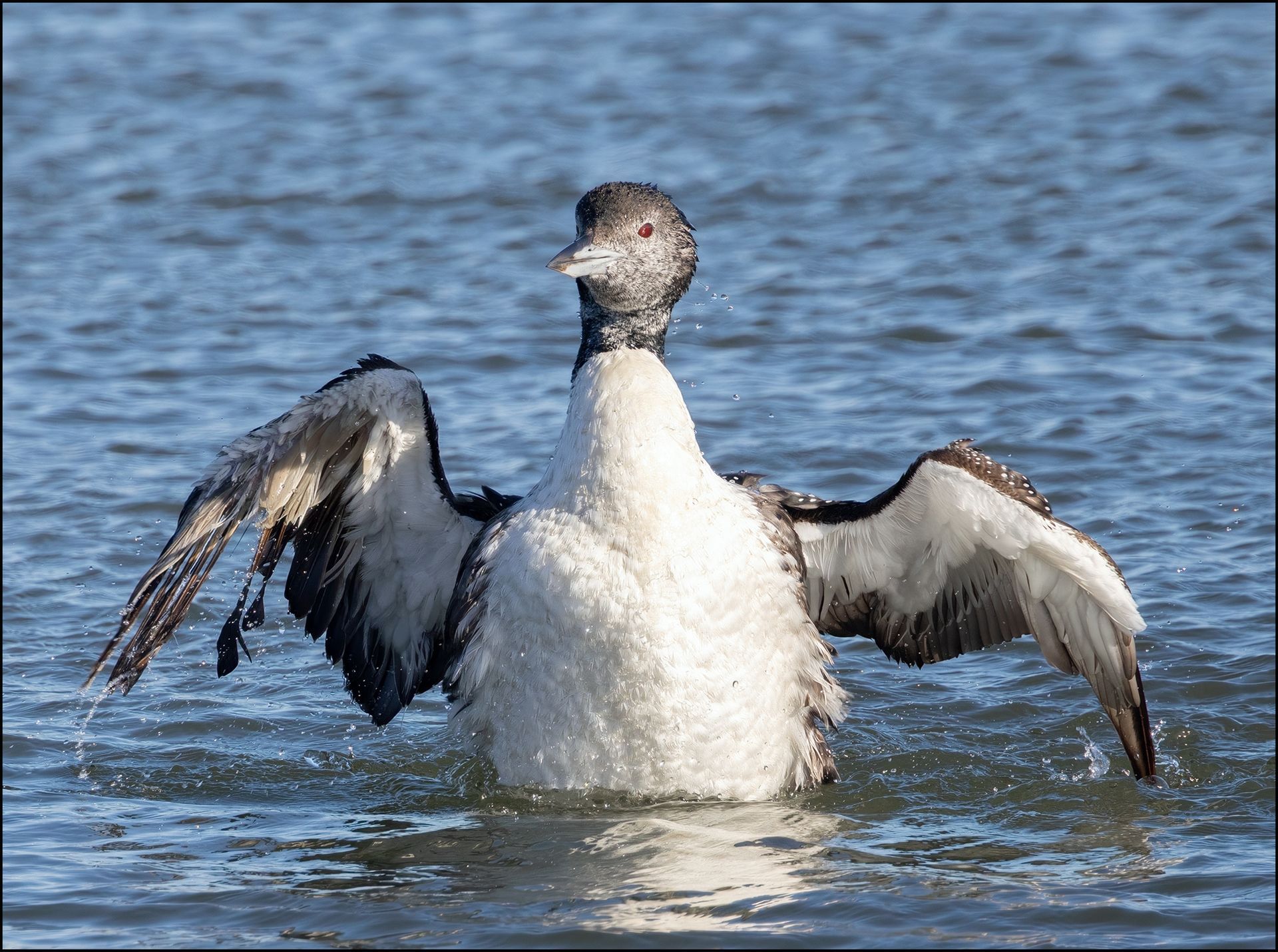
Common Loon by Tom Griswold
Winter birding is still great—in some ways better than summer birding. The picture changes, as lands and lakes to our north disappear in snow or freeze up. Many people used to seeing Common Loons, for example, on inland lakes find them an odd sight in the ocean. Loons in winter have molted into drabber plumage and sought out our still liquid salt water for access to food. But don’t necessarily expect to hear them call.
Probably nothing has changed birding culture more than the “Merlin” app from Cornell. Along with the much older “eBird” list-keeping app, both have given birders much wider access to a bigger picture, such as birds’ normal range in every season. Apps help birders identify what they see and or hear. And for science, it makes it easy to keep track of the effort expended, a factor in determining relative abundance and rarity.
Merlin is not perfect; new birders should also use visual references as they “learn the birds” in their area and beyond. But eBird is also a great way to keep in touch with what other birders are seeing in the area.
But no matter how refined the technology, some things remain the same: birds’ elusiveness; their speed; their maddening ability to disappear. No matter how fast reports come in, birds are still faster. Birding culture is full of quaint terms like “Birthday Bird” or “Christmas Bird.” We may go out looking for something in particular, either for a list or just for fun. Mostly we accept whatever shows up. But there is also the term “Nemesis Bird.” This is often one that everyone else seems to have found lately, except you. Luck and timing also have to come together in a moment of vision.
This is what makes an experience in nature, like seeing or hearing a bird well, a gift. And although it may take patience to “unwrap,” it’s a gift available to all.
Recent Posts