

Keep Calm and Bird On: March 2026
“If you don’t look, you don’t see. You have to go and look.”
-Edith Andrews
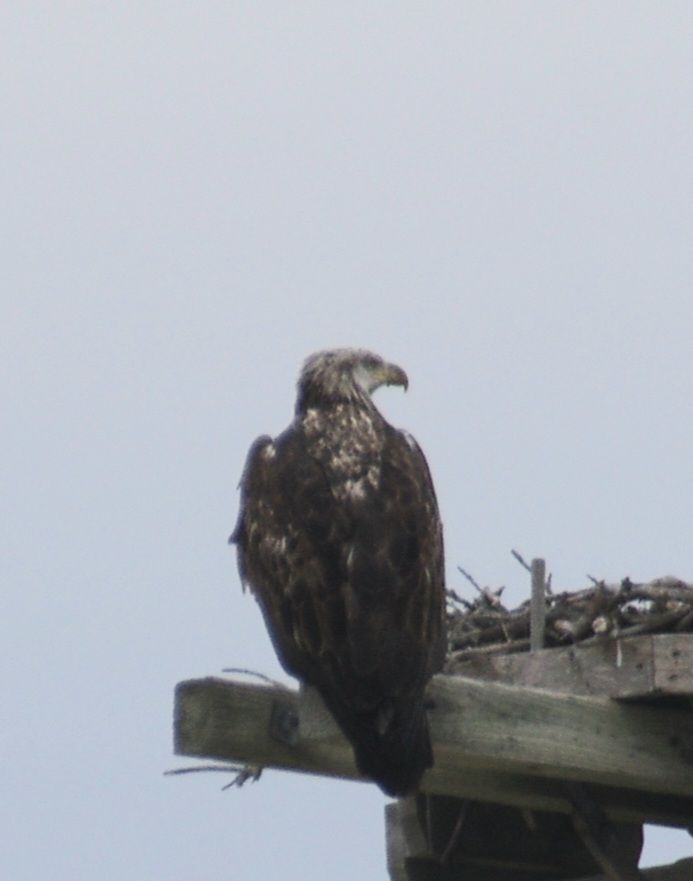
House-shopping Bald Eagle checked out an Osprey- built abode. Photo by Mitch Blake.
Balmy or bitter? Either way, March is a month of changes. We expect the first American Oystercatchers. But this year it seems it might not be a question of “first” as much as “last and still going.” Two have showed signs of living over one of our most wintery winters in almost a decade. We don’t know how long they can survive frozen harbors and marshes, but as of this writing they were still hanging in there.
March is also when we expect the first Ospreys, returning from the Caribbean or South America, to reclaim their nest platforms of the previous year. This year, they may face some competition, as more than one Bald Eagle has checked out the island—and its nest potential—recently. An adult was seen on the ice at Sesachacha Pond on February 12. Then a Juvie (or could there have been 2?) checked out first a nest on a pole in Pocomo and then a utility pole near Hummock Pond a few hours later.
And towards the end of the month, we expect the first Piping Plovers to return to its beach hatching- or nesting- place in hope of a mate and chance to raise a family. Hardy to sun and cold, they are vulnerable to disturbance from humans and their dogs and cats, as well as crows, ravens, falcons, and hawks. But given protection, the Piping Plover-comeback in New England is still a marvel. It is a demonstration that given sufficient will and determination we humans can maintain or even grow even the most defenseless, the most endangered birds.
But there is still plenty of time to fill in the winter list with an Iceland, Glaucous, or Black-headed Gull. Dunlin, Purple Sandpiper, even a lingering Western Willet—there are plenty of reasons to bundle up and brave the wind, fog, snow, or whatever the weather throws at us. To paraphrase an old saying “there’s no bad weather—there’s only inadequate clothing.”
Recent Posts