

Keep Calm and Bird On: July 2026
“If you don’t look, you don’t see. You have to go and look.”
-Edith Andrews
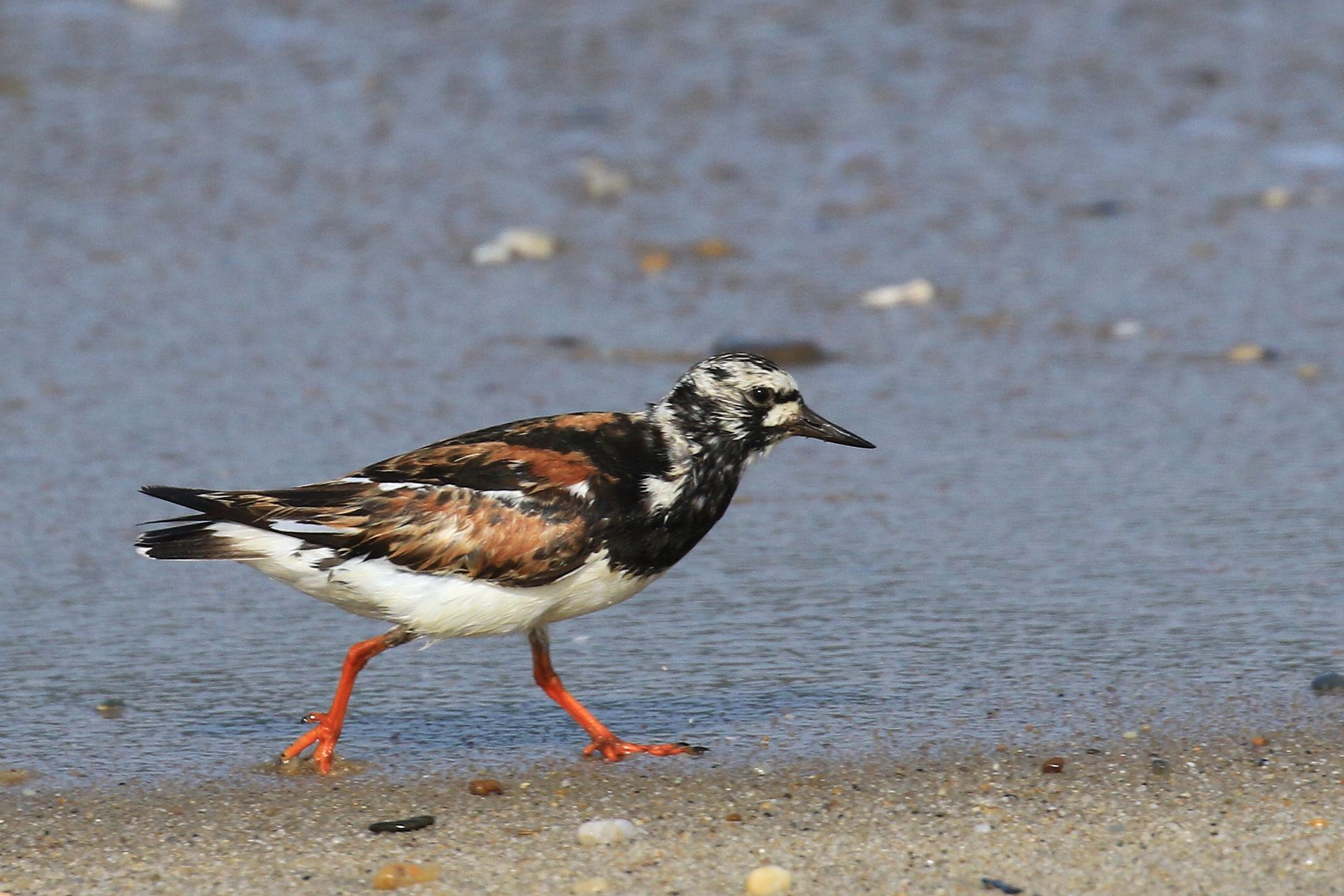
Photo of a Ruddy Turnstone by David Policansky
Ruddy Turnstones, sometimes described as “looking like a slice of Marbled Rye,” return early in July. They are a swirl of black necklace, with black and white facial pattern, black and warm rusty wings above bright yellow legs. They actually do turn over stones and shells to look for the goodies beneath that other birds might have missed.
Although here it seems as if summer is just beginning to get under way, in the Arctic where many shorebirds nest, the angle of the sun has already begun to decline. The advantage to breeding so far north is that insects, a major food, also make haste to reproduce, and meltwater between tussocks of grass and sedge offers ideal insect breeding habitat. But as days shorten, birds take the hint.
Black-bellied Plovers are also early to make the return south. They are a favorite bird of novice birders: they are large; their name is actually descriptive; and their plumage offers vivid contrast. They can also be recognized by their typical plover ‘run-stop-look, run-stop-look-jab-the-sand’ feeding style.
Sanderlings are perhaps everyone’s favorite shorebird; rushing down after the waves, grabbing food and rushing back up, out of the incoming wash of the swash. By mid-July they return. Here they eat small mollusks, crustaceans, and polychaete worms, or horseshoe crab eggs. In probing the sand, they sometimes have to eject that as well as bits of shell. They do this by casting a pellet. If no animal food is available, they also eat plant material.
They are medium-sized. Some may retain reddish breeding plumage, others will already have assumed the demure grey and white of winter. They have lost 50% of their population in the last 50 years and have been declining faster recently. So, we should enjoy them now while we can.
Recent Posts