

Keep Calm and Bird On: August 2026
“If you don’t look, you don’t see. You have to go and look.”
-Edith Andrews
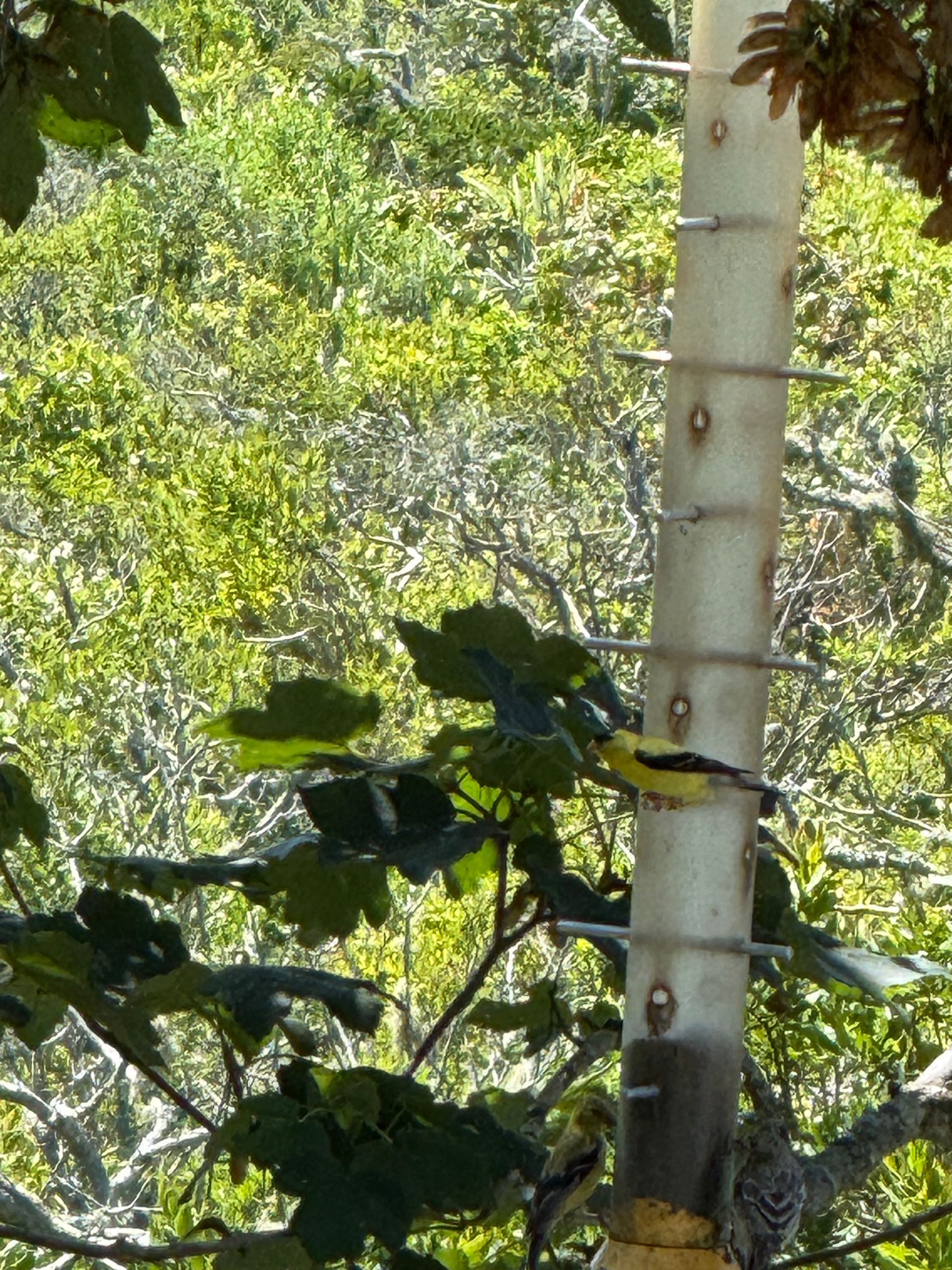
Photo of a Goldfinch by Ginger Andrews
By August, most of our resident breeding birds will have finished nesting. One exception is the American Goldfinch, which often delays breeding until thistle down and thistle seeds are available for nest material and high-energy food. Young-bird-begging often involves a lot of fluttering with heads extended and gaping bills open. It’s fun to watch.
Many birds maintain parental care, even after the young have fledged. American Oystercatchers are noted for this; their young are lighter brown and their big shucking-knife red bills dark-tipped. They are brooded by one parent while the other refuels. They depend on parents for food for about two months after hatching. The family stays together until migration, after which they “do their own thing” individually.
Red-tailed Hawks, on the other hand, adopt a notably casual, “get your own” attitude. The sound of a young Redtail begging is plaintive and seemingly endless. They are at their heaviest after parental feeding in the nest, so they have a bit of a reservoir to sustain them for a time. Sometimes if they can’t “get a job” on their own, they starve. But given the amount of roadkill available, that seems unnecessary.
Ospreys split the difference; they set an example of “how to do it.” But the young still have to practice, practice, practice, to develop the skill that brings up a fish. They can only reach fish in about the top two feet of water. So, they have to find just the right shallows and just the right fish. But they also have to learn to avoid many hazards: cars, towers, utility wires. While there isn’t much we can do about those things, one big item we can and should help with is loose fishing line, which can impair or even strangle an Osprey. Help avoid entanglements: don’t leave yours at the beach, and pick up any you find lying around.
Recent Posts