


Women’s History Month – Alice Paul
Jascin N. Leonardo Finger • March 24, 2014
This link for a blog came to me last week from the Mitchell House’s 2013 summer intern, Sarah Scott, who is a 2012 graduate of Vassar College.
Alice Paul was a Quaker suffragist who was born in 1885. She most likely knew of Maria Mitchell but she was born just a few years before Maria passed away. Quite a remarkable woman, Paul often faced controversy in how she went about making her point. Take a look at these links to learn more about her.
Blog Post forwarded from Sarah on Alice Paul: http://officialnj350.com/joining-alice-paul-on-the-picket-line-a-century-later/
Alice Paul Institute: http://www.alicepaul.org/alicepaul.htm
JNLF
Recent Posts
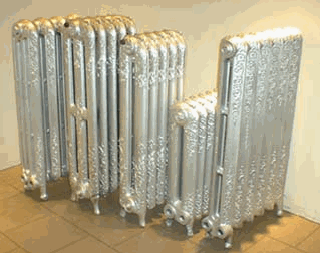
I grew up, quite literally, with hot water radiators in a Colonial Revival from the 1920s. There was a huge boiler in the basement that chugged and blew hot belching air. It took up one whole area of the basement and I avoided it. I could hang over on the stairs and stare at its flames at the bottom. It scared me. It not only kept the basement very warm but also very dry. While the house had been built in an area that began to slope at our property, between the furnace and the clever drainage system installed by the builders of the house in the 1920s, our basement was always dry. My mother, the queen of rebates (this is the 1970s and 1980s), had her “rebate and coupon table” right in front of this furnace. I remember it always glowed – and I would not doubt that it still had some asbestos around some of its pipes. Maybe another reason I stayed away – perhaps I was warned away at an early age not just because I could burn myself! One of my fondest memories of this house was the clang and hiss of the heaters in the winter. It made me feel instantly cozy, as if I was wrapped in a nice warm quilt. If I was in bed at night and it was snowing, all the more warmth and cozy feeling. It was comforting and a sound and feel I still associate with snow and winter. The street light and the snow falling, spiraling down in that pinkish gold of the light – and the hoped for snow day to come! Forced air systems just don’t do the same thing. And, they suck all the moisture out of the house to boot! They do keep a house quite warm though – but still not the same – and I miss that humidity as do my plants. I reflect back on the hot water radiators – those old cast iron loopy radiators with the valve and perhaps a radiator box to cover them – as it if they kept me super warm. They didn’t. We kept our house at 63F – a lesson I still follow – and it was a big old Colonial-style house so it could be drafty. One reason we had a Franklin stove in our family room and quilts for nighttime television watching! So many times over the course of a winter, I think of that house where I spent about twenty years of my life, and remember the, “Bang, Clang, Hiss!” of the radiators and the coziness they projected. And while, it wasn’t always warm, it was a lot warmer that the Mitchell House would have been in February! JNLF
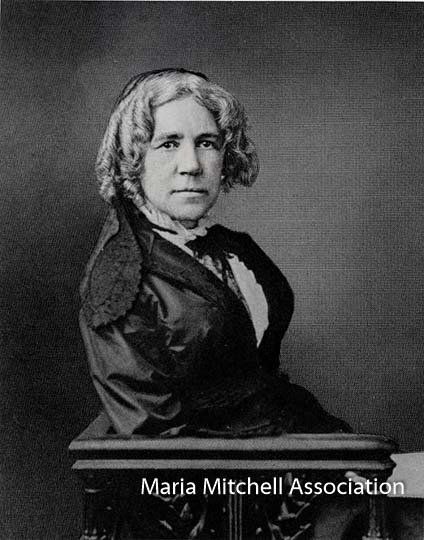
October 1. {1857} No place that I have yet seen in Europe has interested me like Abbotsford; no palace has held such royalty. I sat down in the chair which Sir Walter Scott had occupied, and I almost felt his presence; his power I had known nearly all my life . . . . It was rather a sad visit as all such visits must be . . . I had half a mind to sit down and cry, perhaps because the “wizard” was dead, perhaps because I was a little homesick. This date marked the anniversary of Maria Mitchell’s comet discovery on October 1, 1847. At least one of Scott’s books exists in Maria’s personal library today – and I am sure there were more – handed about among family members, as well as available at the Nantucket Atheneum. This was truly an experience and education for Maria – touring through Europe. It was also the first time she had even been away from home for any length of time. She was entering into her third month away from her family and Nantucket – it must not have been easy. Keep in mind – no easy communication – letters only, do not forget. At least a voice at the other end of a phone line can help a bit when one is homesick. (Yeah, no, I’m not a Facetime/Skype kind of girl. I do “live” in the 19 th century!) JNLF

“If you don’t look, you don’t see. You have to go and look.” -Edith Andrews