

Prickly Perfect!

Jascin N. Leonardo Finger • August 2, 2021

Success!


At the MMA, we have been focusing on better establishing our gardens as pollinator pathways and ensuring that they are full of native species. I have blogged about this several times recently.


One plant, that some may find unusual, is the Eastern Prickly Pear Cactus. Believe it or not, it is found on Nantucket but in limited areas– specifically Coatue and Great Point. It is in fact, native to Nantucket, as well as Massachusetts and New England – and the only cactus that is so it’s incredibly special.


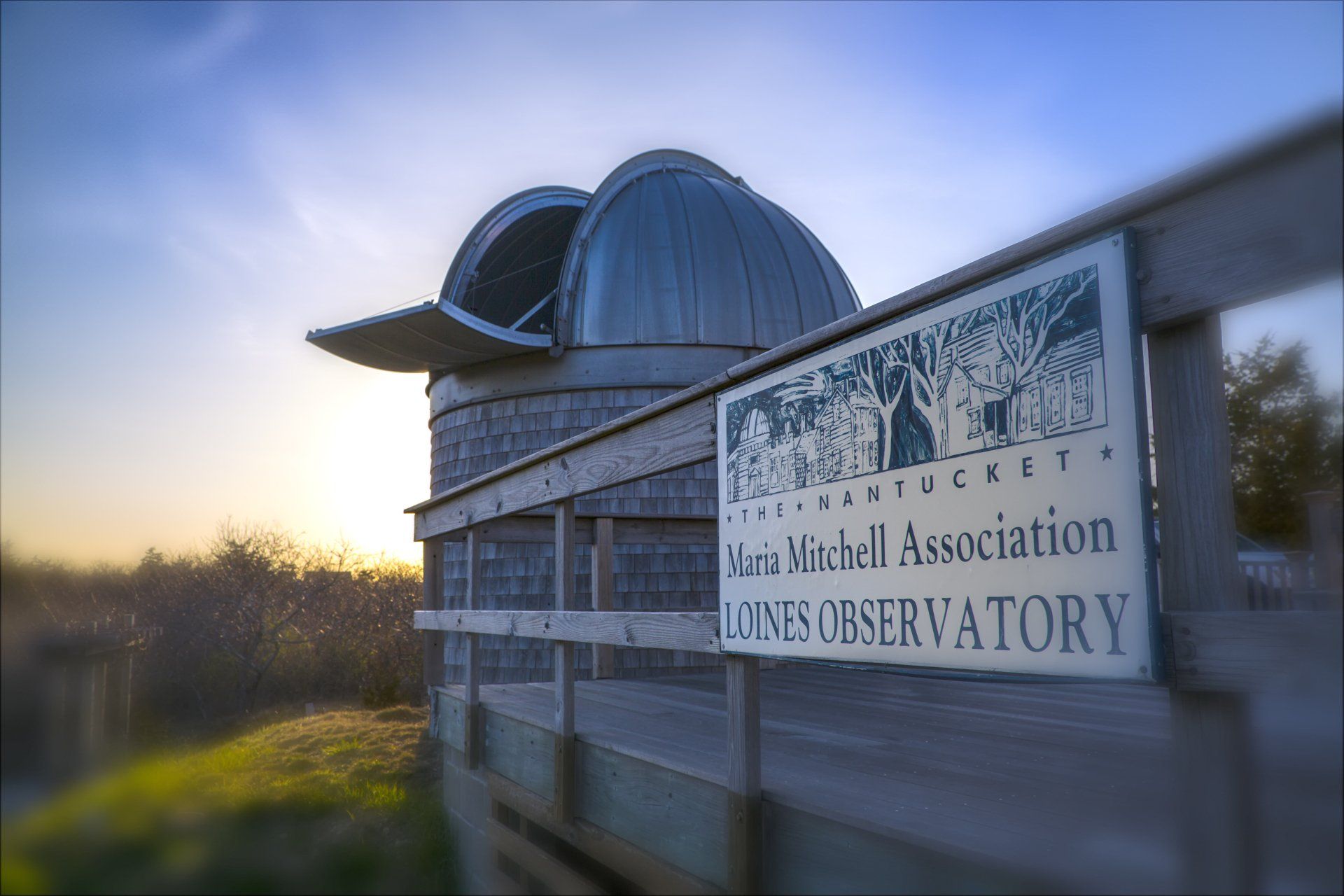
For many years, the MMA had a much different garden in front of the Maria Mitchell Vestal Street Observatory. It was a large native plant and herb garden that took the entire space that is now grass and a small garden. In that old garden, the cactus grew in abundance but over time it almost faded away. When the area was re-landscaped after the 1987 Seminar Room addition to the MMO, a smaller garden was created and the remaining cactus was carefully transplanted into the new one. Unfortunately, it didn’t make the transfer very well and was lost. 


I have been trying to re-establish some here on Vestal Street over the last few years. Thanks to the generosity of several grants from the Nantucket Garden Club, I have been able to purchase quite a few native plants and wildflowers, the cactus among them. Believe it or not, my bunny “friends” love to eat them! So the battle has been raging. My netting and now the myriad of fences has been working – to some degree – and this small group of cacti is trying very hard to thrive. 


Happily, when I was watering the other day, I noted that one had finally flowered! You see two images of it here and then a third is a bud coming along where I planted a few more along the side of the Hinchman House, our Natural Science Museum.

Hooray for small gifts! (And, victories over the bunnies!)


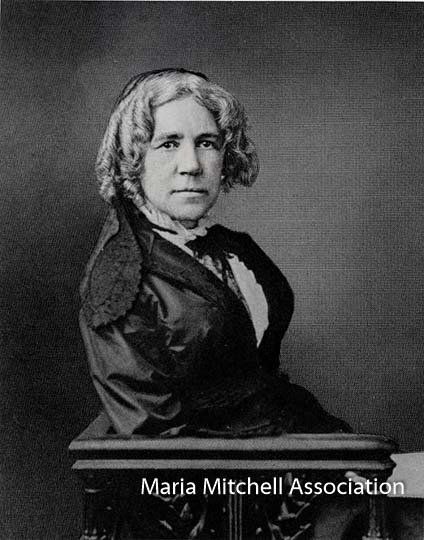
I guess it bloomed in time for Miss Mitchell's 203rd Birthday!  Which was yesterday - August 1.


JNLF

Recent Posts
By Jascin N. Leonardo Finger August 17, 2026
August 19 {1857}. There are four great men whose haunts I mean to seek, and on whose footsteps I mean to stand: Newton, Shakespeare, Milton, and Johnson. To-day I told the driver to take me to St. Martin’s, where the guide-book says that Newton lived. He put me down at the Newton Hotel, but I looked in vain to its top to see anything like an observatory. I went into a wine-shop near, and asked a girl, who was pouring out a dram, in which house Newton lived. She pointed, not to the hotel, but to the house next to a church, and said, “that’s it – don’t you see a place on the top? That’s where he used to study nights.” It is a little, oblong-shaped observatory, built apparently of wood, and blackened by age . . . .” Blackened no doubt by the wood ash and soot found in the air throughout over-crowded nineteenth century London. We always think about London being very foggy in the nineteenth century but frankly a lot of it was wood and coal ash as the nineteenth century grew older, particularly as factories developed and belched all of that into the air – think Sherlock Holmes in the 1880s. But Maria Mitchell, while starting in Europe as a young woman’s chaperone, also knew that this tour of Europe was a great learning experience – the equivalent of a college education she could not have. Doors were thrown open to her around Europe – in particular at all of the observatories that dotted the continent. She was not just well-known – she was famous. JNLF
By Jascin N. Leonardo Finger August 10, 2026
This is a blog of the past. I often think of this “story” when it’s hot and humid out. So here it is again. The past few weeks have been very un-Nantucket as far as the heat and the extreme humidity. When I was a child and even a teenager, I remember that we always wore long pants and even sweaters in the summer evenings on island. This does not seem to be the norm any longer unfortunately. The heat also leads me to think about staying cool and what generations before us did to preserve food. Long before modern refrigeration, ice was used for preserving foods. Although the use of ice brought an end to salting and drying fish for local markets, with railroad development and western expansion in the 1850s, salt fish was still being shipped to inland domestic markets as well as abroad. As the fishing industry grew on Nantucket and elsewhere, however, so did the need for ice to keep the catch fresh for market. On Nantucket, when a hard freeze produced ice of the necessary thickness, blocks were cut from Maxcey’s and Washing Ponds and the North Head of Hummock Pond and stored in nearby icehouses. This was a fairly long and tricky process that took skill to make sure the ice was the right thickness and that one did not fall through the ice. Mainland icehouses typically used sawdust for insulation, but Nantucket ice was insulated with beach grass, seaweed, and eelgrass—sawdust not being readily available here. The iceman would drive his cart around the streets with usually a gaggle of children trailing behind – or hitching a secretive ride on the back of the cart – hoping for a piece of ice to suck on and cool off with – back when something that simple was a pure delicacy. When electricity was introduced on Nantucket in 1889, cutting pond ice was no longer necessary. Captain John “Jack” Killen built the first ice-making plant, on Straight Wharf, opening it on May 5, 1902. Several other plants, including that of the Island Service Company, followed—all operating until the Great Depression. Nantucket’s early ice-making plants were established primarily for packing fish and shellfish, which were shipped in barrels or fish boxes layered with ice. Fishermen both on and off-island would stock up on ice before going out on long trips, and it is said that island ice was of a much higher quality than that from plants off-island—perhaps because of the purity of Nantucket’s water. Some people still cut ice. My parents had an elderly friend, now gone, and his family owned – and I assume still owns – a camp of cottages from the 19 th century up in New Hampshire. In the winter, the entire family shows up to harvest ice and store it in the icehouse. The ice is then used in each of the cottages during the summer since they have no electricity or plumbing. It is an art that is almost gone but happily there are still a few who have passed down the knowledge and skill for harvesting ice. I recently took a look at his obituary and was blown away – I remember him for ice harvesting – but wow what a life! One of service and seeking justice. JNLF
August 3, 2026
“If you don’t look, you don’t see. You have to go and look.” -Edith Andrews
Show More