

Keep Calm and Bird On: January 2026
“If you don’t look, you don’t see. You have to go and look.”
-Edith Andrews
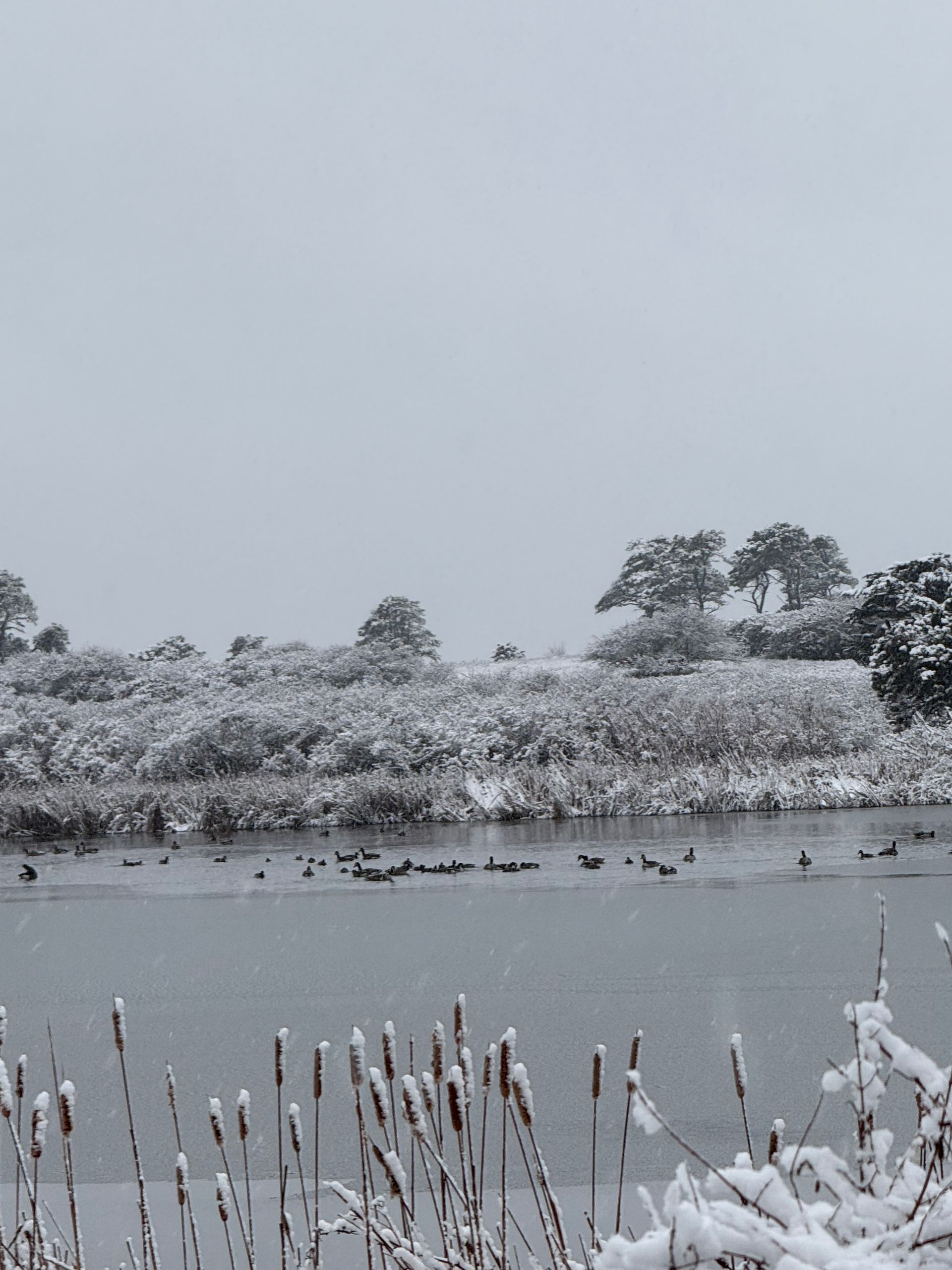
Snow-covered Canada geese, carrying their own insulation like little swimming igloos.
January brings a whole different cast of characters to the winter birding scene. For most human visitors it is the “off” season—but for some birds, particularly those that nest in the arctic, it’s a nice warm spot with open water and abundant food. True, the neotropical migrants have—or should have—left for Central or South America by now. Many birders are content to put out a variety of foods and stay inside watching their feeders in comfort. It does ease the challenge of the raw winds, see-sawing temperatures, and possible ice and snow. But car birding is also an option.
Outside there is still a moveable feast for the eye, and with proper clothing we can still brave the elements and find plenty to look at. The ocean offers sea ducks, with three species of scoters, Common Eider in several plumages, gorgeous Harlequin Ducks, alcids like Razorbills and Murres, the ubiquitous Bufflehead, and for those who really love an identification challenge, several species of gulls.
Ponds are equally active, with Scaup, Redheads, Canvasbacks, Northern Shovelers and Gadwall; three species of merganser, two types of loons, three kinds of grebes, and more. When ponds freeze the ducks are concentrated in open water, making them easier to find.
As long as they can get food, birds spending the winter are well-adapted for cold; the inner layers of filoplumes, the tough waterproof primaries and wing coverts keep body heat in. Their feet and legs are mostly bone and tendon, with little to suffer from chill. Land birds have also found other useful strategies. Chickadees, for example, store food. They huddle together in cavities or birdhouses for warmth. At night they control their metabolism and body temperature, going into torpor, which is like a kind of temporary hibernation. When daylight returns, they are active again, raiding the sunflower seeds. There is really no bad time to go birding.
Recent Posts