
Maria Mitchell In Her Own Words

Jascin N. Leonardo Finger • September 28, 2015

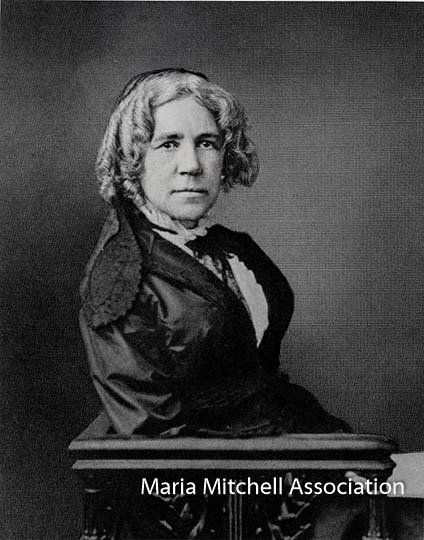
Sept. 25, 1854. . . . The best that can be said of my life so far is that it has been industrious, and the best that can be said of me is that I have not pretended to what I was not.


I think of two things when I read this. One is that Quakers believed in being industrious and not wasting time. The second point makes me think immediately of Holden Caulfield – The Catcher in the Rye if you don’t know that character’s name – and his various references and discussions to “phonys” as he refers to them though Maria’s mention here is not entirely in the same vain.


A materially successful Quaker was one who was living “in the light,” as Quakers referred to it. Even if gifted with material wealth, Quakers still lived frugally and were a hard working group of people. As Hector St. Jean de Crèvecoeur noted, “Idleness is the most heinous sin that can be committed in Nantucket . . . for idleness is considered as another word for want and hunger.” If you were not productive and industrious, you would starve – and it would affect others in the community since isolated Nantucket acted as a corporate family economy – everyone was relying on one another for survival. While Maria is also not necessarily going to this depth of industrious it is a Quaker ethic that was strongly imbued in her. She certainly was a hard worked with numerous accomplishments to her name and many different projects completed even by 1854 at age thirty-six.


And don’t forget October 1st is the anniversary of Maria’s comet discovery – October 1, 1847.


JNLF

Recent Posts
By Jascin N. Leonardo Finger September 14, 2026
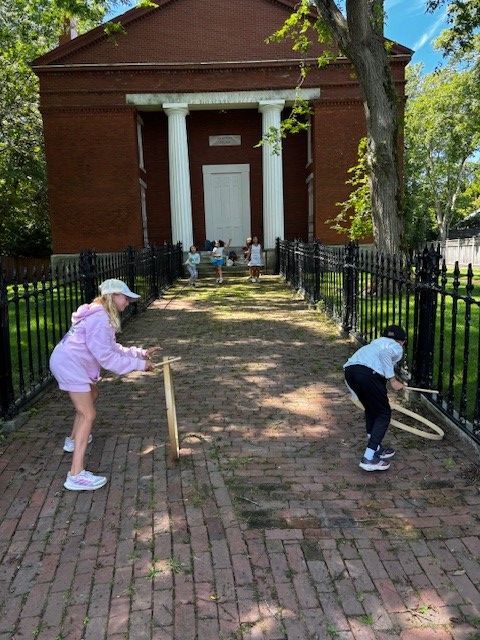
Do you know what these Mitchell House Junior Historians are doing? It is a good old-fashioned round of hoop rolling. And, they had a lot of fun learning how to use them down at the Coffin School one day. Hoop rolling or hoop trundling were popular from very early on and well into the twentieth century. By early on I mean Ancient Greece even. It’s on ancient pottery and was not limited to children! Native Americans, ancient Rome, 16 th century England – it’s been known by different names, taken various formats, played by various ages, and played through various ages. In the nineteenth century, both boys and girls did hoop rolling – and it was likely seen as a more “ladylike” active game that girls could play. I’m assuming that is likely the reason why several women’s colleges still have I tradition of rolling hoops. We use these sometimes in the summer during our weeklong Mitchell House children’s program – Junior Historians. Do not be too surprised if you see me out on the lawn on Vestal Street practicing on warm days this fall, winter, and spring! Got to get up to speed! JNLF
September 1, 2026
“If you don’t look, you don’t see. You have to go and look.” -Edith Andrews
By Jascin Leonardo Finger August 31, 2026
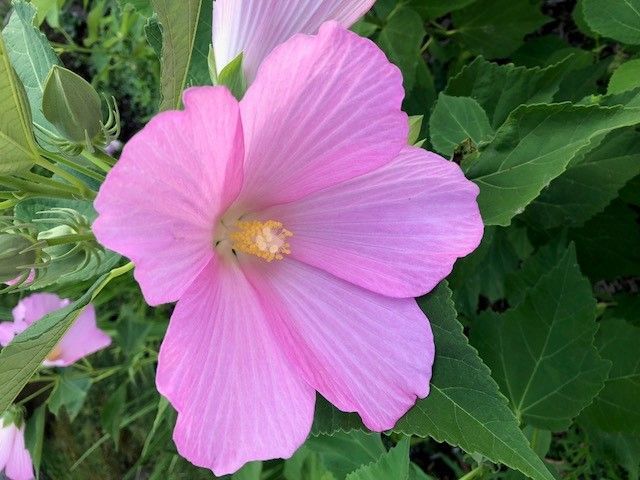
I’m sure you’ve seen it as you trek about the island – near the beaches and ponds. This image is of the swamp or marsh mallow that we have on Vestal Street in our garden out front of the Observatory. It can grow in drier places – though it’s not as lush as at Capaum Pond or out in Quaise. It’s in the Hibiscus family – and is fairly tropical looking and always a delight to see.  “When in bloom, one of the most showy plants of the Island, for a mass of the magnificent, large flowers on the edge of a blue pond causes one’s heart to thrill at the wealth of deep pink colour . . .” from Nantucket Wild Flowers, Alice O. Albertson (cousin of Maria Mitchell), 1921. JNLF
Show More