Maria Mitchell In Her Own Words

Jascin N. Leonardo Finger • January 29, 2014

1857 Jan 22.


Hard winters are becoming the order of things. Winter before last was hard, last winter was harder and this surpasses all winters known before. We have been frozen in to our Island now since the 6th. No one said much about it for the first two or three days. The sleighing was good and all the world was out trying their horses on Main St. – the race-course of the world. Day after day passed and the thermometer sank to a lower point and the minds rose to a higher, and sleighing became uncomfortable and even the dullest man longed for the cheer of a newspaper. The Inquirer came out for a while, but at length had nothing to tell and nothing to Inquire about and so kept its peace . . . .


Inside the houses we amuse ourselves in various ways. Frank’s family and ours form a club, meeting three times a week and writing machine poetry in great quantities. Occasionally something very droll puts us in a roar of laughter. Frank, Ellen and Kate I think are rather the smartest, tho’ Mr. Macy has written rather the best of all.


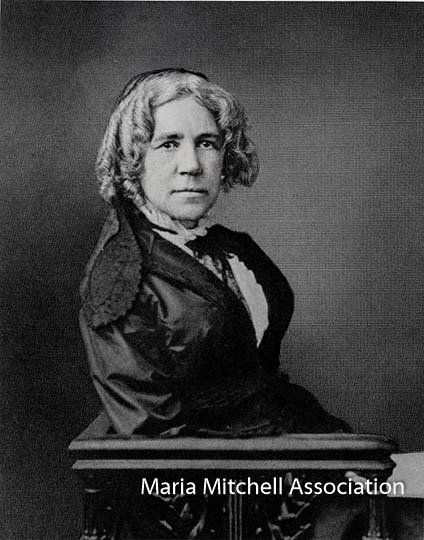
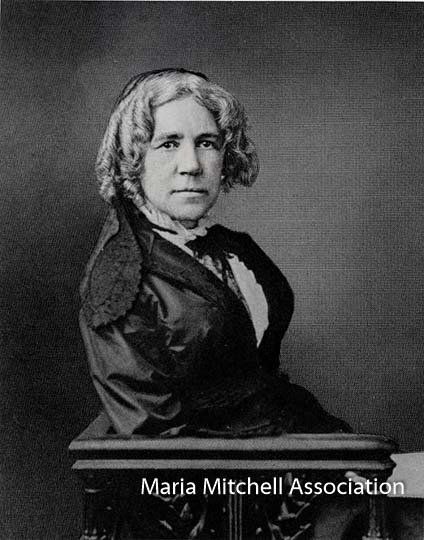
Some things never change and Maria Mitchell and her family were confronted with a cold and snowy winter, rendering them – and the island – house-bound due to the bitter weather. Maria writes in her journal of the sitting room at the Pacific Bank − where the family lived on the second floor − not getting above forty degrees in the evening, though she implies this was fairly snug which helps you get a better feeling for what winter home interiors were like in those days. With constant clouds, Maria found that she could not observe but it seems she likely got to know her sister-in-law Ellen much better (Ellen married Francis “Frank” Macy Mitchell – younger brother of Maria in April 1853), as well as Mr. Macy – Alfred Macy – a lawyer and the head of the Coffin School for several years. Alfred would marry Anne Mitchell (younger sister of Maria) in May of 1857 – perhaps the confined quarters help to kindle the romance all the more!


JNLF

Recent Posts
By Jascin N. Leonardo Finger February 9, 2026
On August 6, 1872, the first meeting of the Nantucket Sorosis Club took place at the home of Sarah Cathcart on Main Street. Originally founded in New York in 1868, several of its founding members were Nantucket women such as Maria Mitchell and Reverend Phebe Coffin Hanaford, and the club appropriately found its way to Nantucket where Hanaford first publicly announced its inaugural meeting from the pulpit of the Unitarian Church. Its purpose: the “intellectual improvement of its members, by means of written essays, select readings, recitations and discussions upon the current questions of the day.” It was Hanaford and Nantucket summer resident Rebecca Morse – members of the New York Sorosis – who developed the idea of founding a Nantucket Sorosis. Like the sewing circles founded earlier in the nineteenth century, the development of a Sorosis on Nantucket may have been in part to aid women not only during a period of economic decline on the island, but to help those women who found that they were now losing their jobs as whalemen returned to the island for good and tried to “reclaim” the jobs of men. It was also a logical club to have for women on the island – given the history of their playing such an integral role in all aspects of island life. Two other island women involved with the Nantucket Sorosis Club were Eliza Starbuck Barney and the Reverend Louise S. Baker. The main Sorosis club came about as a reaction by female journalists barred from attending and reporting on Charles Dickens’ first public lecture in the United States in New York City. They quickly came together to created forms of support for one another in their field, expanding to include women working in a variety of other fields – science among them. Thus, Maria Mitchell was one of the founding members when the first official meeting was held at Delmonico’s in NYC. With a thirteen-article constitution, the Nantucket Sorosis had a board of directors with officers being elected annually. The club hosted lecturers and orators, discussed social and political issues – particularly those of woman suffrage – and also discussed art, literature, travel, and current events. The Nantucket Sorosis lasted approximately thirty years. Little is known about who was involved outside of key players and when exactly the group folded and why, but the last printed material that can be located dates to 1903, and by that time most of the Nantucket Sorosis members were in their seventies and eighties. JNLF
February 5, 2026
NANTUCKET, MA—On the occasion of the 247th American Astronomical Society (AAS) Meeting, and the 179th anniversary year of the discovery of Maria Mitchell’s Comet, the 2025 astronomy interns from the Nantucket Maria Mitchell Association (MMA), journeyed to Phoenix, AZ, to represent the MMA and present their research. Building on the legacy of Maria Mitchell, the first female American astronomer, the MMA offers STEM research and education opportunities to interns from across the country via their paid internship programs. The MMA’s Maria Mitchell Observatory has operated a National Science Foundation funded Research Experiences for Undergraduates (REU) program for decades. The REU is funded by a generous grant from the U.S. National Science Foundation (NSF) which allows the MMA to bring six undergraduate students to Nantucket each summer. These talented and promising students are selected out of a pool of hundreds of applicants from across the United States. From January 4 – 8, 2026, the MMA’s most recent NSF-REU students presented their work at the winter AAS meeting on subjects ranging from the characteristics of dust around and between stars, to various aspects of supernova explosions. MMA Director of Astronomy, Dr. Jackie Milingo, attended the conference and presented each student with a bound volume of their collected research papers. “The MMA’s long-standing REU program has nurtured hundreds of budding scientists over many decades. It’s always inspiring to see these students shine and make the most of this extraordinary opportunity. We’re a small program with an outsized effect on not only these students, but the future of the scientific community.” The 2025 REU students and their respective presentations are listed below. The common theme of their research was dust. This dust is made of familiar elements like carbon, oxygen, silicon and iron is similar to grains of sand or ash. Even though these dust grains are a small part of our Galaxy, they are very important because they can block the light coming from everything astronomers study. Understanding this dust helps us to understand how it is formed and how it affects the light that must travel vast distances across our Milky Way to get to our telescopes. This past summer’s NSF-REU interns and their research presentations which they presented at the AAS are: Madison Gerard (University of Texas at Austin) : SN 2024abfl: An Absolutely Flat and Low-Luminosity Interacting Type II Supernova Kaylee Perez (Texas State University) : Exploring the Link Between Dust Extinction and Attenuation with Simulated Data LaurenBarkey (CaliforniaPoly Pomona) : Peek-a-Boo: Exploring the NEOWISE Lightcurves of RCoronae Borealis Stars Aiden Agostinelli (University of Montana) and Ben Radmore (University of Michigan) : When the Dust Settles: Late-Time MIRI Imaging of SN 2011ja Image: 2025 NSF-REU Interns, Madison Gerard, Lauren Barkey, Benjamin Radmore, Aidan Agostinelli, and Kaylee Perez with MMA Director of Astronomy, Dr. Jackie Milingo.  The Maria Mitchell Association was founded in 1902 to preserve the legacy of Nantucket native astronomer, naturalist, librarian, and educator, Maria Mitchell. After she discovered a comet in 1847, Mitchell’s international fame led to many achievements and awards, including an appointment as the first professor of astronomy at Vassar College. Maria Mitchell believed in “learning by doing” and today that philosophy is reflected in the MMA’s mission statement, programs, research projects, and other activities. The Maria Mitchell Association operates two observatories, a natural science museum, an aquarium, a research center, and preserves the historic birthplace of Maria Mitchell. A wide variety of science and history-related programming is offered throughout the year for people of all ages. ###
February 4, 2026
NANTUCKET, MA— The Nantucket Maria Mitchell Association (MMA) welcomes Susan Vizurraga for a discussion of her book Williamina Fleming, Astronomer, an imagined memoir. As one of the Harvard College Observatory’s (HCO) women computers Williamina Fleming led a fascinating life. She was, an immigrant, a working mother, and an astronomer and her story will be brought to light in this engaging presentation on the remarkable legacy of a woman who helped transform modern astronomy from behind the scenes. Through Fleming’s own imagined voice, Vizurraga explores Williamina’s journey from domestic servant to internationally respected scientist, her pivotal role in classifying stellar spectra, and her quiet perseverance in a male-dominated field. This talk celebrates Williamina Fleming not only for her scientific achievements, but also for her resilience, curiosity, and lasting impact on how we understand the stars. This free event will be held via Zoom on Wednesday, February 18, from 7–8 pm. Susan Vizurraga is the author of the historical fiction novel-in-verse Williamina Fleming, Astronomer, an imagined memoir based on the life of the real-life Scottish immigrant who began work as a maid, joined the HCO as one of many women computers, and became the discoverer and curator of stars. A former middle school teacher and university instructor, Vizurraga is the author of the picture books Our Old House (a Junior Library Guild Selection) and Miss Opal’s Auction (a multi-generational selection of the National Council for the Social Studies). She is a volunteer docent at the Georgia Museum of Art and a poll worker with her local elections board. She lives in rural southern Oconee County, Georgia. This event will be held via Zoom. Pre-registration is required. To register for the free, virtual event, use the registration link: https://us06web.zoom.us/webinar/register/WN_SVlPAu9ITmmQll_E9aU3aw#/registration The Science Speaker Series is generously sponsored by the Maria Mitchell Association’s lead sponsor, Bank of America. The Maria Mitchell Association was founded in 1902 to preserve the legacy of Nantucket native astronomer, naturalist, librarian, and educator, Maria Mitchell. After she discovered a comet in 1847, Mitchell’s international fame led to many achievements and awards, including an appointment as the first professor of astronomy at Vassar College. Maria Mitchell believed in “learning by doing” and today that philosophy is reflected in the MMA’s mission statement, programs, research projects, and other activities. The Maria Mitchell Association operates two observatories, a natural science museum, an aquarium, a research center, and preserves the historic birthplace of Maria Mitchell. A wide variety of science and history-related programming is offered throughout the year for people of all ages. ###
Show More