
Celebrate International Dark Sky Week with the Maria Mitchell Association, Nantucket Conservation Foundation, and Nantucket Lights

April 1, 2025

NANTUCKET, MA—In celebration of 2025 International Dark Sky Week, the Nantucket Conservation Foundation, Nantucket Lights, and the Maria Mitchell Association invite the community to an unforgettable evening of stargazing at Altar Rock in the Middle Moors. This free, family-friendly event, set for April 23, 2025, provides a rare opportunity to experience Nantucket at night and gain a deeper appreciation for the environmental significance of dark skies and how to preserve them.


Guided by expert stargazers, attendees will explore the night sky — all its constellations and celestial wonders — in a pristine, low-light environment. This collaborative community event presents an ideal opportunity to connect with nature, engage with like-minded individuals, and be inspired by the beauty of the night. Advance registration is strongly encouraged for weather-related updates.


Event Details:

• Date: Wednesday, April 23, 2025

• Rain/Cloud Date: Thursday, April 24, 2025

• Time: 8:00PM – 9:30PM

• Location: Altar Rock, Middle Moors, Nantucket

• Parking: Free parking will be available along Altar Rock Road, with volunteers on hand to guide attendees to the event site. Carpooling is strongly encouraged.

• Registration link: http://support.nantucketconservation.org/site/Calendar?id=101941&view=Detail

• Open to all ages. To ensure a safe and enjoyable experience, children must be accompanied by at least one adult.

• Attendees are encouraged to dress appropriately for current weather conditions and wear comfortable footwear, as the event will involve a short walk up to Altar Rock. For added comfort, we recommend bringing blankets or chairs.


About International Dark Sky Week:

International Dark Sky Week is a global initiative of DarkSky International to celebrate the dark and natural night sky, raise awareness about light pollution, and promote the use of environmentally responsible outdoor lighting during the week of the new moon in April each year.

About the Nantucket Conservation Foundation: The Nantucket Conservation Foundation owns, protects, and stewards over 9,000 acres of land and coastal shoreline, conserves Nantucket’s rare and significant natural resources, and engages in impactful ecological research to inform resource management and further our knowledge of Nantucket’s unique ecosystems and species. Through conservation, education, and stewardship, the Foundation aims to maintain Nantucket’s unique ecosystems and natural beauty for future generations.


About Nantucket Lights: Nantucket Lights is an all-volunteer citizen advocacy group committed to preserving and protecting Nantucket’s nighttime environment and heritage of dark skies by raising awareness about light pollution on the island and advocating for environmentally responsible outdoor lighting.


About the Maria Mitchell Association:

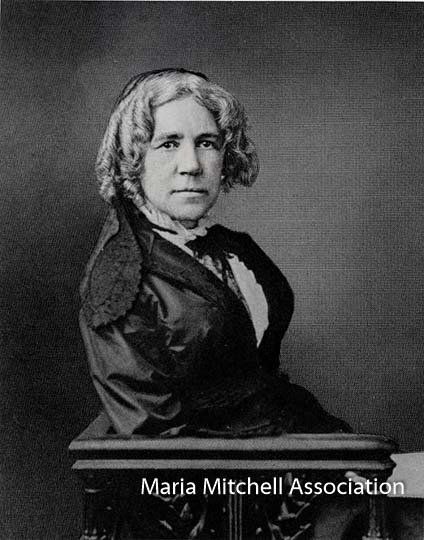
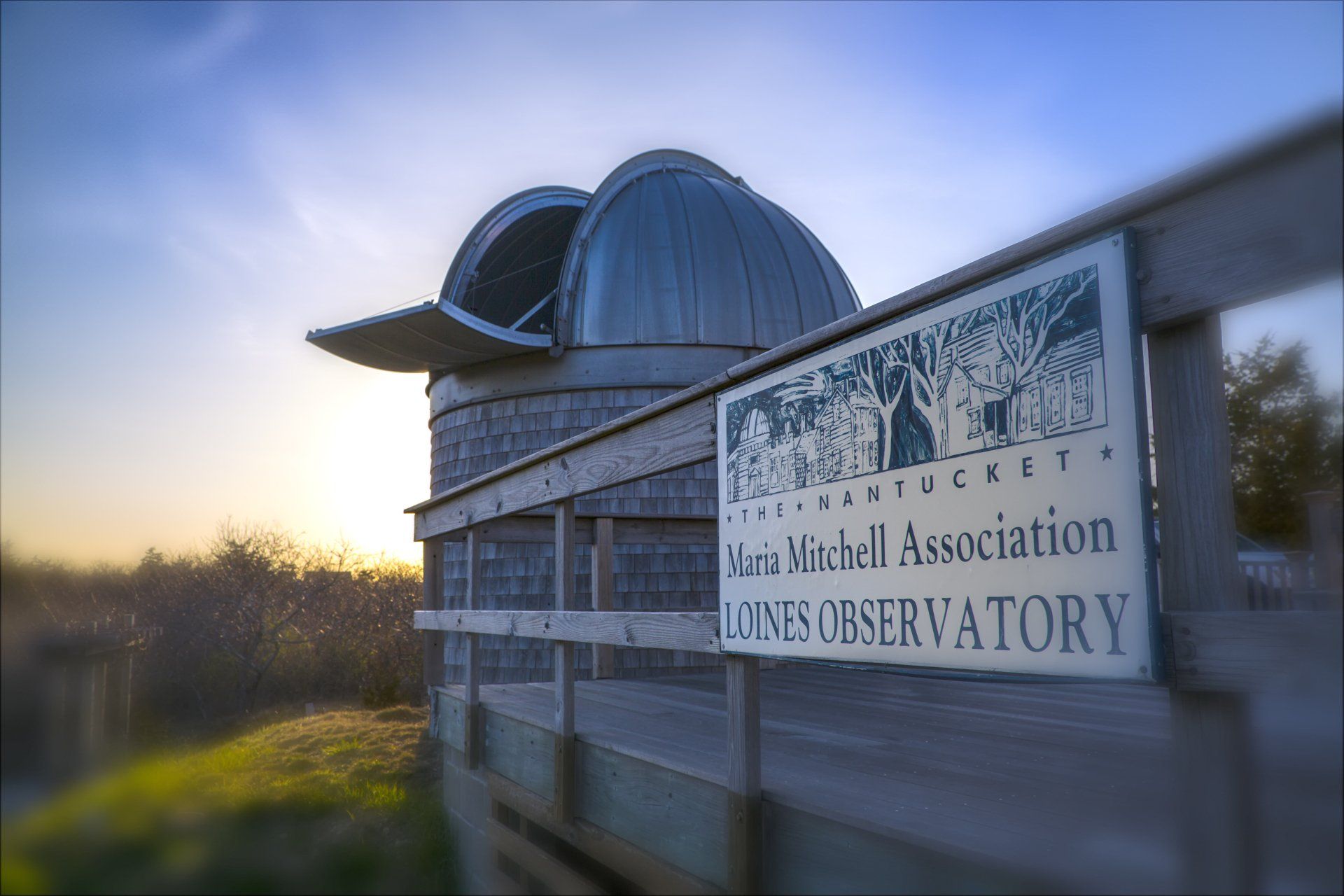
The Maria Mitchell Association was founded in 1902 to preserve the legacy of Nantucket native astronomer, naturalist, librarian, and educator, Maria Mitchell. After she discovered a comet in 1847, Mitchell’s international fame led to many achievements and awards, including an appointment as the first female professor of astronomy at Vassar College. Maria Mitchell believed in “learning by doing” and today that philosophy is reflected in the MMA’s mission statement, programs, research projects, and other activities. The Maria Mitchell Association operates two observatories, a natural science museum, an aquarium, a research center, and preserves the historic birthplace of Maria Mitchell. A wide variety of science and history-related programming is offered throughout the year for people of all ages.


###

For Immediate Release

April 1, 2025

Contact: Jónelle Gurley

jgurley@mariamitchell.org

Recent Posts

By Jascin Leonardo Finger August 31, 2026
I’m sure you’ve seen it as you trek about the island – near the beaches and ponds. This image is of the swamp or marsh mallow that we have on Vestal Street in our garden out front of the Observatory. It can grow in drier places – though it’s not as lush as at Capaum Pond or out in Quaise. It’s in the Hibiscus family – and is fairly tropical looking and always a delight to see.  “When in bloom, one of the most showy plants of the Island, for a mass of the magnificent, large flowers on the edge of a blue pond causes one’s heart to thrill at the wealth of deep pink colour . . .” from Nantucket Wild Flowers, Alice O. Albertson (cousin of Maria Mitchell), 1921. JNLF
By Jascin N. Leonardo Finger August 24, 2026
I have always wanted to find a piece of a clay pipe. I know – weird – but if you have ever read any of my blogs here for the MMA then you know I have a thing for pottery shards. I sort of figured I would not find a piece of a clay pipe – not even a piece of a stem. But the other day, walking in a place where I have found quite a few shards, I found a piece of clay pipe! Now, I’m not talking about water pipes – I am talking about tobacco pipes. And I know very little about clay pipes. Yes, I am a curator of a historic house museum, but this family did not smoke. They were Quaker and among the many things they abstained from, tobacco was one of them. Therefore, I am not up on clay pipes so I am doing a bit more research.  For one, age can be determined by the width of the hole inside the pipe. So based on this one, I would say it’s fairly late. Since they were so fragile, and those holes pretty small, if it got filled with tobacco, the person just broke off the stem creating a shorter pipe and one that was not clogged with tobacco. Apparently, stems could be recycled – in fact, 15,000 broken stem pieces were uncovered at a historic walkway at Colonial Williamsburg – they were used as fill! And pipes were made into the early twentieth century – falling out of favor around World War One. It makes sense – they were cheap, easy to make, and affordable. Typically, one could last a few years – unless you dropped it of course. An,d pipes were used by men, women, and (eh, em) yes, children. I can see that Nantucket may not have had a lot of tobacco smoking residents – not just that some were Quaker – but because of the Quaker influence. I t does not mean people here do not smoke – I just think there may have been fewer smokers on the island in the nineteenth century and earlier. JNLF
By Jascin N. Leonardo Finger August 17, 2026
August 19 {1857}. There are four great men whose haunts I mean to seek, and on whose footsteps I mean to stand: Newton, Shakespeare, Milton, and Johnson. To-day I told the driver to take me to St. Martin’s, where the guide-book says that Newton lived. He put me down at the Newton Hotel, but I looked in vain to its top to see anything like an observatory. I went into a wine-shop near, and asked a girl, who was pouring out a dram, in which house Newton lived. She pointed, not to the hotel, but to the house next to a church, and said, “that’s it – don’t you see a place on the top? That’s where he used to study nights.” It is a little, oblong-shaped observatory, built apparently of wood, and blackened by age . . . .” Blackened no doubt by the wood ash and soot found in the air throughout over-crowded nineteenth century London. We always think about London being very foggy in the nineteenth century but frankly a lot of it was wood and coal ash as the nineteenth century grew older, particularly as factories developed and belched all of that into the air – think Sherlock Holmes in the 1880s. But Maria Mitchell, while starting in Europe as a young woman’s chaperone, also knew that this tour of Europe was a great learning experience – the equivalent of a college education she could not have. Doors were thrown open to her around Europe – in particular at all of the observatories that dotted the continent. She was not just well-known – she was famous. JNLF
Show More