


Maria Mitchell's Attic
Maria Mitchell’s Attic is a blog written on a weekly basis by the MMA’s Deputy Director and Curator, Jascin Leonardo Finger.
While its focus is mainly on Maria Mitchell, the Mitchell family, and life at 1 Vestal Street,
the blog also highlights the archives, collections, MMA properties, the history of the MMA
and its people, and aspects of the MMA that are lesser known.
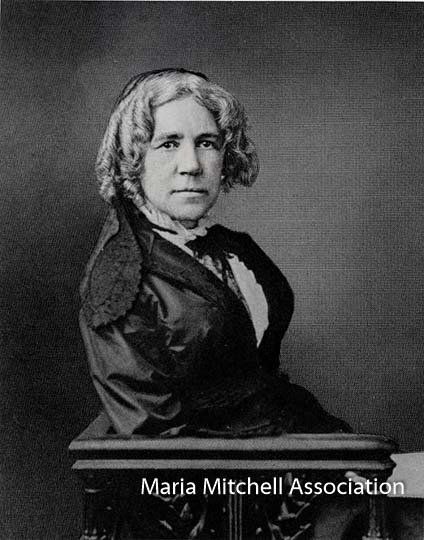
10mo 1, 1847. {October 1, 1847} This evening at half past ten Maria discovered a telescopic comet five degrees above Polaris. Persuaded that no nebulae could occupy that position unnoticed it scarcely needed the evidence of motion to give it the character of a comet. From the journals of William Mitchell, father of Maria. One hundred and seventy-nine years later! JNLF
Sept. 24, 1881. . . . Mr. I. {van Ingen} thinks that not a person on the Board of Trustees would approve of the clause in Mr. Vassar’s will which objected to women as occupants of chairs. Just months before, Maria Mitchell had written a letter describing the controversy surrounding the bequest of Matthew Vassar to the college he founded. The large sum was separated out within his will, including the establishment of department chairs. The bequest for this action, however, did not allow for women professors to have a chair. Quite shocking for a women’s college but then, there were early trustees in the College’s founding who believed that women professors should not exist at Vassar! Maria would be the first professor Vassar hired – male OR female. JNLF
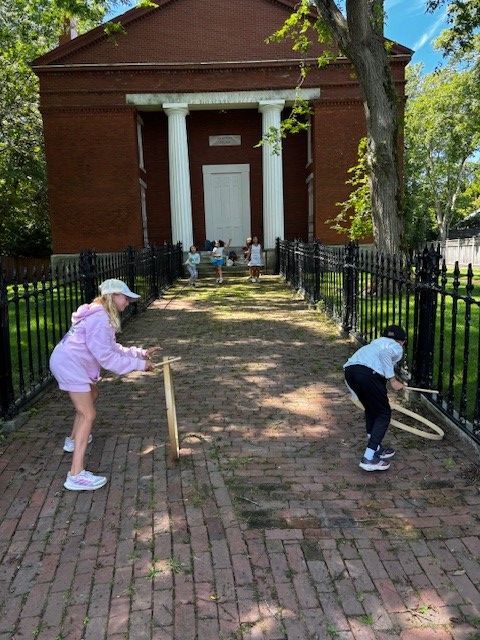
Do you know what these Mitchell House Junior Historians are doing? It is a good old-fashioned round of hoop rolling. And, they had a lot of fun learning how to use them down at the Coffin School one day. Hoop rolling or hoop trundling were popular from very early on and well into the twentieth century. By early on I mean Ancient Greece even. It’s on ancient pottery and was not limited to children! Native Americans, ancient Rome, 16 th century England – it’s been known by different names, taken various formats, played by various ages, and played through various ages. In the nineteenth century, both boys and girls did hoop rolling – and it was likely seen as a more “ladylike” active game that girls could play. I’m assuming that is likely the reason why several women’s colleges still have I tradition of rolling hoops. We use these sometimes in the summer during our weeklong Mitchell House children’s program – Junior Historians. Do not be too surprised if you see me out on the lawn on Vestal Street practicing on warm days this fall, winter, and spring! Got to get up to speed! JNLF
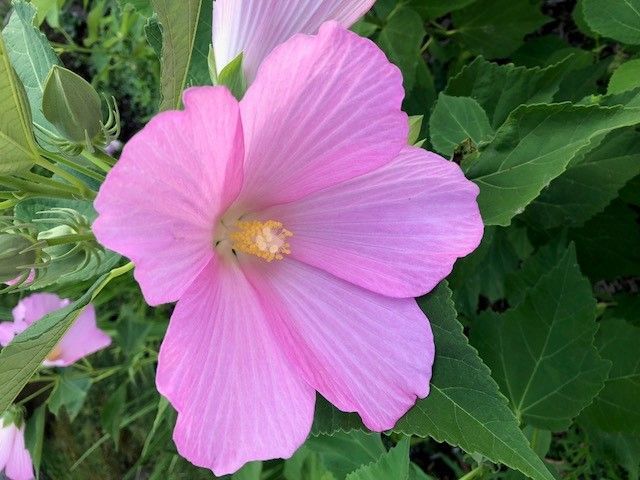
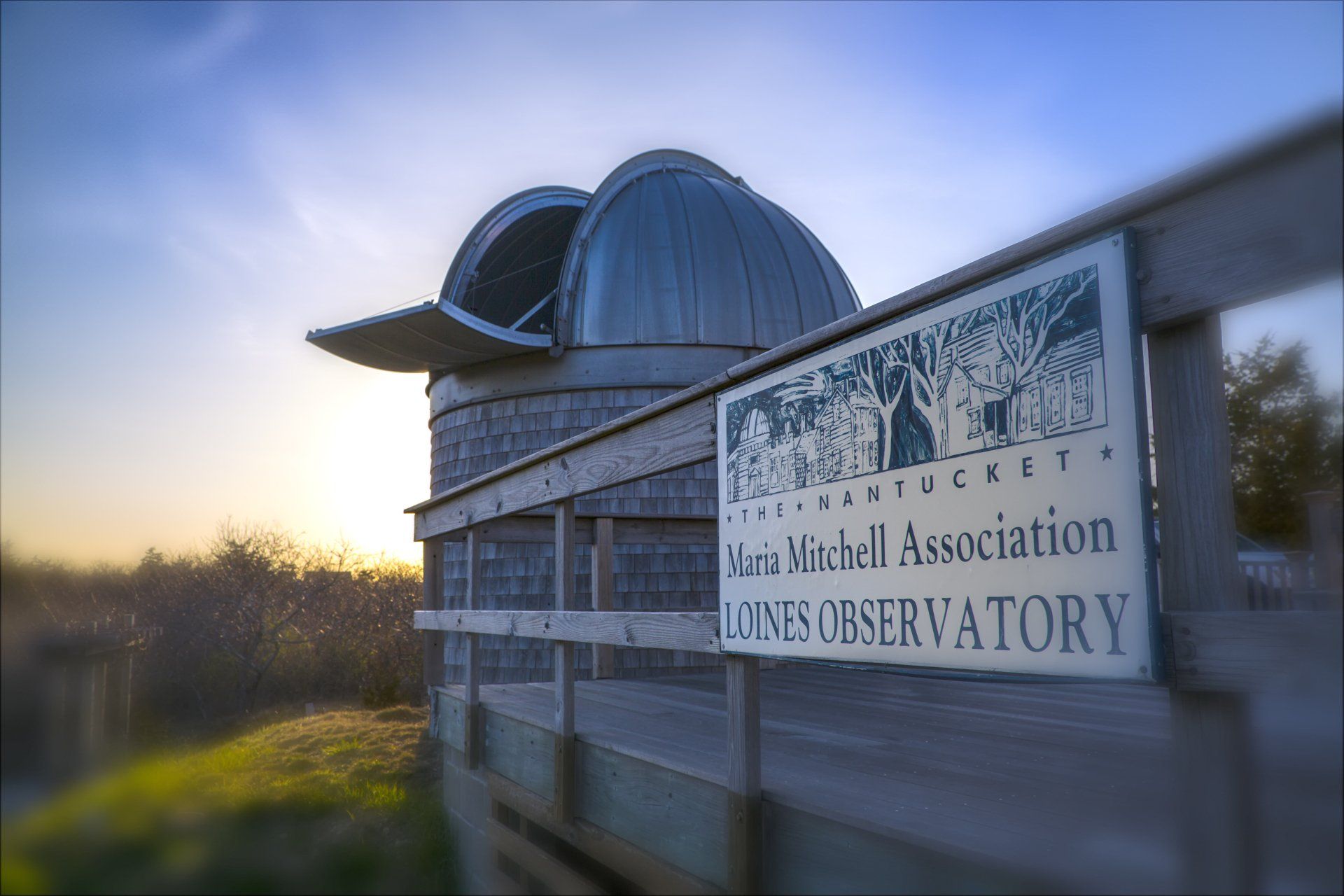
I’m sure you’ve seen it as you trek about the island – near the beaches and ponds. This image is of the swamp or marsh mallow that we have on Vestal Street in our garden out front of the Observatory. It can grow in drier places – though it’s not as lush as at Capaum Pond or out in Quaise. It’s in the Hibiscus family – and is fairly tropical looking and always a delight to see. “When in bloom, one of the most showy plants of the Island, for a mass of the magnificent, large flowers on the edge of a blue pond causes one’s heart to thrill at the wealth of deep pink colour . . .” from Nantucket Wild Flowers, Alice O. Albertson (cousin of Maria Mitchell), 1921. JNLF
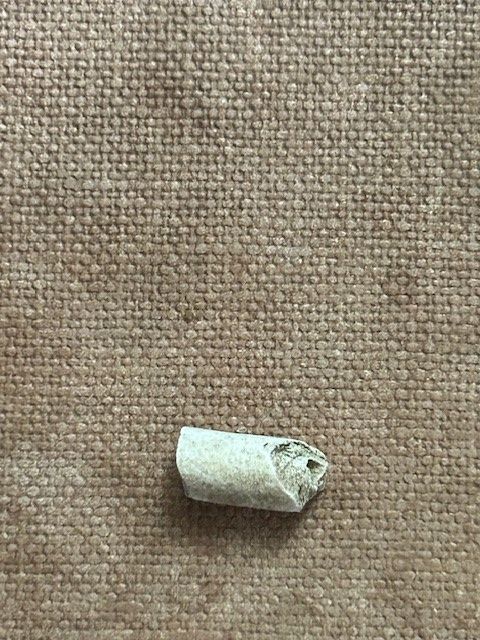
I have always wanted to find a piece of a clay pipe. I know – weird – but if you have ever read any of my blogs here for the MMA then you know I have a thing for pottery shards. I sort of figured I would not find a piece of a clay pipe – not even a piece of a stem. But the other day, walking in a place where I have found quite a few shards, I found a piece of clay pipe! Now, I’m not talking about water pipes – I am talking about tobacco pipes. And I know very little about clay pipes. Yes, I am a curator of a historic house museum, but this family did not smoke. They were Quaker and among the many things they abstained from, tobacco was one of them. Therefore, I am not up on clay pipes so I am doing a bit more research. For one, age can be determined by the width of the hole inside the pipe. So based on this one, I would say it’s fairly late. Since they were so fragile, and those holes pretty small, if it got filled with tobacco, the person just broke off the stem creating a shorter pipe and one that was not clogged with tobacco. Apparently, stems could be recycled – in fact, 15,000 broken stem pieces were uncovered at a historic walkway at Colonial Williamsburg – they were used as fill! And pipes were made into the early twentieth century – falling out of favor around World War One. It makes sense – they were cheap, easy to make, and affordable. Typically, one could last a few years – unless you dropped it of course. An,d pipes were used by men, women, and (eh, em) yes, children. I can see that Nantucket may not have had a lot of tobacco smoking residents – not just that some were Quaker – but because of the Quaker influence. I t does not mean people here do not smoke – I just think there may have been fewer smokers on the island in the nineteenth century and earlier. JNLF
August 19 {1857}. There are four great men whose haunts I mean to seek, and on whose footsteps I mean to stand: Newton, Shakespeare, Milton, and Johnson. To-day I told the driver to take me to St. Martin’s, where the guide-book says that Newton lived. He put me down at the Newton Hotel, but I looked in vain to its top to see anything like an observatory. I went into a wine-shop near, and asked a girl, who was pouring out a dram, in which house Newton lived. She pointed, not to the hotel, but to the house next to a church, and said, “that’s it – don’t you see a place on the top? That’s where he used to study nights.” It is a little, oblong-shaped observatory, built apparently of wood, and blackened by age . . . .” Blackened no doubt by the wood ash and soot found in the air throughout over-crowded nineteenth century London. We always think about London being very foggy in the nineteenth century but frankly a lot of it was wood and coal ash as the nineteenth century grew older, particularly as factories developed and belched all of that into the air – think Sherlock Holmes in the 1880s. But Maria Mitchell, while starting in Europe as a young woman’s chaperone, also knew that this tour of Europe was a great learning experience – the equivalent of a college education she could not have. Doors were thrown open to her around Europe – in particular at all of the observatories that dotted the continent. She was not just well-known – she was famous. JNLF
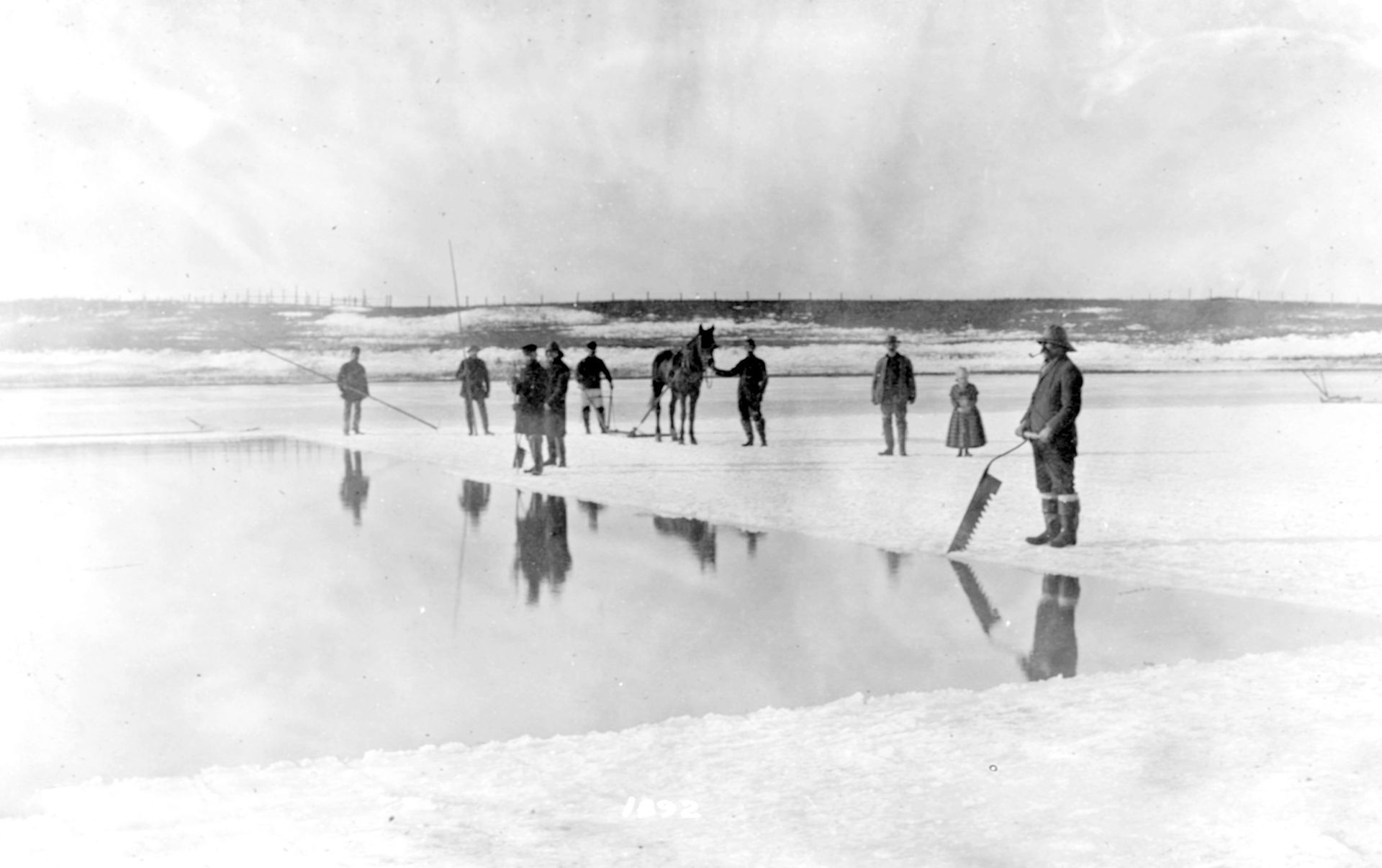
This is a blog of the past. I often think of this “story” when it’s hot and humid out. So here it is again. The past few weeks have been very un-Nantucket as far as the heat and the extreme humidity. When I was a child and even a teenager, I remember that we always wore long pants and even sweaters in the summer evenings on island. This does not seem to be the norm any longer unfortunately. The heat also leads me to think about staying cool and what generations before us did to preserve food. Long before modern refrigeration, ice was used for preserving foods. Although the use of ice brought an end to salting and drying fish for local markets, with railroad development and western expansion in the 1850s, salt fish was still being shipped to inland domestic markets as well as abroad. As the fishing industry grew on Nantucket and elsewhere, however, so did the need for ice to keep the catch fresh for market. On Nantucket, when a hard freeze produced ice of the necessary thickness, blocks were cut from Maxcey’s and Washing Ponds and the North Head of Hummock Pond and stored in nearby icehouses. This was a fairly long and tricky process that took skill to make sure the ice was the right thickness and that one did not fall through the ice. Mainland icehouses typically used sawdust for insulation, but Nantucket ice was insulated with beach grass, seaweed, and eelgrass—sawdust not being readily available here. The iceman would drive his cart around the streets with usually a gaggle of children trailing behind – or hitching a secretive ride on the back of the cart – hoping for a piece of ice to suck on and cool off with – back when something that simple was a pure delicacy. When electricity was introduced on Nantucket in 1889, cutting pond ice was no longer necessary. Captain John “Jack” Killen built the first ice-making plant, on Straight Wharf, opening it on May 5, 1902. Several other plants, including that of the Island Service Company, followed—all operating until the Great Depression. Nantucket’s early ice-making plants were established primarily for packing fish and shellfish, which were shipped in barrels or fish boxes layered with ice. Fishermen both on and off-island would stock up on ice before going out on long trips, and it is said that island ice was of a much higher quality than that from plants off-island—perhaps because of the purity of Nantucket’s water. Some people still cut ice. My parents had an elderly friend, now gone, and his family owned – and I assume still owns – a camp of cottages from the 19 th century up in New Hampshire. In the winter, the entire family shows up to harvest ice and store it in the icehouse. The ice is then used in each of the cottages during the summer since they have no electricity or plumbing. It is an art that is almost gone but happily there are still a few who have passed down the knowledge and skill for harvesting ice. I recently took a look at his obituary and was blown away – I remember him for ice harvesting – but wow what a life! One of service and seeking justice. JNLF
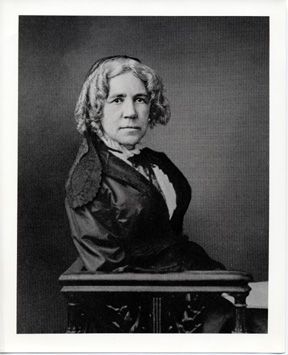
August 1, 2026 marks Maria Mitchell’s 208 th Birthday! To celebrate, join us for an open house the day before on July 31, 2026 from 3-5PM . Since just about the founding of the Maria Mitchell Association – way back in 1902 – the MMA has hosted some celebration or marked the occasion of our namesake’s birth. From 3-5PM, Vestal Street will be close to traffic and our Vestal Street properties will be open free to the public. We will have activities, games, art projects, live music with Susan Berman and Ray Saunders, and refreshments will be served. So, stop by and say hello! JNLF
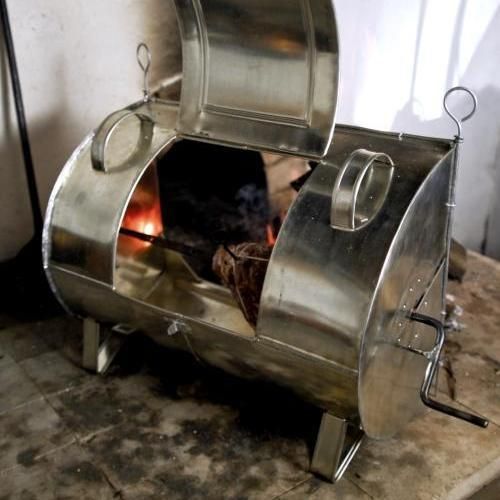
Being Nantucket, we tend to stay cooler than the mainland in the summer though the humidity is often over the top. It often makes me think about people in the nineteenth century and earlier – heck, even well into the mid 1900s, and how they handled the weather. With climate change, we have warmed and our weather is more severe and volatile at times. Instead of a nice gentle rain, we get a deluge and the ground has trouble absorbing that sort of onslaught. But they did did still have heat and humidity – and think of a fire in the hearth all day and the bake oven – if it was a baking day. And now, think of the women standing in front of the firebox and bake oven, or even a cook stove later on. I am sure if the confines of their home, alone, les could be worn but for the most part, those women still had a lot of layers on. I am sure that a cloth dipped into or run under the mouth of the pump and wrung out gently – to keep as much as the cool, moisture as possible – was tied around a neck or stuffed down a dress front (or even in addition to the wet neckerchief). At the Mitchell House, we get a little of the feeling for this. We have no HVAC in the House so we rely on doors being open – with screens to keep the bugs out – and the roofwalk opened (also with a screen) so that air circulates throughout the House. Air can move nicely through – the heat rises, the air moves up and out of the roofwalk hatch very much as it might have in Maria Mitchell’s day. While we do not have the added (somewhat) drying benefit of the heat of the fire in the kitchen, we do have all of the original horsehair plaster, so the House does remain somewhat cooler and drier overall. But some days, the relative humidity does get up into the 90s in the House – that’s when I say, “Get out your umbrellas!” JNLF