Serpents in the Stacks

Jascin N. Leonardo Finger • January 11, 2016

As you know, when I was cleaning the Special Collections books, I came across all manner of interesting books. This one in particular I was asked to keep an eye out for having been a favorite of a dear MMA friend. Happily, I found it!


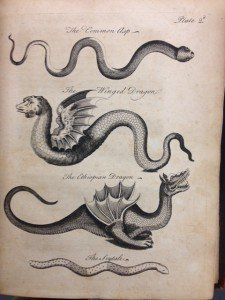
It seems a little unusual to have but I can understand why we were given it. It’s from 1742. Titled An Essay Towards a Natural History of Serpents in Two Parts it was written by Charles Owen. Frankly, it is a book that might have a hard time finding a home but from a historian’s and even a scientist’s perspective it can be helpful with learning more about the worship of serpents, the belief in them, and how actual snakes and other invertebrates might spawn (sorry) tails (sorry again! I can’t help it!) of serpents. I have provided you with the title page and one of the copper engravings.


JNLF


AND, AND! A Happy Birthday to Alice Paul. Born a Quaker, she was a mover and shaker in the rights for women. Check out today’s “Google Doodle.”

Recent Posts
By Jascin N. Leonardo Finger • September 21, 2026
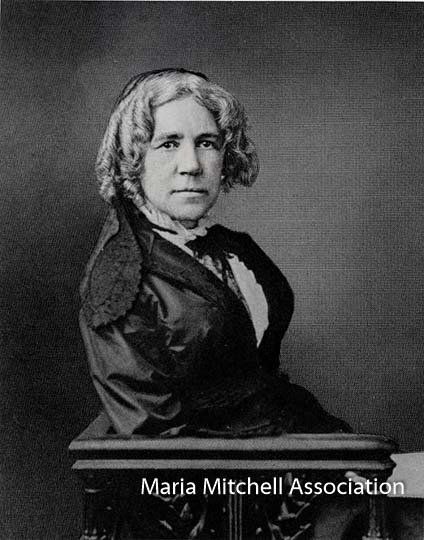
Sept. 24, 1881. . . . Mr. I. {van Ingen} thinks that not a person on the Board of Trustees would approve of the clause in Mr. Vassar’s will which objected to women as occupants of chairs. Just months before, Maria Mitchell had written a letter describing the controversy surrounding the bequest of Matthew Vassar to the college he founded. The large sum was separated out within his will, including the establishment of department chairs. The bequest for this action, however, did not allow for women professors to have a chair. Quite shocking for a women’s college but then, there were early trustees in the College’s founding who believed that women professors should not exist at Vassar! Maria would be the first professor Vassar hired – male OR female. JNLF
By Jascin N. Leonardo Finger • September 14, 2026
Do you know what these Mitchell House Junior Historians are doing? It is a good old-fashioned round of hoop rolling. And, they had a lot of fun learning how to use them down at the Coffin School one day. Hoop rolling or hoop trundling were popular from very early on and well into the twentieth century. By early on I mean Ancient Greece even. It’s on ancient pottery and was not limited to children! Native Americans, ancient Rome, 16 th century England – it’s been known by different names, taken various formats, played by various ages, and played through various ages. In the nineteenth century, both boys and girls did hoop rolling – and it was likely seen as a more “ladylike” active game that girls could play. I’m assuming that is likely the reason why several women’s colleges still have I tradition of rolling hoops. We use these sometimes in the summer during our weeklong Mitchell House children’s program – Junior Historians. Do not be too surprised if you see me out on the lawn on Vestal Street practicing on warm days this fall, winter, and spring! Got to get up to speed! JNLF
September 1, 2026
“If you don’t look, you don’t see. You have to go and look.” -Edith Andrews
Show More