Maria Mitchell In Her Own Words

Jascin N. Leonardo Finger • August 16, 2021

August 23 {1888}

My dear Mrs. Livermore,

I am better and apparently steadily improving. But I am pleased to be asked to lecture and shall not be pleased to accept your invitation. 

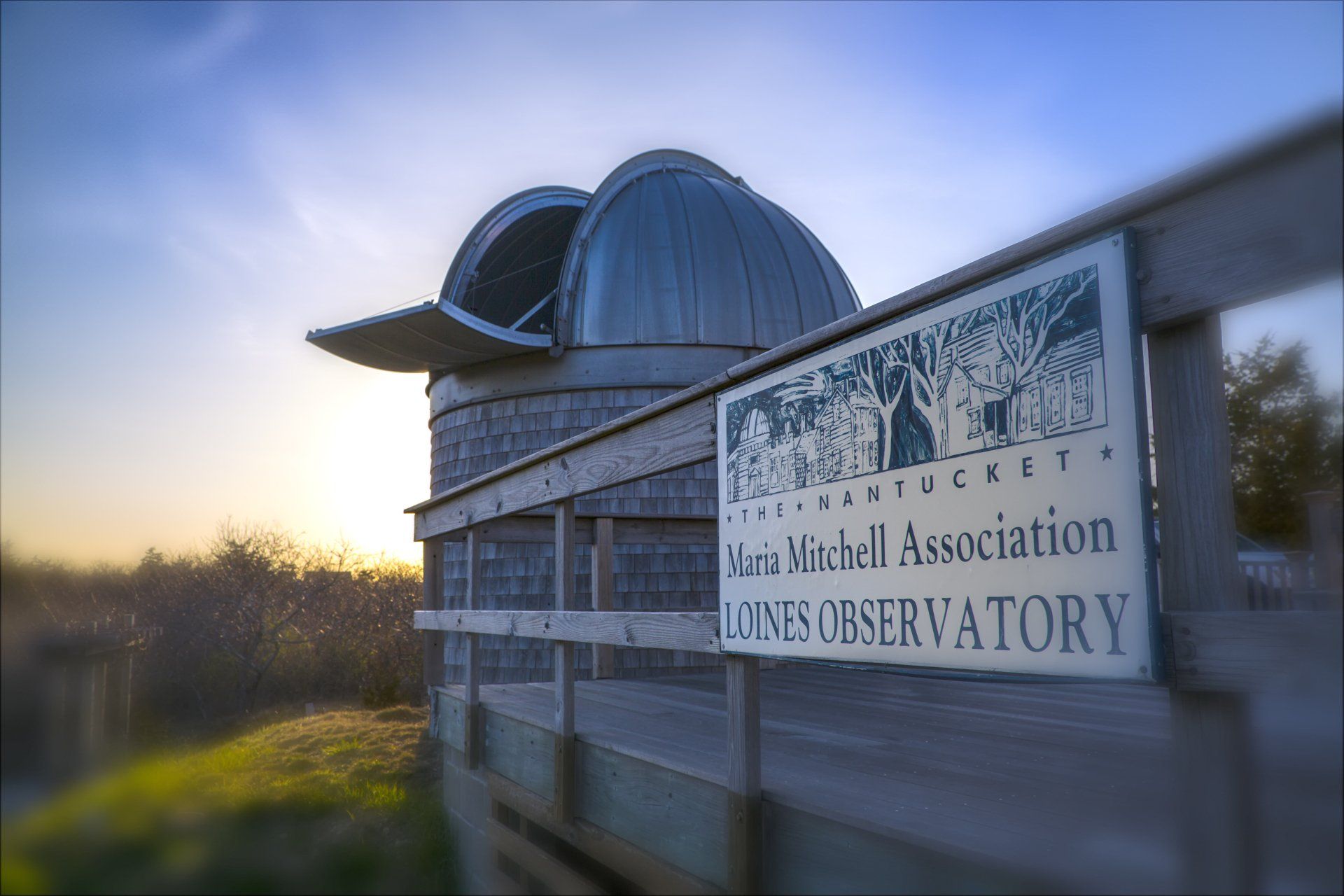
Just as the Lick Observatory goes up, mine, the smallest in the world, peeps up, above the grass and among the morning glories – It is really intended as a health lift.

I am very glad to see your list of names. I ran a course of similar kind once in Po’keepsie – I had 5 Lectures – and 5 good Lecturers and the whole cost was as small as my observatory – I paid all the bills and no one complained – the sum total was $12! There wasn’t a man asked to speak!

But a better way is co-education.

Yours with love,

Maria Mitchell


While short, this is a rather information packed letter. First off, it underscores yet again, Maria’s connections to those in the abolitionist, women’s rights, temperance and other important and noteworthy movements of the nineteenth century. A journalist, Livermore would help to found a SOROSIS chapter, which Maria was a founding member of, and would serve as the first president of the Association for the Advancement of Woman. Later, Maria would also serve as its president.


This letter also serves to highlight when her observatory in Lynn, Mass. was being built. Designed by her architect nephew, William Mitchell Kendall (a senior architect with McKim, Mead and White and Phebe’s son who I have mentioned before), she notes it is something to motivate her in her poor and declining health. Unfortunately, she utilized it very little – it was not so much about motivation but failing health. Built behind her youngest sister, Kate’s, house in Lynn, it really was covered with morning glories as the image that we have at the MMA illustrates. It had an exterior stair that wound its way to a second floor door – it was not a full two stories – and inside could be found her Alvan Clark telescope.


And finally of note, is her discussion of holding something of a conference or lecture   series – I’d like to think maybe similar to our Maria Mitchell Women of Science Symposium (MMWSS). She says men were excluded from speaking however, but notes that she thinks co-education is the way to go. I think she likely, by this point, felt that a purely women’s college/education was not helping with the path towards the equality of women. In order to ensure equality, everyone has to have a seat and a voice at the table to properly problem solve. As a women’s college graduate (Mt. Holyoke forever shall be!), I firmly believe in women’s colleges – however, they are not right for everyone. But I also believe that again, all voices need to be heard – and considered. With the MMWSS, we have tried to have men on our panels but have not found any that want to participate! We continue to seek those interested for future MMWSS events. (Though we do have male attendees.)


JNLF

Recent Posts
By Jascin N. Leonardo Finger February 2, 2026
Maria Mitchell once said, “When I see a woman sew, I think, what a capacity she has for using a micrometer!” So, maybe what I am about to write would be a bit disappointing to her. However, I believe she was likely pleased by what sewing circles on Nantucket could accomplish for her fellow Nantucketers. As, the great-granddaughter of a milliner and extremely talented seamstress (she hand-smocked about twenty dresses for me when I was an infant and did all of that with rheumatoid arthritis!) and the granddaughter of two talented women of sewing and needlework, my apologies to Maria . . . . The sewing circles that arose on Nantucket in the nineteenth century were formed in part because of the Great Fire of 1846, which, along with the demise of whaling and the lure of the Gold Rush, helped to bring about an economic depression that would last decades and cause Nantucket’s population to decrease from its height of around 10,000 in the 1830s to fewer than 2,000 people by the late nineteenth century. The sewing circles helped struggling families by providing them with clothes, food, and even paying their rent. Many of the organizations rose from within the churches of the island and all were founded, managed, and run by women. The Ladies Union Circle of the First Congregational Church, established in 1846, was followed by similar groups, such as the Unitarian Sewing Society and the Ladies Wesleyan Society of the Methodist Episcopal Church, both established in 1850. The women gathered together to create, sew, and sell their creations to raise money for those in need and for their own churches. The groups not only generated the money to help others; they also provided a social venue for those who remained on Nantucket and witnessed the quickly deteriorating social fabric of their island home. The societies served as a positive network and support group for their members. The women’s activities, accomplished many good deeds, and one group, the Unitarians, was even able to purchase a parish house for the church with funds they raised – no small task. Additionally, the sewing circles gave rise to other groups that many islanders heavily relied upon in the nineteenth century: the Relief Association, the Children’s Aid Society, and the Ladies Howard Society, which could date its beginnings to the era of the American Revolution. The Relief Association is still in existence today; assisting island families in need. The act of helping your fellow islander is something that has been a constant on Nantucket, back to when the first English came to the island to settle in 1659. Some of it is born of the isolation of the island, but it is largely that the island is akin to one big family and that is what you do, you take care of your family. JNLF
By Jascin N. Leonardo Finger January 26, 2026
January 18, 1858. Before I left Marseilles I took a carriage and with Miss Shepard and the Hawthorne children visited the best parts of the city and then the seaside . . .On Sunday morning {January 17} at 8 o’clock we left Marseilles for Genoa and Leghorn, uncertain what our further destination would be. Mr. Hawthorne’s indecision is so great that the termination of our journey together is very uncertain . . . I have noted before that Maria Mitchell would travel through parts of Europe with Nathaniel Hawthorne, his wife, Sophia Peabody Hawthorne, and their children. She expressed her frustrations with Hawthorne – as you can see above – in multiple ways. Further on she notes, that if he had been, “as agreeable in conversation as he is in writing“ which gives you a deeper insight. Here was America’s first woman astronomer getting an intimate experience with the Hawthorne family. She did become quite close to Sophia and the children and I have noted before, Maria would act as their impromptu governess or teacher. Hawthorne was finally swayed in making a decision when his daughter, Una, noted that both Maria and Miss Shepard desired visiting Rome as did she. JNLF
January 13, 2026
NANTUCKET, MA— The Nantucket Maria Mitchell Association (MMA) welcomes Dr. Elizabeth (Betsy) Sherman, MMA’s Marine Senior Science Advisor, for a discussion on what the most recent data from the MMA’s harbor monitoring buoy tells us about the health of Nantucket Harbor and the biodiversity we are working to protect. This event is free and will be held via Zoom on Wednesday, January 21 from 7 – 8:30pm. During the presentation, Sherman will share update highlights on what high-frequency buoy data reveals: short-lived events; repeated excursions beyond biological thresholds; and the sequencing of changes across oxygen, temperature, pH, chlorophyll, salinity, and nitrate—patterns that are often invisible in grab samples collected days or weeks apart. She will also summarize progress on cross-platform integration – enabling buoy data to be compared with other local monitoring efforts and used to flag conditions that warrant closer attention and guide future questions. Dr. Elizabeth (Betsy) Sherman is Senior Marine Science Advisor at the Maria Mitchell Association (MMA), a role she assumed in summer 2025. In this position, she has shaped the MMA’s Nantucket Harbor buoy program into a rigorous, decision-relevant monitoring effort focused on harbor biodiversity. She established verification procedures for continuous sensor measurements, cross-checked buoy data with other regional monitoring records, and strengthened data collaboration with partner organizations. She also advises on program design and provides public outreach talks that translate sensor records into ecological meaning. Dr. Sherman’s work leverages continuous buoy data to address ecological questions that grab sampling rarely resolves, including how often conditions cross biologically meaningful thresholds, how short-lived events accumulate, and how multiple stressors interact across temperature, oxygen, pH, and nutrients. Her analyses have identified recurring temperature patterns consistent with sublethal stress, clarified nitrate dynamics in collaboration with Nantucket’s Natural Resources Department, and kept pH research focused on impacts to eelgrass, bay scallops, and the broader harbor community. Dr. Sherman is Professor Emerita of Biology at Bennington College, where she spent more than four decades teaching and conducting research. Her scholarship focused on environmental physiology, evolution, and behavior in freshwater and marine systems, with a long-standing emphasis on coral reef biology. Her peer-reviewed publications span thermal tolerance and climate stress, amphibian physiology and disease, and coral reef dynamics. She also held a long-term appointment as a Visiting Scientist with the Cayman Islands Department of Environment and founded several field-based learning programs, including the Bennington College Coral Reef Project. She earned a B.A. in Biology, High Distinction, from the University of Rochester; a Ph.D. in Zoology, High Distinction, from the University of Vermont; and completed postdoctoral research in Neurobiology and Behavior at Cornell University. A central theme throughout her career has been strengthening public understanding of science and its role in civic life through education consulting and extensive public speaking across New England. Her work has been supported by numerous awards and grants, including multiple grants from the National Science Foundation. This event will be held via Zoom. Pre-registration is required. To register for the free, virtual event, use the registration link: https://us06web.zoom.us/webinar/register/WN_JYOohlUpRkG-WQBDmIQ6QQ The Science Speaker Series is generously sponsored by the Maria Mitchell Association’s lead sponsor, Bank of America. The Maria Mitchell Association was founded in 1902 to preserve the legacy of Nantucket native astronomer, naturalist, librarian, and educator, Maria Mitchell. After she discovered a comet in 1847, Mitchell’s international fame led to many achievements and awards, including an appointment as the first professor of astronomy at Vassar College. Maria Mitchell believed in “learning by doing” and today that philosophy is reflected in the MMA’s mission statement, programs, research projects, and other activities. The Maria Mitchell Association operates two observatories, a natural science museum, an aquarium, a research center, and preserves the historic birthplace of Maria Mitchell. A wide variety of science and history-related programming is offered throughout the year for people of all ages. ###
Show More