
PEACE

Jascin N. Leonardo Finger • January 2, 2025

As Walt Whitman once wrote, “Peace is always beautiful.” 


Peace can mean many different things. I have used this Whitman quote above  before – my Father loved Whitman. And when I quote Whitman, it makes me feel like my Father is here. Maria and her father, William, were close. In fact, even with a large family of twelve people, the Mitchells were all close. My family is close as well, though we have our moments as most, if not all, families do.


As we bring to a close another difficult year in which the world and its people continue to struggle, take a moment to be thankful and to find and give peace. May you always find peace in yourself and peace with others. May our world become more peaceful and may we all learn that this small space we inhabit is shared and meant for everyone. In the echoes of one of my favorite Maria Mitchell quotes, your small step, your small gesture to another or towards helping something happen, can make a difference – more than you think.


I’ll end with another quote – and a poem I have used the last few years – that is fitting and that also reminds me of another Whitman poem.


JNLF


In Memoriam, [Ring out, wild bells]

Alfred, Lord Tennyson - 1809-1892


Ring out, wild bells, to the wild sky,
   The flying cloud, the frosty light:
   The year is dying in the night;
Ring out, wild bells, and let him die.

Ring out the old, ring in the new,
   Ring, happy bells, across the snow:
   The year is going, let him go;
Ring out the false, ring in the true.

Ring out the grief that saps the mind
   For those that here we see no more;
   Ring out the feud of rich and poor,
Ring in redress to all mankind.

Ring out a slowly dying cause,
   And ancient forms of party strife;
   Ring in the nobler modes of life,
With sweeter manners, purer laws.

Ring out the want, the care, the sin,
   The faithless coldness of the times;
   Ring out, ring out my mournful rhymes
But ring the fuller minstrel in.

Ring out false pride in place and blood,
   The civic slander and the spite;
   Ring in the love of truth and right,
Ring in the common love of good.

Ring out old shapes of foul disease;
   Ring out the narrowing lust of gold;
   Ring out the thousand wars of old,
Ring in the thousand years of peace.

Ring in the valiant man and free,
   The larger heart, the kindlier hand;
   Ring out the darkness of the land,
Ring in the Christ that is to be.


Recent Posts
By Jascin N. Leonardo Finger August 17, 2026
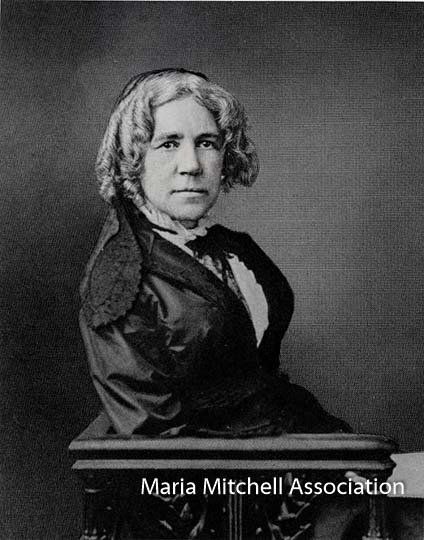
August 19 {1857}. There are four great men whose haunts I mean to seek, and on whose footsteps I mean to stand: Newton, Shakespeare, Milton, and Johnson. To-day I told the driver to take me to St. Martin’s, where the guide-book says that Newton lived. He put me down at the Newton Hotel, but I looked in vain to its top to see anything like an observatory. I went into a wine-shop near, and asked a girl, who was pouring out a dram, in which house Newton lived. She pointed, not to the hotel, but to the house next to a church, and said, “that’s it – don’t you see a place on the top? That’s where he used to study nights.” It is a little, oblong-shaped observatory, built apparently of wood, and blackened by age . . . .” Blackened no doubt by the wood ash and soot found in the air throughout over-crowded nineteenth century London. We always think about London being very foggy in the nineteenth century but frankly a lot of it was wood and coal ash as the nineteenth century grew older, particularly as factories developed and belched all of that into the air – think Sherlock Holmes in the 1880s. But Maria Mitchell, while starting in Europe as a young woman’s chaperone, also knew that this tour of Europe was a great learning experience – the equivalent of a college education she could not have. Doors were thrown open to her around Europe – in particular at all of the observatories that dotted the continent. She was not just well-known – she was famous. JNLF
By Jascin N. Leonardo Finger August 10, 2026
This is a blog of the past. I often think of this “story” when it’s hot and humid out. So here it is again. The past few weeks have been very un-Nantucket as far as the heat and the extreme humidity. When I was a child and even a teenager, I remember that we always wore long pants and even sweaters in the summer evenings on island. This does not seem to be the norm any longer unfortunately. The heat also leads me to think about staying cool and what generations before us did to preserve food. Long before modern refrigeration, ice was used for preserving foods. Although the use of ice brought an end to salting and drying fish for local markets, with railroad development and western expansion in the 1850s, salt fish was still being shipped to inland domestic markets as well as abroad. As the fishing industry grew on Nantucket and elsewhere, however, so did the need for ice to keep the catch fresh for market. On Nantucket, when a hard freeze produced ice of the necessary thickness, blocks were cut from Maxcey’s and Washing Ponds and the North Head of Hummock Pond and stored in nearby icehouses. This was a fairly long and tricky process that took skill to make sure the ice was the right thickness and that one did not fall through the ice. Mainland icehouses typically used sawdust for insulation, but Nantucket ice was insulated with beach grass, seaweed, and eelgrass—sawdust not being readily available here. The iceman would drive his cart around the streets with usually a gaggle of children trailing behind – or hitching a secretive ride on the back of the cart – hoping for a piece of ice to suck on and cool off with – back when something that simple was a pure delicacy. When electricity was introduced on Nantucket in 1889, cutting pond ice was no longer necessary. Captain John “Jack” Killen built the first ice-making plant, on Straight Wharf, opening it on May 5, 1902. Several other plants, including that of the Island Service Company, followed—all operating until the Great Depression. Nantucket’s early ice-making plants were established primarily for packing fish and shellfish, which were shipped in barrels or fish boxes layered with ice. Fishermen both on and off-island would stock up on ice before going out on long trips, and it is said that island ice was of a much higher quality than that from plants off-island—perhaps because of the purity of Nantucket’s water. Some people still cut ice. My parents had an elderly friend, now gone, and his family owned – and I assume still owns – a camp of cottages from the 19 th century up in New Hampshire. In the winter, the entire family shows up to harvest ice and store it in the icehouse. The ice is then used in each of the cottages during the summer since they have no electricity or plumbing. It is an art that is almost gone but happily there are still a few who have passed down the knowledge and skill for harvesting ice. I recently took a look at his obituary and was blown away – I remember him for ice harvesting – but wow what a life! One of service and seeking justice. JNLF
August 3, 2026
“If you don’t look, you don’t see. You have to go and look.” -Edith Andrews
Show More