
Keep Calm and Bird On: January 2024

January 2, 2024
“If you don’t look, you don’t see. You have to go and look.”
-Edith Andrews
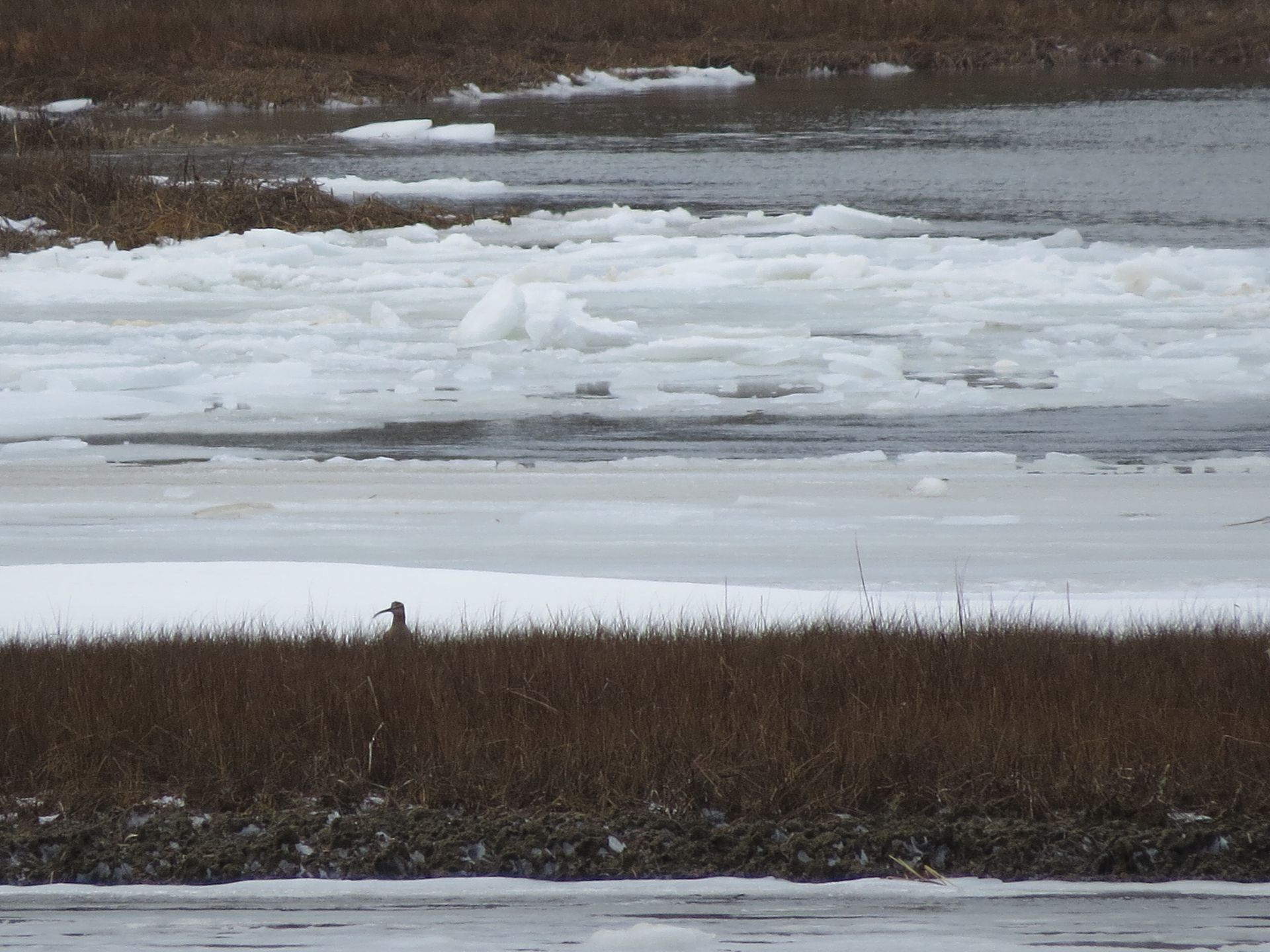
The fact is, we never know what may show up in the winter. Look closely and you can see the unmistakable head of an-out-of season Whimbrel in the icy marsh. A young bird taking a late jaunt found the UMass Field Station marsh a welcome rest stop for almost a month.

Winter birding? For die-hard birders, it’s a no-brainer. Of course we want to look at birds in the winter! That’s the best time! Undistracted by summer hordes, birds enjoy the extra space, not to mention peace and quiet, that winter brings. And the cast of characters we see in winter is as different from the summer regulars, as lolling half naked on a towel is from the winter coat, gloves, headgear, boots, etc. that we put on to keep frostbite away.


For winter comfort, forget fleece. Layer wool. Insist on wind and water proof, emphasis on proof. It takes a serious commitment on the part of a manufacturer to produce functional clothing, and most can’t be bothered. Let’s face it, most so-called winter garb favors appearance over comfort and is designed to only cover the thirty seconds between the car and the door. But assuming one has already heeded the Irish maxim, “There’s no bad weather, just improper dressing,” there are still a few useful extra tips. One is to find a lee. Try a beach with the wind off-shore that day. Get on the lee side of a dune, a tree, a building. Or park in such a way that the car blocks the wind.


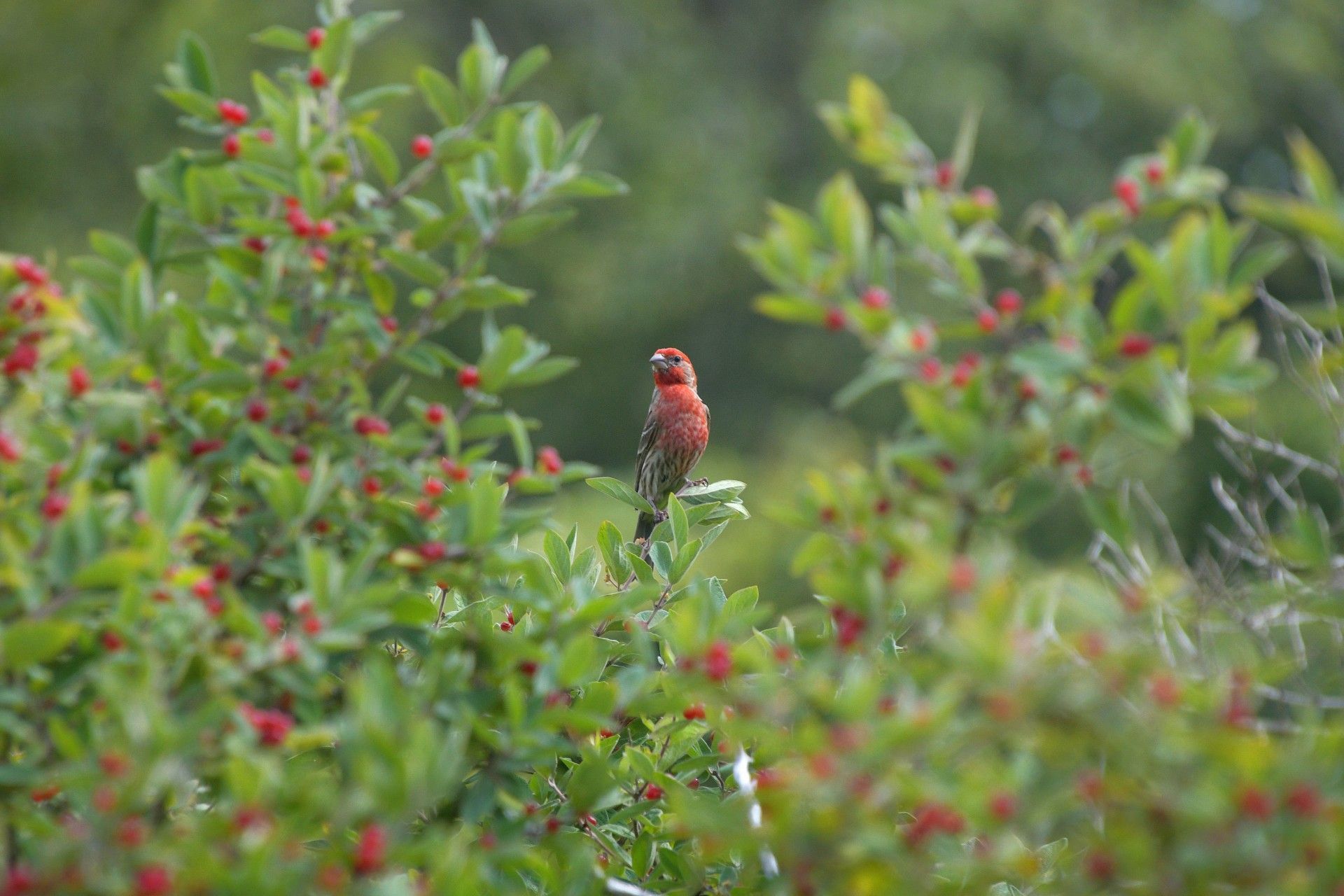
This makes it easier to enjoy the White-winged Gulls, alcids such as Razorbills, two species of Loons, three species of Scoters, or Harlequin, Common Eider, or Long-tailed Ducks. Red-necked or Horned Grebes in salt water, Pied-billed in fresh; the ubiquitous Buffleheads; or Canvasbacks or Red-heads, American Wigeon or Coot: there is plenty to look at in the winter. Yellow-rumped Warblers will be with us as long as there are bayberries to eat, and a stray Palm or Orange-crowned Warbler may linger into January.


No matter where you go, Nantucket is still a wonderful spot for birds in any season.


Photo by Ginger Andrews

Recent Posts
By Jascin N. Leonardo Finger April 13, 2026
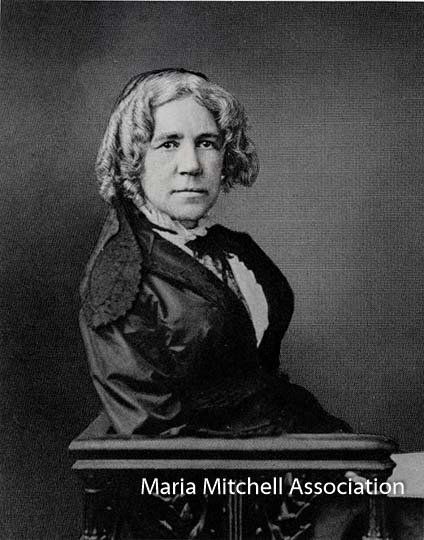
April 1878. The conference of Woman’s Congress officers met in Washington. Because we had one member in Washington we were invited to meet in that place. I went on at a great expense of time, money and strength . . . . We were in session at least nine hours. I think that more than half of that was used by Mrs. Spencer and Mrs. Sayles. The only motion which I carried through was to pay the Secretary $200 . . . In 1878, that was a long train(s) ride to Washington, DC from Poughkeepsie, NY and Vassar College. If Maria seems perturbed, I am sure she was. As president of the Association for the Advancement of Women, and thus the Congress, she had to be at the meeting. But it appears she did not get much say in the nine hour meeting. This was also a long trip to take when she had another, even longer trip coming up in July of 1878. In that month, she would travel with students and her sister, Phebe, out west to Colorado to view the eclipse and that train and wagon ride I am sure was weighing on her mind – not just the physical trip but making her way for an important eclipse viewing event. JNLF
By Jascin N. Leonardo Finger April 6, 2026
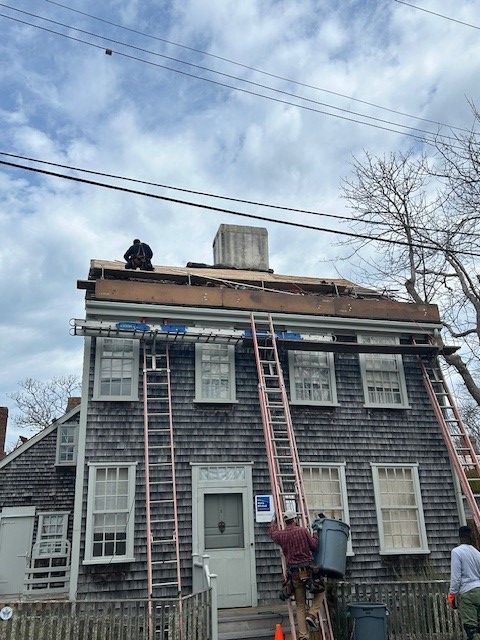
Well, actually replace the roof! With funding from the Community Preservation Act and the work of Lydon and Sons, Inc. the Mitchell House is getting a new roof. The current one had come to the end of its useful life. A cedar roof can last a long time – longer than asphalt – and is more historically accurate. The roof we are removing was installed in about 1992 – replacing a roof from the 1930s that was not cedar but a combination of materials that actually yes, did last sixty years. The unfortunate issue has arisen that the roofwalk (walk) has to be replaced. This is NOT the original walk – nor that old of a walk. It’s likely from the 1970s or so and has been cobbled at over time. It’s not a functioning walk – no one is allowed on it – but the Mitchell House needs it none the less. Maria Mitchell and her father, William, likely used the walk for astronomical observations – in addition to the yard – but the walk is also protected as part of the preservation easement on the House. Walks – NOT and NEVER called widow’s walks – were used for preventing and putting out chimney fire and roof fires. In a place where wood was expensive and had to be brought from “the main” these were purely utilitarian. What good Quaker (or non-Quaker) would build a platform for his wife to stare out to the harbor to see if her husband was on his way home? The other issue is that the walk was completely resting on the ridge board – and actually was notched to accept the pitch and tip of the ridge board so they couldn’t work around it. I suspect this may have been the ways walks were once built – and also a crafty and smart thinking carpenter who came up with the idea. It makes the walk lower. But between that issue and the age of the walk and then the blizzard of February 2026 that packed gusts over 83 MPH (that’s Category 1 hurricane winds) the walk gave in. Balusters had been knocked out and the railings were loose and pulling away from the posts. So, we will also be working with Barber and Sons to create a new roofwalk – and they agreed to do this for us quickly which is also no small feat given how busy everyone is these days. So from the bottom of the Mitchell House’s heart (and mine) a big thank you to Chris Lydon and Lydon and Sons and crew, Barber and Sons / Beau and Nate Barber, the Community Preservation Committee, and Nantucket Preservation Trust (our easement holder)! JNLF
April 1, 2026
“If you don’t look, you don’t see. You have to go and look.” -Edith Andrews
Show More