
Julia Knisel to Speak as Featured Guest for Nantucket Maria Mitchell Association Science Speaker Series
On August 18, at 7pm, Julia Knisel will speak at the Nantucket Maria Mitchell Association’s (MMA) Science Speaker Series. Her talk, “How to Share Local Observations of Flooding and Erosion and Influence Coastal Management” is part of our FREE Science Speaker Series and will be held via Zoom.
Awareness of coastal flooding and erosion impacts increases with every nor’easter and extreme high tide. Documentation of these impacts (and causes) supports planning and management efforts to minimize damages and build more resilient communities. The Massachusetts Office of Coastal Zone Management launched the MyCoast portal and mobile applications (iPhone and Android) ten years ago to collect and analyze photographs and data relating to coastal hazards. Since 2011, 5,300 reports have been submitted for Massachusetts, with the most attributed to the winter storms of 2018. Knisel will highlight observations on Nantucket, and across Massachusetts, and demonstrate how to submit and view reports of coastal storms and King Tides using MyCoast. Citizen scientists can help increase awareness of local impacts, inform response and recovery efforts, and influence best practices, policies, regulations, and long-term priorities.
Assessing and managing flooding and erosion impacts have been the focus of Julia Knisel’s work with state coastal programs for twenty years. Knisel leads the StormSmart Coasts program for the Massachusetts Office of Coastal Zone Management to help communities proactively address coastal flooding and erosion while enhancing beach systems. She serves on the Massachusetts Emergency Support Function Team to help inform response and recovery from coastal storm events, and supports state hazard mitigation and climate adaptation planning and implementation. Knisel values collaboration with state, federal, non-profit, and academic partners across New England through the Coastal Hazards Resilience Committee of the Northeast Regional Ocean Council, which has been focused on advancing nature-based approaches to shoreline management. Knisel teaches as an adjunct with the Marine Studies Consortium to help build broader appreciation for coastal resource functions and values. Knisel has a B.S. in Biology/Marine Science and an M.S. in Marine Policy/Coastal Zone Management.
To register for this event, please follow the link below:
https://us06web.zoom.us/webinar/register/WN_2Z2uz04OReyiAIa8DmB5qQ
For the full Science Speaker Series schedule, please visit our website here:
https://www.mariamitchell.org/science-speaker-series
This series is generously presented by our lead sponsor, Bank of America, and additional sponsors, Cape Air, Cisco Brewers, and White Elephant Resorts.
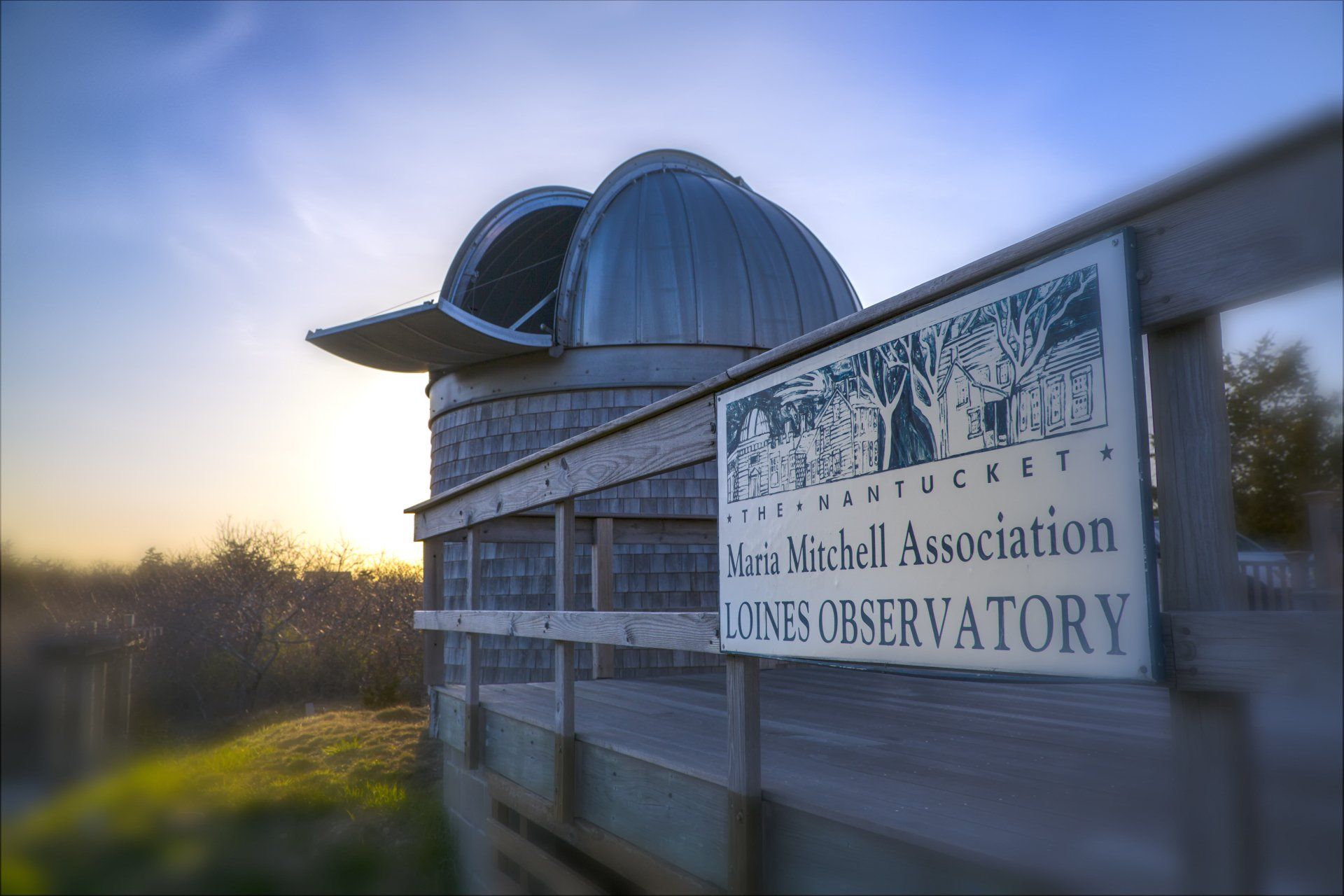
The Maria Mitchell Association is a private non-profit organization. Founded in 1902, the MMA works to preserve the legacy of Nantucket native astronomer, naturalist, librarian, and educator, Maria Mitchell. The Maria Mitchell Association operates two observatories, a natural science museum, an aquarium, a research center, and preserves the historic birthplace of Maria Mitchell. A wide variety of science and history-related programming is offered throughout the year for people of all ages.
For Immediate Release
August 12 2021
Contact: Kelly Bernatzky, Development Associate
Recent Posts