



RESEARCH – Marine Science
Nantucket Bay Scallops
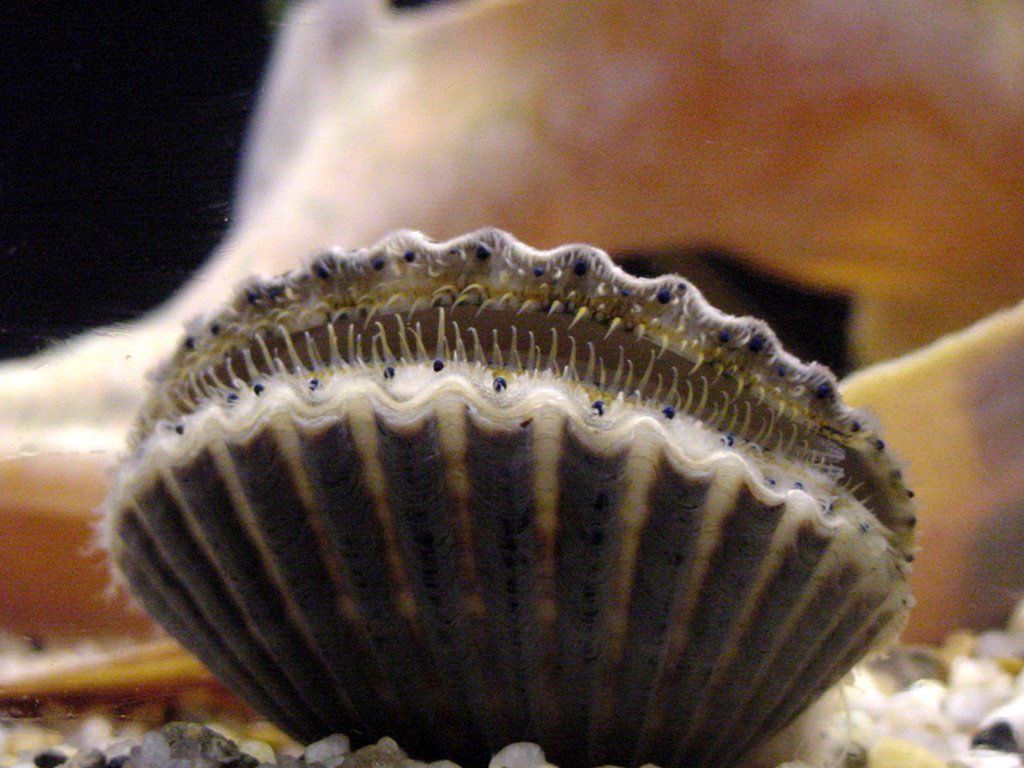
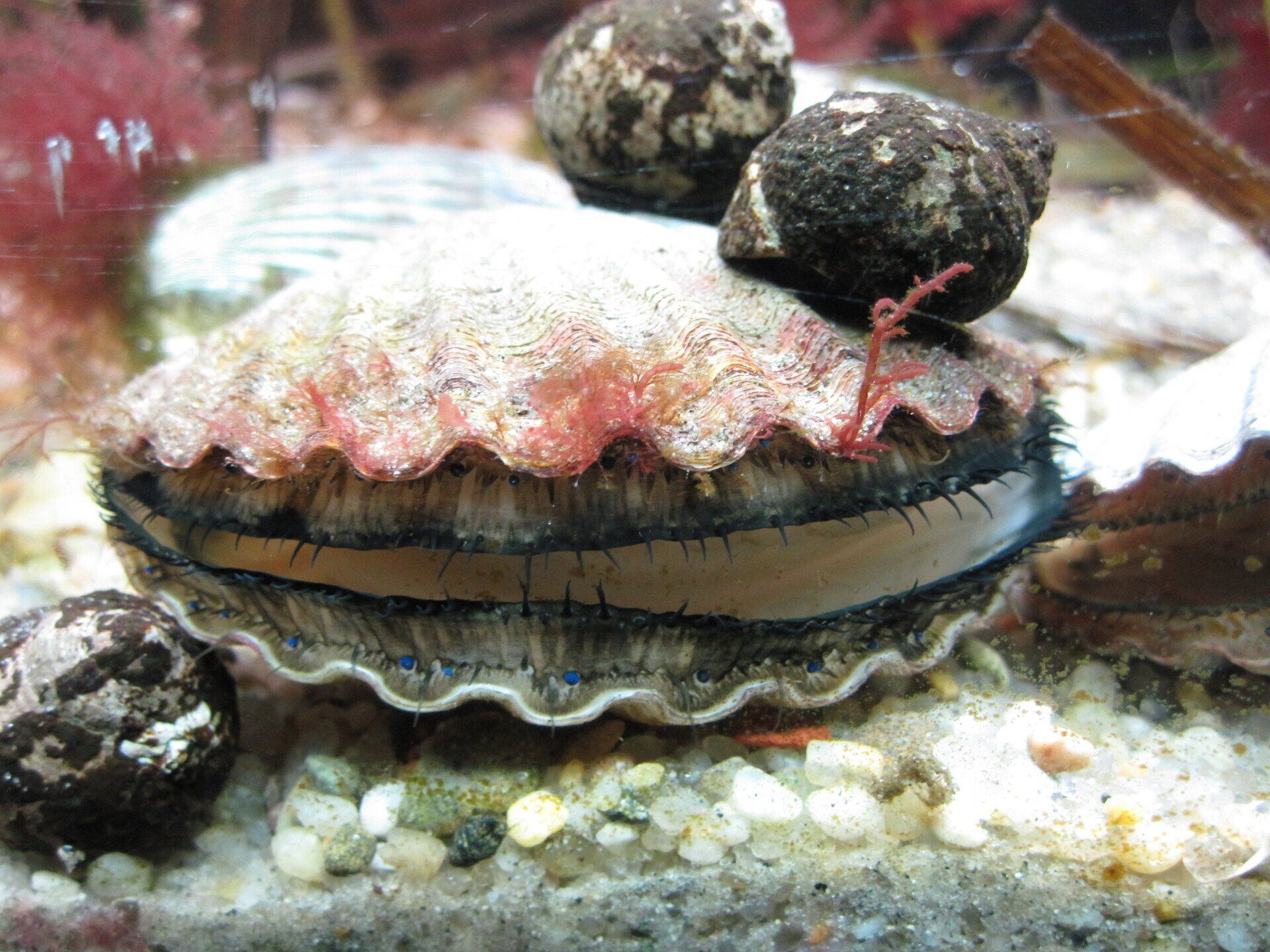
Nantucket Bay Scallops, Argopecten irradians irradians (Lamarck 1819), add around two million dollars to the Nantucket economy each winter. The adductor muscle that opens and closes the two shells in the live animal is a delicacy and Nantucket is one of the last places where wild bay scallops are regularly harvested.
Since 2003, the Maria Mitchell Association (MMA) and Nantucket Shellfish Association (NSA) have collaborated on a long-term study of the Nantucket Bay Scallop to understand scallop longevity, reproduction and survival and habitat preferences of the bay scallop.
The scallop research program has been very important to our understanding of the timing of spawning of the wild scallop population in Nantucket Harbor. Currently, MMA Research Associate, Dr. Valerie Hall oversees the research and the students who assist with it.
Current Research
Dr. Valerie Hall
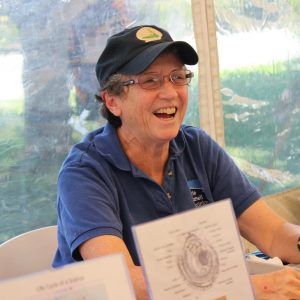
Dr. Valerie Hall, who retired after a 35-year science teaching career, received her PhD in 2014 at the UMass School for Marine Science and Technology (SMAST). Her dissertation, Impact of the Second Seasonal Spawn on Reproduction, Recruitment, Population, and Life History of the Northern Bay Scallop, is based on several years of scallop monitoring, field experiments, and laboratory investigations in and along Nantucket Harbor.
A large part of Dr. Hall's work is trying to understand the influence of nub scallops in the population. Scallops usually reproduce twice a summer; there is an early spawn around late June and a late spawn that occurs late in the summer or early fall. Scallops produce in the late spawn are referred to as "nubs" because they are very tiny their first fall.
Only about 40% of the late-spawned nubs reproduce during the following summer, since they are often not mature enough until water temperatures become too low in the fall. However, Val found that they are able to reproduce throughout their second summer, something that early-spawned classic scallops cannot do. Thus, the nubs have more total opportunities to spawn during the two-year lifespan of the species, making them very important in maintaining the bay scallop population under detrimental environmental conditions. For example, an algal bloom or “rust tide” in 2009 wiped out most of the early-spawned larvae and juveniles, but dissipated before the late spawn began.
Dr. Hall was mentored by her SMAST doctoral committee, and worked very closely with her colleagues Dr. Bob Kennedy (MMA Senior Research Fellow), Dr. Peter Boyce (MMA Research Associate) and Tara Riley (Nantucket Town Shellfish Biologist).
The Nantucket Shellfish Association and the Nancy Sayles Day Foundation have been generous financial supporters of the Bay Scallop Research Project. Their support and the work of dozens of MMA interns and volunteers have been critical to the success of the project.
Student Mentoring and Research Program
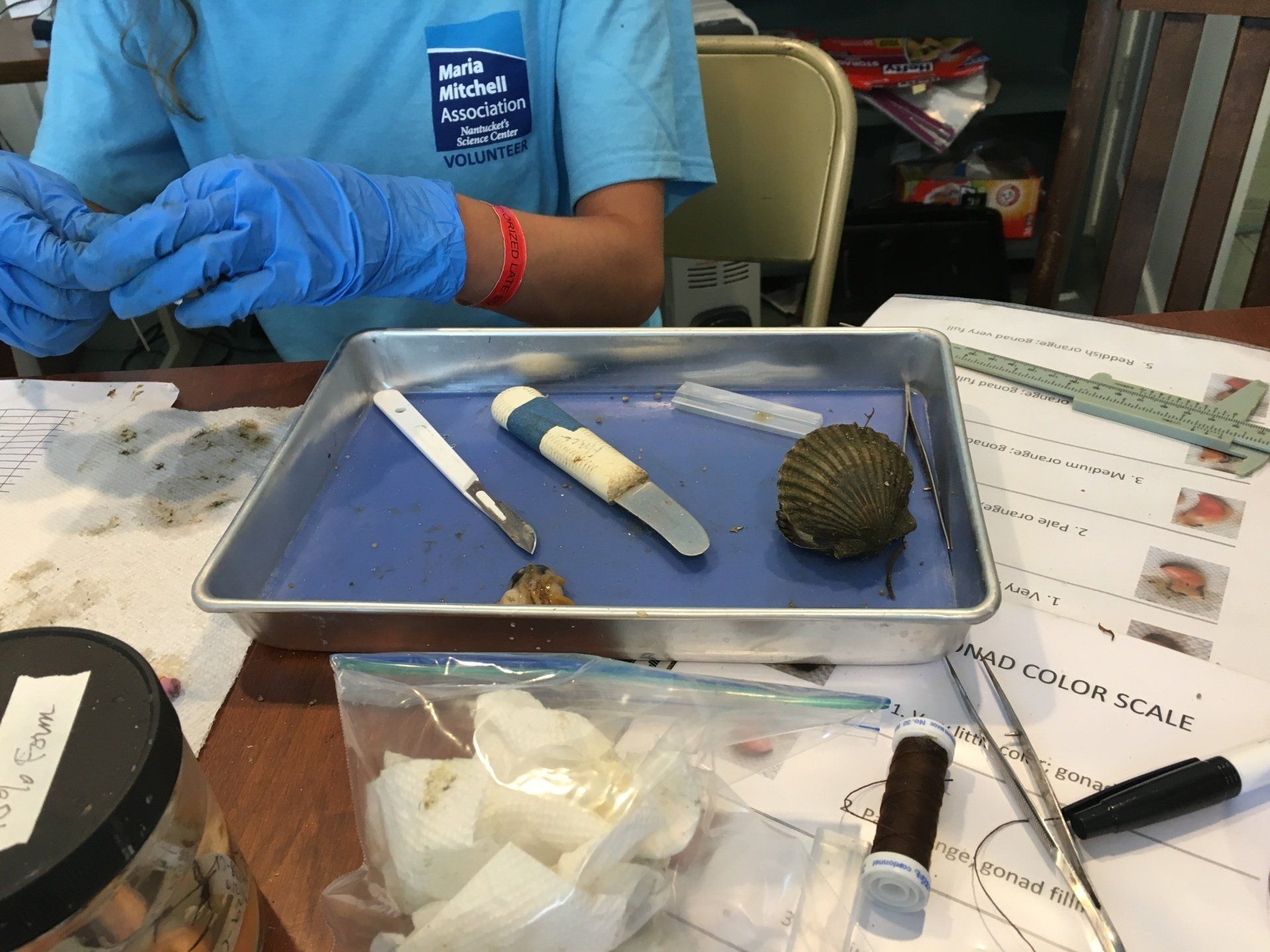
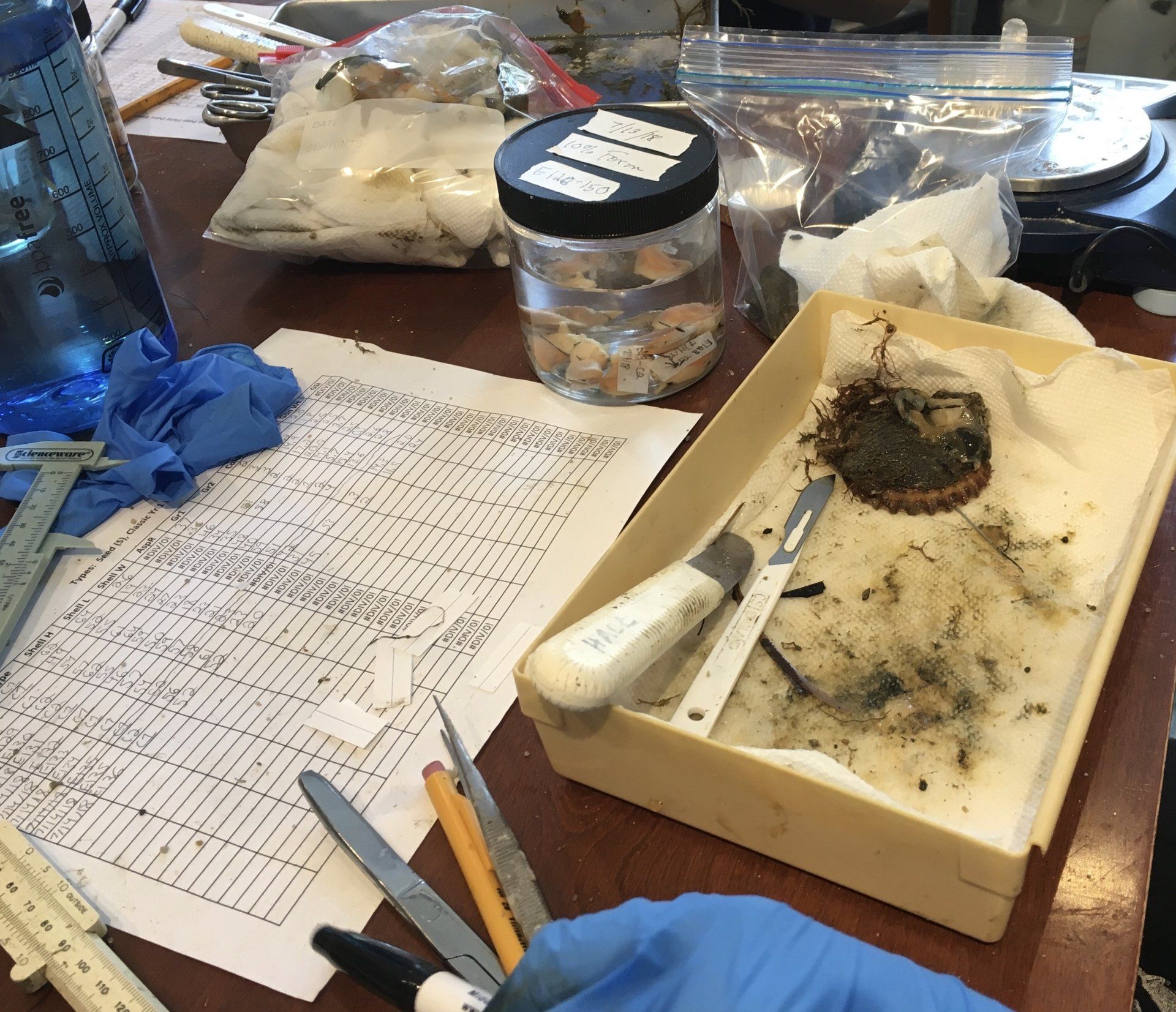
Dr. Hall has combined her research on bay scallop reproduction and her passion for teaching by instituting a summer research and mentoring program at the Maria Mitchell Association. The program has served a total of 45 students since 2016, ranging in age from 11 to 22. Students participate in all aspects of Val’s ongoing research, as well as designing and carrying out their own projects, and enhancing both their written and oral presentation skills. This program has been generously supported by the Nantucket Shellfish Association, the Great Harbor Yacht Club, the Qureshi family, the Nantucket Biodiversity Initiative, and Madaket Marine.